Blog

  • Da Yun Transition: When Your Decade Luck Shifts

    Da Yun Transition: What Happens When Your Decade Luck Shifts

    Da Yun (Major Life Cycle, 大运) shifts every ten years in a BaZi (Eight Characters, 八字) chart. This shift is the largest structural energy change in the BaZi time framework. The transition period typically unfolds gradually over one to two years, not as a sudden switch. Understanding what happens at a Da Yun transition helps you recognize the pattern when you are in one, and approach that period with a more fitting response.

    You may have experienced stretches where things that used to flow stopped working, or periods when long-stalled directions suddenly began moving. This rhythm shift often has less to do with any specific event and more to do with the underlying energy field of the chart cycling through a Da Yun transition. This piece explains what happens at a transition, the typical patterns people notice, and how to orient during that period.

    Contents

    • What is a Da Yun transition
    • Three typical patterns during a transition
    • How to know whether you are in a transition period
    • How to navigate a transition
    • Da Yun transitions and crystal adjustments

    What Is a Da Yun Transition

    Da Yun is the ten-year energy phase in BaZi. Each step carries a unique Heavenly Stem and Earthly Branch pair, bringing a distinct Five Element energy into the overall chart configuration. Da Yun does not replace your natal chart. It overlays on top of it, shaping the ambient energy environment for that decade.

    When you move from one Da Yun step to the next, the entire energy backdrop of your chart changes. This change does not happen instantaneously. In the one to two years surrounding the transition point, both the outgoing and incoming Da Yun energies are present simultaneously, creating a distinctive mixed-energy period before the new cycle stabilizes.

    For the foundational explanation of how Da Yun is calculated and sequenced, see What Is Da Yun. This piece focuses specifically on the transition experience.

    Three Typical Patterns During a Transition

    Da Yun transitions tend to produce three recognizable patterns. Some people experience all three; others notice only one or two, depending on how different the outgoing and incoming Da Yun energies are.

    Pattern A: The outgoing Da Yun energy begins receding

    In the one to two years before the transition, the energy of the current Da Yun starts to fade. What worked reliably may begin to stall. Approaches that produced results may seem to lose traction. Directions that were active may slow.

    This is not a sign that something has gone wrong. It is the outgoing energy field beginning to withdraw. Strategies calibrated to the previous Da Yun may need adjustment as that cycle winds down.

    Pattern B: The incoming Da Yun energy begins entering

    After the transition point, the new Da Yun energy starts to take hold. Directions that previously showed little movement may begin to respond. Areas that were stuck may start to loosen. The chart’s overall rhythm begins orienting toward a new direction.

    This is the incoming energy becoming active. The Five Element quality of the new Da Yun determines the dominant energy direction for the next decade: sometimes closely related to the previous step, sometimes markedly different.

    Pattern C: The overlap period feels unstable

    When both the outgoing and incoming energies are simultaneously present, the chart receives two partially conflicting energy inputs. This can produce a sense of directional ambiguity: it is not clear which way to push or which direction to trust. This is specific to the transition overlap period and typically resolves once the new Da Yun has fully settled, within one to two years.

    San Ming Tong Hui (Wan Minying, Ming Dynasty) states: “大运最怕与流年相会”: the Major Life Cycle most fears converging unfavorably with the Current Year. This points to the compounding effect when a Da Yun transition coincides with a challenging Liu Nian (Annual Luck, 流年). When both layers are in friction simultaneously, the instability is more noticeable. But this state is time-limited: the transition period passes.

    How to Know Whether You Are in a Transition Period

    Knowing whether you are in a Da Yun transition requires two things: knowing which Da Yun step you are currently in, and knowing the age boundaries of that step.

    The direct method is to run a BaZi reading. The tool calculates your Da Yun sequence and shows your current step along with its age boundaries. If your current age falls within the final one to two years of a Da Yun step, you are approaching a transition. If you recently crossed into a new step, you are in the early adaptation phase of the incoming Da Yun.

    The tool calculates the transition timing precisely from your birth data, using solar term boundaries. You do not need to consult a traditional almanac manually.

    How to Navigate a Transition

    Transition periods have a distinct energy character. Several approaches tend to work well:

    Consolidate rather than expand

    Da Yun transitions are not well suited to large-scale expansion, whether in scope, resources, or direction. The outgoing Da Yun’s supporting context is receding and the new Da Yun’s footing is not yet established. Contracting to core priorities tends to be more effective than pushing broadly during this overlap.

    Observe before concluding

    Early friction in a new Da Yun is not necessarily a long-term signal. Some difficulties are the outgoing Da Yun’s trailing edge; others are the new Da Yun’s initial adaptation friction. Give the new cycle six to twelve months before making strong judgments about its overall character.

    Stabilize core resources and relationships

    The transition period is better used for maintaining what matters most rather than restructuring broadly. Major directional changes can be made more confidently once the new Da Yun energy has established itself and you have a clearer read on its direction.

    These are energy orientation guidelines, not predictions about which specific events will or will not occur. Individual choices, external conditions, and the concurrent Liu Nian all operate independently.

    Da Yun Transitions and Crystal Adjustments

    When Da Yun shifts, the overall Wu Xing (Five Elements, 五行) balance of your chart may change, and with it, your Yong Shen (用神) may shift. When Yong Shen shifts, Mio&Gem’s crystal recommendation updates accordingly.

    How this works in the tool:

    • The tool positions you in your current Da Yun step based on your age
    • The Da Yun’s Heavenly Stem and Earthly Branch contribute to the overall chart energy calculation
    • The recalculated Yong Shen, combined with your chosen INTENT, produces the updated main crystal recommendation

    If you have recently crossed into a new Da Yun step, running a fresh BaZi reading will show whether the recommendation has changed. Some people find their main crystal stays the same after a Da Yun shift (when the new Da Yun reinforces the same Yong Shen direction). Others see a change from one element family to another. The fire element collection, water element collection, and metal element collection cover the different element directions if you want to explore.

    FAQ

    How do I find out when my next Da Yun transition is?

    Run a BaZi reading. The tool shows your current Da Yun step and its age range. You can see which year your current step ends and the next one begins. The transition is calculated from your birth data using solar term precision.

    Do Da Yun transitions always feel significant?

    Not necessarily. If the outgoing and incoming Da Yun elements are closely related in the Five Element cycle, the shift can be quite smooth. If the elements are very different (for example, a Fire Da Yun followed by a Water Da Yun), the shift tends to feel more pronounced. Individual charts also vary in how strongly Da Yun influences are felt relative to natal chart factors.

    Do I need to change my crystals at every Da Yun transition?

    Only if your Yong Shen changes. If the new Da Yun reinforces the same Yong Shen direction as before, the recommendation does not change. The simplest way to know is to re-run the tool after the transition and compare the result to your previous recommendation.

    Can I make major decisions during a Da Yun transition?

    Yes. If a decision has a fixed timing, act on it according to your situation. If there is flexibility, waiting until the new Da Yun energy has settled (roughly six to twelve months into the new step) gives you a more stable energy base for the decision. This is a directional consideration, not a prohibition.


    To find your current Da Yun step and check whether you are approaching a transition, run a BaZi reading. For the foundational explanation of Da Yun calculation and sequencing, see What Is Da Yun.
  • Crystal bracelet gift for her: Christmas 2026 guide

    A crystal bracelet gift for her lands best when the stone is chosen from her own birth chart: her element decides the crystal, your intention decides the design. This Christmas 2026 guide covers how to find her element and what to pick for wife, girlfriend, mum, or the office draw.

    Christmas in Singapore has its own physics: the Orchard Road lights go up in November, the malls sing carols at 32 degrees, and somewhere in between you need a crystal bracelet gift for her that does not look like it was grabbed on the 23rd. The fix is the same one this whole series is built on: let her birth chart choose the stone. Personal by calculation, wrapped by you, and Christmas Day falls on a Friday this year, so the deadline is real.

    In this guide:

    Why a crystal bracelet works as a Christmas gift for her

    Because it solves the two problems Christmas gifts for women usually fail at: it is personal without requiring you to guess her taste, and it lasts past January. The personalization is structural rather than sentimental; her birth date fixes her BaZi chart, the chart names the element it needs, and that element maps to one specific natural stone. You are not choosing what you think she would like; you are looking up something that is already hers. The full mechanics live in the BaZi crystal bracelet guide.

    There is also the story it tells when she opens it. “I saw it and thought of you” is a fine sentence, but “I ran your chart and this is your stone” is a better one: it proves minutes of specific attention, and it hands her a small mystery she can verify herself on the calculator before the tree comes down. Gifts that come with their own reason travel further than gifts that come with a ribbon.

    How to find her element before Christmas

    You need her birth date, ideally with the time and place, and two minutes on the BaZi calculator. The tool computes her five element balance and names the element her chart needs, in plain language. Choose the intention that fits the relationship, everyday, love, or career, and the specific stone follows.

    The practical Christmas versions:

    • You know her birthday. Wife, girlfriend, mum, sister: this is you. Run it; done.
    • You know the date but not the time. Run it anyway; the chart reads from three of its four pillars and still gives a solid answer.
    • Office draw, birthday unknown. Skip the chart and choose the crowd-pleaser register instead: the everyday stones below are safe for anyone, and amethyst in particular is the most universally worn of the lineup.

    The five elements: her Christmas stone

    The everyday intention is the default gift register, “for everyday clarity and calm.” One stone per element:

    Her element Everyday stone If the gift is romantic (love) If she is building something (wealth)
    Wood Green Fluorite Green Fluorite Love Xiu Jade
    Fire Amethyst Rose Quartz Strawberry Quartz
    Earth Citrine Peach Moonstone Golden Topaz
    Metal Clear Quartz White Moonstone Blue Moonstone
    Water Aquamarine Blue Moonstone Blue Tiger’s Eye

    Two seasonal notes. Christmas styling favors the pale and the golden: clear quartz and white moonstone read like frost, citrine and golden topaz like the lights on Orchard Road, which is worth knowing when two intentions would both fit. And if her chart points to Water, there is a neat bit of timing in the wrapping paper: the winter solstice falls three days before Christmas, the season Water traditionally owns.

    Choosing by relationship

    • Your wife. The full version: run her chart properly, pick the intention honestly (love if the year needs tenderness, wealth if she is mid-build), and put the reason in the card. December marriages run on logistics; a calculated gift is a small rebellion in favor of attention.
    • Your girlfriend. First Christmas together: the everyday stone in her element, light on ceremony. Established: the love stone, and let her verify the chart herself; the verification is half the present.
    • Your mum. The everyday intention, always defensible: “for everyday clarity and calm” is the truest thing anyone has said about mothers in December. If you already gave her a stone at Mid-Autumn, a second element she also scores high in makes a quiet set.
    • Sister, best friend, secret santa. For close ones, the chart route as above. For the office draw where the budget is fixed and the birthday unknown, the everyday amethyst is the statistically safe pick, and the BaZi story (“you can check which stone is actually yours”) turns a polite gift into the best conversation at the party.

    One general rule across all of them: when torn between two stones, choose by her wardrobe, not by the price tag. A stone she can wear four days a week beats a slightly grander one that waits for occasions.

    When to order for Christmas 2026

    Christmas Day 2026 is a Friday, which stacks the season’s logistics into the two weekends before it. Working guidance for Singapore and Malaysia: order by mid-December for comfortable delivery, and treat the final week as courier roulette not worth playing with a headline gift. If the bracelet needs sizing thought, the size guide covers measuring her wrist without spoiling the surprise, including the borrowed-bracelet trick.

    And if December has already collapsed and you are reading this on the 22nd: the chart takes two minutes, the reveal can be a card with her element and the bracelet following in January. A calculated gift arriving late still beats a guessed one arriving on time.

    FAQ

    What is a good crystal bracelet gift for her at Christmas?

    One matched to her own chart. Her birth date determines the element her chart needs, and that element maps to a specific stone: green fluorite for Wood, amethyst for Fire, citrine for Earth, clear quartz for Metal, aquamarine for Water in the everyday register, with love and wealth alternatives per element.

    How do I know her element without asking her?

    You need her birth date, which most gift-givers already know or can get from family. Enter it in the Mio&Gem BaZi calculator; even without a birth time it reads three of the four pillars and names the element her chart needs. The stone follows from there.

    Which crystal bracelet suits a secret santa gift?

    When the recipient’s birthday is unknown, skip the chart and choose the everyday register. Amethyst is the most universally worn stone in the lineup and reads as a considered gift at any budget, and the recipient can later check her own chart to find her true pairing.

    Is a crystal bracelet an appropriate gift for my mum?

    Yes, and the everyday intention fits best: it stands for daily clarity and calm rather than romance. Run her birth date through the calculator, give the stone her chart names, and tell her how it was chosen; the method is half the gift.

    When should I order a Christmas gift for delivery in Singapore?

    By mid-December for Christmas 2026. The 25th falls on a Friday and the preceding two weekends absorb most of the season’s courier load, so the final week is a risk not worth taking with a headline gift.

    Her element is one birth date away. Run it through the BaZi calculator tonight, and Christmas becomes a matter of wrapping.

  • 八字能预测未来吗?它能与不能

    BaZi 能预测未来吗?八字能告诉你什么,不能告诉你什么

    BaZi(八字) 不是预言机,它是一个描述命盘能量结构和时间节律的框架。它能告诉你的是:你当前所在的能量阶段倾向于什么方向,哪些选择更顺势、哪些方向阻力偏大。它不能告诉你的是:具体的事件会不会发生、何时发生。理解这条界限,是用 BaZi 作为决策参考工具的前提。

    “这一年我会升职吗?””我今年会遇到对象吗?”这类问题在 BaZi 咨询中很常见。理解 BaZi 框架到底能回答什么、不能回答什么,不只是一个学术问题,它直接影响你怎么用这套工具做有效的参考。

    目录

    • BaZi 在描述什么
    • 时间节律:大运与流年的作用
    • BaZi 的能力边界
    • 为什么 BaZi 不应该被用作事件预言
    • BaZi 作为决策参考框架的正确用法
    • Mio&Gem 的 BaZi 水晶工具怎么运用这个框架

    BaZi 在描述什么

    BaZi(八字) 的核心是八个字,包括出生年、月、日、时各对应一个天干和一个地支,共同构成命盘的基础信息。这八个字本身是固定的,反映出生时刻所处的天地气候状态。

    命盘分析从这八个字里提炼出核心概念:用神(Yong Shen),即命盘中最需要补充或扶助的五行方向。用神的方向,是判断哪些外部能量(包括年份的能量场、流年的五行属性)与你的命盘是生助关系还是克制关系的依据。

    这是 BaZi 最核心的功能:描述能量结构,判断方向顺逆。它描述的是倾向,不是命令;是可能性的分布,不是必然的结果。

    时间节律:大运与流年的作用

    命盘的能量不是静态的,它随时间推移而叠加不同的外部能量层。

    大运(Da Yun) 是每 10 年一步的主节律。大运切换时,命盘所处的能量背景发生较大变化。一步顺势的大运可能带来能量整体舒展的 10 年,一步逆势的大运可能带来需要更主动应对的 10 年。大运是中长期方向的主要参照。

    流年(Liu Nian) 是每年一次的年度叠加。流年的天干地支进入命盘,跟命盘原局和大运同时互动,产生当年的具体能量感受。流年的影响比大运轻,但因为每年切换,能直接感知到年度节奏的变化。

    《滴天髓》(明清之际命理经典)说:「以日为主,以月令之用神为的而消息于年时。」(白话:以日主为命盘核心,以月令中提炼的用神为靶向,再通过年、时的信息来消长判断。)这条原则的核心是:命盘结构(日主和月令用神)是主体,年份和时段的能量是外部叠加的参数,两者共同决定当下的顺逆方向。

    这是 BaZi 对”时间”的理解方式:时间不是一条匀速的线,而是不同能量阶段的叠加,不同阶段里同一个人的选择所处的顺逆底色是不同的。

    BaZi 的能力边界

    明确 BaZi 能做什么、不能做什么,有助于把这套工具用在它真正有效的地方。

    BaZi 能描述的:

    命盘的五行结构和用神方向。这是最稳定、最可靠的判断,来自出生时刻的八个字,不随时间变化。

    当前大运的能量底色。当前大运支持什么方向、对什么元素有额外压力,这是 10 年维度的方向参照。

    当年流年对命盘的影响倾向。当年天干地支与命盘的生克关系,决定了这一年的顺势方向和需要留意的方向。

    BaZi 不能回答的:

    具体事件。升职、恋情、换工作、签合同,这些具体事件受到你的选择、他人的选择、外部环境、机遇与准备的共同影响,不是任何命理框架能单独决定的。

    精确的时间点。”某月某日会发生什么”不是 BaZi 的功能。BaZi 描述的是能量阶段,不是日历上的事件时刻。

    其他人会怎么做。命盘只描述你自己的能量结构,不预测他人的行为选择。

    为什么 BaZi 不应该被用作事件预言

    这不只是一个理论上的边界,也是实践层面的诚实。

    把 BaZi 用作事件预言会带来两种系统性问题。第一,当”预言”准确时,会强化对 BaZi 的迷信依赖,让人倾向于把选择权外包给命盘,而不是把命盘作为参考信息来辅助自己的判断。第二,当”预言”不准时,会引发不必要的焦虑或对整套工具的彻底放弃。两种结果对使用者都没有真正的价值。

    BaZi 本质上描述的是能量方向的概率分布,而不是事件的确定性。同样的”顺势大运 + 流年木生火”,对一个做好准备的人可能表现为事业发展机会,对一个没有准备的人可能只是感受到大运期间整体状态比较顺畅。外部条件、个人选择和准备程度都是独立变量,BaZi 提供的是参考方向,不是结果保证。

    BaZi 作为决策参考框架的正确用法

    理解了 BaZi 的能力边界之后,它在决策参考层面是有实际价值的。

    方向性判断。 某个方向上的重要决策,顺势期推进比逆势期阻力小。这不是”逆势期不能做”,而是在资源和时间条件相同时,顺势期的能量底色对该方向更友好。了解当前所在的能量阶段,有助于在资源分配上做更合理的优先级判断。

    风险缓冲的节奏感。 逆势阶段适合留有更多缓冲,不过度押注某个方向。顺势阶段可以在条件成熟时更积极推进。这是对能量节律的主动配合,不是被动等待。

    长期方向的参照。 大运切换是重新审视中长期方向的好时机。一步新的大运带来不同的能量底色,原来的优先方向可能需要调整,原来阻力大的方向可能打开了新的空间。

    关于 BaZi 在年度规划中的具体运用,可以参考 如何用 BaZi 做年度规划。关于流年与大运如何共同决定当年的能量方向,可以参考 如何读懂你的年度运势

    Mio&Gem 的 BaZi 水晶工具怎么运用这个框架

    Mio&Gem 的 BaZi 测算 工具的核心输出是水晶推荐。这个推荐背后的逻辑,正是上述 BaZi 框架的实际应用:

    工具首先从命盘里提炼用神方向,判断你的命盘当前最需要哪个五行方向的补充。然后纳入当前大运的能量层,判断大运对用神的影响。再叠加当年流年,计算流年对用神的生助或克制关系。最终给出的水晶推荐,是三层能量叠加后的综合判断。

    水晶的逻辑不是”戴了就能改运”,而是通过选择与用神方向对应的石头属性,让日常佩戴形成一个和命盘能量方向对齐的持续提醒。这是一个状态匹配工具,不是命运干预手段。理解了”BaZi 描述方向而非预言事件”这个前提,水晶推荐的用途也就清晰了:它是帮助你保持在顺势方向上的辅助,而不是改变逆势的装备。

    FAQ

    BaZi 测算”不准”是正常的吗?

    取决于你在问什么。如果问的是”今年我会升职吗”,BaZi 本来就不回答这类问题,不准是正常的,因为这不在它的功能范围内。如果问的是”当前能量阶段对哪个方向有支持”,这是 BaZi 能描述的范围,这层判断的参考价值更稳定。

    大运不顺的时候就什么都做不了吗?

    不是。逆势大运意味着某些方向上的阻力偏大,需要更多准备和缓冲,但并不意味着所有事都会失败。很多人在逆势大运里完成了重要的基础建设,在下一步顺势大运里更快地推进。BaZi 描述的是能量方向的底色,不是行动结果的保证或否决。

    如果知道了逆势期,是不是就什么都不要做了?

    不是。逆势期的正确应对不是停滞,而是调整节奏:更谨慎地配置资源、给重要决策留更多缓冲时间、专注已有基础的深耕而不是大幅扩张。这类年份也有它适合做的事,只是方向和节奏不同。

    Mio&Gem 的水晶推荐会不会改变我的运势?

    水晶推荐是基于用神方向的状态匹配,不是命运改写工具。它帮助你在日常状态上更接近用神方向的能量频率,不能把逆势年变成顺势年,也不能让不顺的外部条件消失。对水晶的定位保持清醒,才能真正从它的辅助功能里获益。


    BaZi 能告诉你你的命盘用神是什么、当前大运和流年对你是顺势还是逆势,以及对应的水晶推荐。运行 BaZi 测算 就能直接看到这三层信息。

  • Can BaZi See the Future? What Eight Characters Show

    Can BaZi See the Future? What Eight Characters Can and Cannot Tell You

    BaZi (Eight Characters, 八字) is not a prediction engine. It is a framework for describing the energy structure of a chart and the rhythms of different time periods. What it can tell you: which directions your current energy phase tends to support, and where the friction is heavier this year or decade. What it cannot tell you: whether a specific event will happen, or when. Understanding this boundary is the prerequisite for using BaZi as a useful decision reference.

    “Will I get promoted this year?” “Will I meet a partner soon?” These are some of the most common questions brought to BaZi consultations. Understanding what the BaZi framework can actually answer, and what it cannot, is not an abstract theoretical question. It directly affects how useful the tool can be in practice.

    Contents

    • What BaZi describes
    • Time layers: the role of Da Yun and Liu Nian
    • The capability boundary of BaZi
    • Why BaZi should not be used as event prediction
    • BaZi as a decision reference framework
    • How the Mio&Gem BaZi crystal tool applies this framework

    What BaZi Describes

    A BaZi chart is built from eight characters: the Heavenly Stem and Earthly Branch of a person’s birth year, month, day, and hour. Together these eight characters form the foundational profile of the chart. They reflect the energetic conditions at the moment of birth and do not change.

    Chart analysis extracts a core concept from these eight characters: Yong Shen (用神), the Five Element direction the chart most needs for balance. The Yong Shen direction is the basis for assessing whether external energy (including the annual energy field and the Five Element quality of a given year) generates or restrains your chart’s primary need.

    This is BaZi’s most essential function: describing energy structure and assessing directional alignment. It describes tendencies, not commands. Probable distributions, not fixed outcomes.

    Time Layers: The Role of Da Yun and Liu Nian

    A chart’s energy is not static. Different time periods layer additional energy on top of the natal chart.

    Da Yun (Major Life Cycle, 大运) operates in decade-long steps. When a Da Yun shifts, the energy backdrop of the chart changes significantly. A favorable Da Yun step can bring a decade where the chart’s energy expands more naturally. A more friction-heavy Da Yun calls for more deliberate navigation. Da Yun is the primary reference for medium- to long-term directional assessment.

    Liu Nian (Annual Luck, 流年) is the annual overlay. Each year’s Heavenly Stem and Earthly Branch interact with both the natal chart and the current Da Yun, producing the energy character of that specific year. Liu Nian carries less weight than Da Yun, but because it shifts annually, its effect on year-to-year rhythm is directly perceptible.

    Di Tian Sui (classical Ming-Qing dynasty BaZi text) states: “以日为主,以月令之用神为的而消息于年时”: the Day Master is the chart’s core; the Yong Shen derived from the month pillar is the target; and the year and hour parameters modulate the assessment from there. The principle here is that natal chart structure (Day Master and month-pillar Yong Shen) is the primary reference, while the year and time parameters are external overlays. Both together determine the current directional reading.

    This is how BaZi understands time: not as a uniform line, but as layered energy phases where the same person faces different energy conditions at different periods.

    The Capability Boundary of BaZi

    Being clear about what BaZi can and cannot do helps place the tool where it is actually effective.

    What BaZi can describe:

    The Five Element structure of the natal chart and the Yong Shen direction. This is the most stable, most reliable assessment, derived from the eight characters at birth. It does not change over time.

    The energy character of the current Da Yun. Which directions the current Da Yun supports, and where there is additional pressure, represents a decade-scale directional reference.

    The annual tendency of Liu Nian on the chart. The generating or restraining relationship between the current year’s Heavenly Stem and Earthly Branch and the chart determines this year’s favorable directions and the ones calling for more care.

    What BaZi cannot answer:

    Specific events. A promotion, a relationship, a job change, a contract: these are shaped by your choices, other people’s choices, external conditions, timing, and preparation. No chart-reading framework determines these outcomes independently.

    Precise timing. “What will happen in a specific month” is not a BaZi function. BaZi describes energy phases, not calendar-stamped events.

    What other people will do. A chart describes your own energy structure. It does not predict other people’s choices.

    Why BaZi Should Not Be Used as Event Prediction

    This boundary is not only theoretical. It is a practical honesty about the framework.

    Using BaZi as event prediction creates two systematic problems. First: when a “prediction” lands, it reinforces a superstitious reliance on the chart, encouraging people to hand decision-making over to the chart rather than using it as contextual information for their own judgment. Second: when a “prediction” does not land, it produces unnecessary anxiety or causes people to abandon a useful tool entirely. Neither outcome serves the person well.

    BaZi describes a probability distribution of energy direction, not the certainty of events. The same “favorable Da Yun with Liu Nian Wood generating Fire” may show up as a career opportunity for someone well-prepared, or simply as a stretch of feeling more energetically settled for someone who did not take action. External conditions, personal choices, and preparation level are all independent variables. BaZi provides directional reference, not result guarantees.

    BaZi as a Decision Reference Framework

    With the capability boundary understood, BaZi has genuine practical value as a decision reference framework.

    Directional orientation. Important decisions on a given path tend to meet less resistance when the current energy phase supports that direction. This does not mean action in an unfavorable phase is impossible: it means that with equal resources and time, a favorable phase carries a more cooperative energy backdrop for that direction. Knowing your current phase helps prioritize more effectively.

    Pacing and buffer sense. Unfavorable phases call for more reserve, less over-commitment to any single direction. Favorable phases, when conditions are ready, support more active forward movement. This is active alignment with energy rhythm, not passive waiting.

    Long-term directional review. A Da Yun transition is a natural moment to revisit medium-term direction. A new Da Yun step brings a different energy backdrop: directions that previously faced friction may now open up; directions that previously flowed may call for reassessment.

    For a practical guide to applying this framework in annual planning, see How to Use BaZi for Annual Planning. For how Liu Nian and Da Yun layers interact to shape a given year’s energy character, see How to Read Your Annual Luck.

    How the Mio&Gem BaZi Crystal Tool Applies This Framework

    The core output of Mio&Gem’s BaZi reading tool is a crystal recommendation. The logic behind this recommendation is a direct application of the BaZi framework described above:

    The tool first extracts the Yong Shen direction from the natal chart, identifying which Wu Xing (Five Elements, 五行) element the chart currently needs most. It then layers in the current Da Yun, assessing how that decade-scale step affects the Yong Shen. The current year’s Liu Nian is added as the third layer, calculating whether the annual energy generates or restrains the Yong Shen. The resulting crystal recommendation reflects the combined assessment of all three layers.

    The logic of the crystal is not “wearing this changes your fortune.” It is that choosing a stone whose elemental property aligns with the Yong Shen direction creates a daily orientation toward that energy. This is a state-alignment tool, not a fate-alteration mechanism. Understanding that BaZi describes direction rather than predicting events clarifies the crystal’s purpose: it supports staying oriented toward your chart’s needed direction, not overriding the character of an unfavorable year.

    FAQ

    Is it normal for a BaZi reading to “not be accurate”?

    It depends on what question was being asked. If the question was “will I get promoted this year?”, BaZi does not address that question by design, so an absence of accuracy there is expected. If the question was “what direction does my current energy phase support?”, this is within BaZi’s functional scope, and the reference value of that assessment is more stable.

    Does an unfavorable Da Yun mean nothing works out?

    No. An unfavorable Da Yun means certain directions carry more friction and require more preparation and buffer. It does not mean all initiatives fail. Many people complete important foundational work during a more challenging Da Yun and move faster in the following favorable step. BaZi describes the energy backdrop, not a guarantee or rejection of outcomes.

    If I know I am in an unfavorable phase, should I stop doing things?

    No. The appropriate response to an unfavorable phase is not inaction but adjusted pacing: allocating resources more conservatively, building more buffer time around important decisions, deepening existing foundations rather than broadly expanding. These phases have things they support, just with different direction and rhythm.

    Can Mio&Gem crystal recommendations change my luck?

    Crystal recommendations are a state-alignment tool based on Yong Shen direction. They help orient daily experience toward the chart’s needed energy frequency. They do not convert an unfavorable year into a favorable one, and they do not make adverse external conditions disappear. Keeping a grounded understanding of what crystals do makes it possible to benefit genuinely from their alignment function.


    BaZi can tell you your chart’s Yong Shen direction, whether the current Da Yun and Liu Nian work with or against that direction, and which crystal aligns with your current energy profile. Run a BaZi reading to see all three layers directly.

  • 用 BaZi 做年度规划:按五行排时机

    怎么用 BaZi 框架做年度规划

    BaZi(Eight Characters,八字) 框架做年度规划,不是预测这一年会发生什么,而是根据当年流年能量场和自己命盘的关系,判断哪类行动方向阻力更小、哪类方向需要额外准备。核心不是”今年运势好不好”,而是”当年能量跟我的命盘怎么互动”。

    每年年初都有很多人发”今年目标”,但很少有人考虑当年的能量场跟自己命盘是否在同一个方向上。在 BaZi 八字框架里,同样的努力在顺势时期和逆势时期的效率可能差别很大,不是能力变了,而是能量配合度不同。这篇讲怎么把 BaZi 时间框架的逻辑用到年度规划里,做出跟能量节奏更配合的选择。

    目录

    • BaZi 规划的底层逻辑
    • 年度规划的三个层次
    • 常见规划场景与 BaZi 视角
    • 怎么用工具做年度规划
    • 规划的边界

    BaZi 规划的底层逻辑

    BaZi 年度规划的核心不是问”今年运势好不好”,而是问”当年的能量场跟我的命盘如何互动”。这两个问题的答案方式完全不同:

    “运势好不好”给出一个全局判断,不区分人,不区分方向。
    “能量互动如何”是个性化的,依赖你的命盘结构,具体是你的 用神(Yong Shen) 跟当年 流年(Liu Nian) 能量的关系。

    顺势规划 vs 逆势规划的区别:

    • 顺势方向:用神被流年生助,这个方向的阻力相对小,推进效率高
    • 逆势方向:用神被流年克制,这个方向需要更多资源和准备
    • 中性方向:流年跟用神没有直接生克关系,影响中等

    《滴天髓》(元末明初,子平派经典)说:「损益用中。」(白话:对过旺的能量进行削减,对衰弱的能量进行补充,以达到中和平衡。)这是子平派命理的核心操作原则:不是预测事件,而是识别当前的能量状态,然后做相应的”损益”调整。年度规划的 BaZi 视角,就是把这个原则应用到具体的行动选择上。

    年度规划的三个层次

    一个完整的 BaZi 年度规划框架有三个层次,从短到长:

    层次一:流年五行属性(1 年维度)

    当年流年的天干地支决定这一年的能量基调。这是年度规划的第一层输入:当年是火年、水年、金年还是其他属性?这股能量跟你的用神是生助还是克制关系?

    具体判断见 怎么读自己的当年流年能量,这里不重复。

    层次二:当前大运背景(10 年维度)

    大运(Da Yun) 是 10 年一步的能量背景,比流年的影响更持久也更底层。流年催化剂叠加在大运底色上,两者共同决定当年的综合能量方向。

    年度规划要考虑:当前大运是否在用神方向上有持续支持?大运是否快要切换(如果在换运附近,过渡期的规划策略需要调整)?

    层次三:命盘用神方向(先天维度)

    命盘是先天给你的能量结构,用神是你命盘最核心的需求方向,也是最稳定的参照。流年和大运都是外部能量,命盘用神是你自己的基础配比。三个层次里,命盘用神的权重最高,流年权重最低。

    把三个层次叠加读,才能得到这一年的综合能量判断:命盘用神方向是什么 + 大运是否在支持这个方向 + 今年流年是否在加持还是压制。

    常见规划场景与 BaZi 视角

    以下是几个常见的年度规划问题,从 BaZi 视角怎么思考:

    场景 A:今年适合创业或启动新项目吗?

    BaZi 视角:看流年能量是否支持你的用神,以及大运是否在扩张期(用神大运 + 流年生助 = 相对顺势)。用神被流年和大运双重支持的时期,启动新事项的能量阻力较小。用神受压的时期,不是”不能启动”,而是需要额外的准备和资源储备。

    场景 B:今年适合做重大投资或大额支出吗?

    BaZi 视角:重大财务决策需要看大运和流年的综合能量方向。如果当前处于稳定的用神大运,流年中性或顺势,财务决策的能量基础相对稳定。如果在大运换运附近或流年逆势,重大财务决策建议多留缓冲。

    场景 C:今年适合结婚或开始重要关系吗?

    BaZi 视角:感情和人际关系方向,看的是与桃花相关的五行和流年的配合度(桃花是允许使用的方向性参考,属于人际连接能量较活跃的时期)。如果流年能量整体顺势,感情方向的推进阻力相对小。这是方向性参考,不是”今年适合 = 一定能遇到”。

    注意:以上每个场景的 BaZi 视角给的都是”能量方向”的参考,不是结果预测。外部条件(市场、机会、对方的情况)和个人判断都是独立的变量,不在 BaZi 框架的描述范围内。

    怎么用工具做年度规划

    把 BaZi 时间框架用到年度规划里,需要知道两件事:你的命盘用神是什么,以及当年流年跟用神的关系如何。

    第一步:确认当前用神

    BaZi 测算,工具会给出你当前的命盘用神(综合命盘原局 + 当前大运计算)。如果你最近有大运切换,用新大运下的用神为准。

    第二步:判断当年流年方向

    确认当年流年的天干地支五行属性,用五行相生相克(详见 五行相生相克)判断流年跟你用神的关系。2026 年丙午年整体偏火,火用神的人顺势,水用神的人受压,其他依此类推。

    第三步:识别顺势方向和逆势方向

    顺势方向:在大运和流年都支持用神的领域,计划可以更主动地推进。
    逆势方向:在大运或流年压制用神的领域,计划需要额外的资源缓冲,或者考虑推迟到更顺势的时期。

    这三步的结果不是”今年做什么 / 不做什么”的绝对判断,而是”哪个方向能量配合更顺、哪个需要额外准备”的参考框架。

    规划的边界

    BaZi 时间框架在年度规划里是一个参考工具,有清晰的能力边界:

    BaZi 能提供的

    • 当年能量方向的倾向描述(顺势 vs 逆势)
    • 不同方向上能量阻力的相对大小
    • 基于命盘结构的个性化方向参考

    BaZi 不能提供的

    • 具体事件是否发生(”今年能创业成功吗”这类问题超出 BaZi 的答案范围)
    • 替代对行业、市场、个人能力的具体判断
    • 对”逆势时期一定失败”的保证:逆势时期可以成功,顺势时期也可以失败

    工具的水晶推荐是配合当前命盘能量方向的补充手段,不是规划本身的核心。关于工具能做什么和不能做什么,详见 BaZi 能预测未来吗

    FAQ

    每年年初是规划的最好时机吗?

    公历年初不是 BaZi 意义上的年度切换节点。流年从立春切换(通常 2 月 4 日左右),不是从公历 1 月 1 日开始。如果按 BaZi 时间框架做规划,在立春附近做一次命盘能量的梳理更为准确。

    顺势的方向一定要做,逆势的方向就不做了吗?

    不是。BaZi 视角给的是能量倾向参考,不是行动指令。逆势方向不是”不能做”,而是”需要更多准备和缓冲”。很多重要的事情有固定时间窗口,该做还是要做,BaZi 框架可以帮你预判需要投入多少额外资源。

    大运和流年都逆势的年份怎么规划?

    大运和流年双逆势的年份,整体能量底色对你的用神方向压力较大。这类年份更适合:收缩到核心、做好内部准备、暂缓大规模扩张。不是什么都不做,而是把资源集中在最关键的事情上,为下一个顺势时期积累基础。

    我不知道自己的用神,怎么用这个框架?

    先跑 BaZi 测算,工具会给出你的用神和当年推荐。有了用神信息,再回来看年度能量倾向就清晰多了。


    你今年的能量方向和对应的水晶推荐,可以从 BaZi 测算 直接看到。如果你想深入了解流年和大运是如何叠加的,参考 什么是大运什么是流年

  • BaZi Annual Planning: Time Your Year by Element

    How to Use BaZi for Annual Planning

    Using BaZi (Eight Characters, 八字) for annual planning is not about predicting what will happen this year. It is about understanding how the year’s energy field interacts with your chart structure, identifying which directions carry less resistance and which require more preparation. The question is not “is this a good year”: it is “how does this year’s energy interact with my chart.”

    Many people set annual goals without considering whether the year’s energy field aligns with their chart’s direction. In the BaZi framework, the same effort applied in a favorable energy direction versus an unfavorable one can produce noticeably different outcomes, not because ability has changed, but because energy alignment differs. This piece explains how to apply BaZi time framework logic to annual planning, making choices that fit the rhythm of your current energy period.

    Contents

    • The foundational logic of BaZi planning
    • Three layers of annual planning
    • Common planning scenarios from a BaZi perspective
    • How to use the tool for annual planning
    • The limits of BaZi planning

    The Foundational Logic of BaZi Planning

    BaZi annual planning starts with a different question than typical planning. Instead of “is this year good or bad,” it asks: “how does this year’s energy field interact with my chart?”

    “Good or bad year” produces a general verdict that applies the same to everyone. “How does this year’s energy interact with my chart” is individual: it depends on your Yong Shen (用神) and how the current year’s Liu Nian (Annual Luck, 流年) relates to that element.

    The planning distinction:

    • Favorable direction: Liu Nian energy generates your Yong Shen. Resistance in that direction is relatively low. Pushing forward tends to encounter less friction.
    • Unfavorable direction: Liu Nian energy restrains your Yong Shen. That direction requires more resources and preparation.
    • Neutral direction: No direct generating or restraining relationship. Moderate influence from the annual energy.

    Di Tian Sui (classical Ziping School text, late Yuan to early Ming dynasty) states: “损益用中”: Reduce the excessive, augment the deficient, to attain the Mean. This is the operational principle behind Ziping School BaZi: not predicting events, but identifying the current energy state and making corresponding adjustments. Applied to annual planning, this principle becomes: align major pushes with the energy grain, and bring extra preparation to directions that run against it.

    Three Layers of Annual Planning

    A complete BaZi annual planning framework has three layers, from shortest to longest timespan:

    Layer 1: Annual energy quality (one-year dimension)

    The year’s Heavenly Stem and Earthly Branch determine the annual energy baseline. This is the first input for annual planning: is this a Fire year, Water year, Metal year, or another element? Does that energy generate or restrain your Yong Shen?

    For the detailed logic, see How to Read Your Annual Luck Energy. Layer 1 is the year’s surface energy, the most immediate but shortest-lasting input.

    Layer 2: Current Da Yun backdrop (ten-year dimension)

    Da Yun (Major Life Cycle, 大运) is the ten-year energy environment underlying the annual layer. Liu Nian stacks on top of Da Yun. Both together determine the year’s combined energy direction. Annual planning should account for: does your current Da Yun consistently support your Yong Shen direction? Are you near a Da Yun transition (requiring an adjusted strategy during the overlap period)?

    Layer 3: Chart Yong Shen direction (natal dimension)

    Your natal chart is the baseline energy structure you were born with. Yong Shen is the most fundamental need direction in your chart, and the most stable reference point. Liu Nian and Da Yun are external energies. The natal chart carries the most weight of the three layers; the annual layer carries the least.

    Reading all three layers together produces the year’s comprehensive energy picture: what Yong Shen direction your chart needs + whether Da Yun is currently supporting it + whether this year’s Liu Nian adds to or presses against that support.

    Common Planning Scenarios from a BaZi Perspective

    Scenario A: Starting a new business or project this year

    BaZi perspective: Look at whether Liu Nian energy supports your Yong Shen, and whether your Da Yun is in an expansive phase. When both Da Yun and Liu Nian support the Yong Shen direction, launching new initiatives tends to encounter less energy friction. When Yong Shen is under pressure from both layers, it is not that starting is impossible. It means extra reserves and preparation are needed.

    Scenario B: Major financial commitment or investment

    BaZi perspective: Significant financial decisions benefit from a stable energy backdrop. If your current Da Yun is steady and Liu Nian is neutral or favorable, the energy foundation for financial decisions is relatively stable. If you are near a Da Yun transition or Liu Nian is unfavorable, building in additional financial buffers makes sense.

    Scenario C: Marriage or significant relationship decision

    BaZi perspective: The interpersonal direction looks at how the year’s energy relates to the relationship-oriented Five Element qualities in your chart. Favorable periods in the interpersonal direction tend to see more natural connection opportunities. This is a directional tendency, not a guarantee that specific events will occur.

    In each scenario, the BaZi perspective provides an energy orientation reference, not an outcome prediction. External conditions, industry dynamics, personal capabilities, and the other person’s situation are all independent variables outside the BaZi framework’s scope.

    How to Use the Tool for Annual Planning

    Applying the BaZi framework to annual planning requires two inputs: your chart’s Yong Shen and the current year’s Liu Nian energy quality.

    Step 1: Confirm your current Yong Shen

    Run a BaZi reading. The tool calculates your Yong Shen from your natal chart combined with your current Da Yun. If you recently entered a new Da Yun step, the tool uses the updated Yong Shen calculation.

    Step 2: Identify the annual energy direction

    Check the current year’s Heavenly Stem and Earthly Branch. Apply Wu Xing (Five Elements, 五行) generating and overcoming relationships to determine how the year’s energy relates to your Yong Shen. For 2026 (Bing Wu year, predominantly Fire): Fire Yong Shen benefits; Water Yong Shen faces pressure; other elements adjust accordingly.

    Step 3: Map favorable and unfavorable directions

    Favorable directions: areas where Da Yun and Liu Nian both support your Yong Shen. Plan more actively here.
    Unfavorable directions: areas where the current energy presses against your Yong Shen. Plan with additional buffers here, or consider shifting timing when there is flexibility.

    This framework does not produce a binary “do this / don’t do this” output. It identifies which directions carry more energy support and which require more preparation, a reference layer that informs, rather than replaces, your own judgment.

    The Limits of BaZi Planning

    The BaZi framework has clear boundaries as a planning tool:

    What BaZi can provide:

    • Energy tendency for the year (favorable, unfavorable, or neutral for your Yong Shen direction)
    • Relative resistance levels across different directions
    • Personalized directional reference based on your chart structure

    What BaZi cannot provide:

    • Whether specific events will occur (questions like “will my business succeed this year” are outside BaZi’s answer range)
    • A substitute for judgment about industries, markets, or personal capability
    • A guarantee that unfavorable periods lead to failure, or favorable periods lead to success

    Crystal recommendations from the tool are a complementary support for your current energy direction, not the core of the planning itself. For a full discussion of what BaZi can and cannot tell you, see Can BaZi Predict the Future.

    FAQ

    Is the start of the calendar year the best time to plan with BaZi?

    January 1 is not the BaZi energy transition point. Liu Nian shifts at Li Chun (Start of Spring), typically around February 4. If you are using BaZi timing as part of your planning process, reviewing your chart’s energy picture around Li Chun gives you the most current reading for the incoming year’s energy.

    Does unfavorable mean I should not pursue that direction at all?

    No. BaZi perspective is a directional tendency reference, not a prohibition. An unfavorable direction means more resistance and a need for more preparation, not that the goal is unachievable. Many important things have fixed timing. BaZi can help you anticipate where extra resources will be needed.

    What if both Da Yun and Liu Nian are unfavorable for my Yong Shen?

    When both layers press against your Yong Shen direction, the overall energy friction is higher. These periods tend to suit consolidation, internal development, and preparation rather than large-scale expansion. Focusing resources on the highest-priority items and building a stronger base for the next favorable cycle is a common approach.

    I do not know my Yong Shen yet. Where do I start?

    Run a BaZi reading. The tool calculates your Yong Shen and provides the current annual energy recommendation. Once you have that information, the annual planning framework becomes much more concrete and actionable.


    To see this year’s energy direction and corresponding crystal recommendation for your chart, run a BaZi reading. For the underlying Da Yun and Liu Nian mechanics, see What Is Da Yun and What Is Liu Nian.

  • 2027 Year of the Goat: crystal guide by element

    2027 is the Ding Wei (丁未) year, the Fire Goat: Yin Fire over an Earth branch. This analysis describes the year’s energy field and its direction for each element group. It is a reading of tendencies, not a prediction of events; your own chart still decides your crystal.

    This analysis is based on the 2027 energy field (Chinese calendar year Ding Wei, 丁未). If you are searching for a 2027 year of Goat crystal, one honest sentence first: no single stone suits everyone in a Goat year, because a year is a background, not a verdict. What a year does carry is a specific mix of elements, and that mix lands differently depending on what your own chart needs. Here is the 2027 field, element group by element group.

    In this guide:

    When does the Year of the Goat 2027 begin?

    Two answers, both correct for different purposes. The zodiac year, the one that names babies and red packets, begins at Chinese New Year: Saturday, 6 February 2027. The BaZi year, the one that matters for charts and energy analysis, begins at Li Chun, the Start of Spring solar term: 4 February 2027, at 09:46 Singapore time. Mio&Gem uses the Li Chun boundary, computed astronomically to the minute, because that is how classical chart analysis counts years; a birth on 5 February 2027 belongs to the Goat year even though New Year’s Eve dinner is still a day away.

    What kind of year is Ding Wei?

    Ding Wei (丁未) pairs a Yin Fire stem with an Earth branch. Read as an energy field: the Fire that dominated the 2026 Bing Wu Fire Horse year does not leave, but it changes register, from Yang Fire’s blaze to Yin Fire’s steadier flame, a candle after a bonfire. Beneath it, the Wei branch adds Earth weight: the year’s field carries more holding, settling, consolidating quality than 2026 did.

    In plain terms, the field tilts from performing to tending. Years like this tend to suit finishing what the louder year started, building structure under things that grew fast, and keeping warmth going at a sustainable temperature. That is a description of the background energy, not of what will happen to you; the same field meets ten million different charts and lands ten million different ways, which is why each element group below reads it differently.

    One structural note for readers who track the mechanics: the year enters your reading as Liu Nian (流年, the annual influence), an extra pillar weighed alongside your natal chart. It shifts the balance; it never replaces the chart.

    If your chart needs Wood

    A Ding Wei year asks Wood-needing charts to protect their growth agenda deliberately. The year’s field is generous to Fire and Earth and carries little Wood of its own, so the growth direction your chart wants does not arrive with the weather; it has to be scheduled. Years with this shape tend to suit tended growth over wild growth: fewer new fronts, deeper roots on the existing ones.

    The pairing itself does not change unless your chart does: green fluorite remains the everyday Wood stone, with the full Wood lineup in the Wood element guide.

    If your chart needs Fire

    Charts that need Fire generally find a Ding Wei year congenial: the year’s stem is Fire, so the background carries some of what these charts are asking for, in a quieter register than 2026’s. The useful distinction this year is between warmth and glare; Yin Fire years tend to favor steady visibility, the kind that comes from consistency rather than volume.

    Fire’s stones are unchanged and covered in the Fire element guide: amethyst for everyday, rose quartz for love, strawberry quartz for wealth.

    If your chart needs Earth

    The Wei branch makes 2027 one of the more Earth-weighted years in the cycle, so charts that need Earth may feel the background working with them rather than against them. Years like this tend to suit the Earth agenda directly: consolidating, finishing, making stable what was provisional. The risk register flips accordingly; with this much settling energy around, the thing to watch is not scatter but stall, holding patterns that outlive their usefulness.

    Earth’s lineup, citrine for everyday with golden topaz and peach moonstone beside it, is in the Earth element guide.

    If your chart needs Metal

    For Metal-needing charts, a Ding Wei year is a mixed field read: the strong Earth of the Wei branch sits upstream of Metal in the generating cycle, while the year’s Fire sits opposite it. Years with this shape tend to reward the Metal virtues done quietly, clear decisions, clean cuts, order restored, without expecting the background to make them easy. Think of it as editing in a warm room: fully possible, better done deliberately.

    Metal’s stones, clear quartz, white moonstone, blue moonstone, are covered in the Metal element guide.

    If your chart needs Water

    Water-needing charts had the hardest background in 2026, and 2027 moderates rather than reverses it: the Fire softens to Yin, but the year’s strong Earth sits opposite Water in the overcoming cycle, so the field still offers Water little free support. The direction that suits years like this: guard the replenishing habits as non-negotiable appointments, rest, depth, unscheduled hours, because the background will not volunteer them.

    Water’s stones, aquamarine for everyday with blue tiger’s eye and blue moonstone beside it, are in the Water element guide.

    FAQ

    What crystal should I wear for the 2027 Year of the Goat?

    The one your own chart needs, which a zodiac year does not change by itself. 2027’s Ding Wei field carries Yin Fire and strong Earth, and it lands differently on every chart; run your birth details through the Mio&Gem BaZi calculator to see your paired element and its stone.

    When does the Year of the Goat start in 2027?

    The zodiac year begins at Chinese New Year, Saturday 6 February 2027. For BaZi chart purposes the year begins earlier, at Li Chun (Start of Spring), 4 February 2027 at 09:46 Singapore time, which is the boundary Mio&Gem’s calculator uses.

    What kind of year is Ding Wei 2027 in the five elements?

    Ding Wei pairs a Yin Fire heavenly stem with an Earth branch. As an energy field it keeps 2026’s Fire in a softer register and adds significant Earth weight: a background that tends to favor consolidating and tending over launching and blazing. It describes tendencies, not fixed outcomes.

    Is the Year of the Goat lucky or unlucky for me?

    BaZi does not sort years into lucky and unlucky; it describes how a year’s energy field interacts with your particular chart. The same 2027 field that supports one chart’s needs sits neutral or demanding for another. Your chart, not your zodiac animal, is where the answer lives.

    Do I need a new bracelet every year?

    Not automatically. Your pairing changes only if the element your chart needs changes, which the annual influence can shift for some charts and not others. Re-running your chart at Li Chun each year is the honest check; if the element holds, so does the bracelet.

    The Goat year is the background; your chart is the subject. Two minutes on the BaZi calculator shows what your chart needs as 2027 opens, and the stone that goes with it.

  • 2026 丙午年能量场:BaZi 年度解读

    2026 年(丙午年)能量场解读

    本文基于 2026 年(农历丙午年)能量场分析,适用时间范围为 2026 年全年(2026 年 2 月初立春至 2027 年 1 月末,以节气为准)。

    2026 年是丙午年,天干丙(阳火)与地支午(午火,藏丁火和己土)双火叠加,全年整体能量场偏强火属性。不同命盘用神方向的人,在这股火能量场里感受到的顺逆方向不同。读懂 2026 年能量场对你的具体影响,需要结合你的个人命盘用神来判断。

    每一年的天干地支组合,创造一个独特的能量场,跟不同命盘的互动方式各不相同。2026 年丙午年的双火格局,使得这一年的整体能量偏向外扩、表达和热度。对不同 用神(Yong Shen) 方向的人,顺势和逆势的体感差异会比较明显。

    目录

    • 丙午年的基本结构
    • 2026 年对不同用神方向的影响
    • 2026 年的整体能量方向
    • 怎么知道 2026 年对你的具体影响
    • 2026 年的水晶参考方向

    丙午年的基本结构

    2026 年的年柱是丙午:

    天干:丙(阳火)

    丙是天干第三位,属阳火,象征太阳的光与热,开阔、光明、表达、可见度。丙火的能量特质是主动、外向、给予光热,不是内聚的能量而是向外扩散的能量。

    地支:午(午火)

    午是地支第七位,对应夏至方向(正南),是一年中阳气最盛的节点。午的本气是丁火,中气是己土,余气仍是丁火。整体午是以火为主、含少量土的地支,不含水或金的成分。

    双火叠加的格局

    丙(天干火)+ 午(地支火)= 2026 年是双火格局。天干代表该年的”表面能量”,地支代表该年的”根本能量”,两者同属火,意味着 2026 年的整体能量场,无论在表面呈现还是底层根基上都是强火属性,没有内在的金或水来平衡。

    这个双火格局,是 五行(Wu Xing) 框架里典型的”单一元素主导”年份,跟 2025 年乙巳(木火)和 2027 年丁未(火土)的格局有明显差异。

    2026 年对不同用神方向的影响

    以下是各用神方向在 2026 丙午年能量场里的倾向描述。这是方向性参考,不是具体事件预测,外部条件和个人选择都是独立变量。

    用神为火(火用神)

    流年火能量与用神方向一致,2026 年能量场整体对火用神有支持。这类人在 2026 年推进需要热度和可见度的方向,阻力相对小。

    用神为木(木用神)

    木生火:木属性在持续向火能量输送支持,有一定消耗感。但因为木是生助方,方向上仍然顺势,只是可能感受到木的能量在被大量消耗。适合在 2026 年注意不要过度耗散资源。

    用神为土(土用神)

    火生土:火旺的年份,土属性有来自火的生助。土用神在 2026 年相对有支持,某些方向上会感受到来自火年能量的加持。

    用神为金(金用神)

    火克金:2026 年强火能量对金属性有直接克制。金用神在这一年的某些方向上阻力偏大,推进重要事项时需要留有更多缓冲空间。不是”这年什么都做不了”,是在金属方向上需要额外准备。

    用神为水(水用神)

    火与水是克制关系,2026 年强火能量对水用神的压力最为明显。水用神在 2026 年某些方向上会感受到明显阻力。积累、内修和深耕已有资源,在这类年份通常是比较配合能量节奏的方向。

    《滴天髓》(元末明初)说:「失其令则为德为合为和为好者吉不终吉,得其地则为忌为害为冲为激者凶不全凶。」(白话:喜神如果在时令上失去优势,即便本性带来和谐美好,这份吉利也不能持久;忌神如果占据有利位置,虽然带来冲突,凶祸也不是绝对的。)这条引文提醒我们,2026 年的火能量强势不等于金水用神的年份一定处处受阻,只是在能量方向上阻力偏大,应对得当仍可以有所作为。

    2026 年的整体能量方向

    2026 年丙午双火格局,整体能量方向有以下特质:

    适合在这类年份推进的方向

    • 需要可见度和表达的方向(火旺年份,这类动作的能量底色比较配合)
    • 新连接和新协作的开启(丙火能量本质上是开放和光热,对建立连接有支持)
    • 需要热情和主动驱动的事项(火年能量偏向外向主动,而非内收等待)

    需要留意的方向

    • 过度扩张:双火年份整体能量较热,需要留意不要因为顺势感受而过度扩展战线
    • 情绪的燥热:强火年份可能带来整体节奏加快、情绪偏激动的气场,适合给自己留更多稳定的空间
    • 金水用神方向的推进:如前述,金水用神方向阻力偏大,重要决策建议多留缓冲时间

    这里说的”需要留意”是方向性提醒,不是预测特定困难会发生。能量方向的描述,是在给你一个参考框架。

    怎么知道 2026 年对你的具体影响

    2026 年能量场对你的实际影响,取决于你个人命盘的用神方向。上面的五种用神分类是整体参考,具体到你的命盘,还需要结合:

    • 当前大运的能量底色(你现在处于哪步 大运(Da Yun),这步大运是否也支持或压制火属性)
    • 命盘原局的整体结构(有些命盘火旺,2026 年双火叠加可能过旺;有些命盘火弱,2026 年可能正好是补充机会)

    这两层叠加,才是你个人在 2026 年的完整能量画面。

    最直接的判断方式是跑 BaZi 测算,工具会基于你的生辰自动计算命盘用神,纳入 2026 年丙午流年,给出当年对你的综合能量判断和主石推荐。

    2026 年的水晶参考方向

    基于 2026 年丙午双火格局,各用神方向的水晶参考:

    火用神(2026 年顺势)

    主石推荐维持常规火属推荐:紫水晶(general)、草莓晶(wealth)、粉水晶(love)。2026 年火年能量对主石有加持,不需要特别调整。

    金用神、水用神(2026 年受压)

    这两类用神在 2026 年承受强火克制,可以考虑在主石基础上叠戴一颗”生用神”属性的辅石,为受压的用神提供额外支持:

    • 金用神受压:叠戴土属辅件(土生金),如黄水晶或橙月光
    • 水用神受压:叠戴金属辅件(金生水),如白水晶或白幽灵

    具体推荐以 BaZi 测算 工具的输出为准,这里只是方向性参考框架。

    FAQ

    2026 年双火会不会对所有人都影响很大?

    影响大小因命盘而异。如果你命盘本来就火旺,再加双火年,可能感受到能量过热;如果命盘火弱,双火年反而是补火的机会。不能用一个结论覆盖所有人,具体影响需要看个人命盘用神。

    我的用神是金,2026 年怎么应对?

    金用神在 2026 年的火旺格局里阻力偏大。这类年份更适合:在核心方向上保持稳健而非大举扩张,做好资源缓冲,考虑叠戴土属辅石(土生金)给用神额外支持。具体水晶推荐跑 BaZi 测算 看。

    2026 年和上一年相比,能量上有什么变化?

    2025 年是乙巳年(木火格局),2026 年是丙午年(双火格局)。从 2025 到 2026,火的能量进一步增强,木的成分减少。对木用神来说,2025 年相对顺势,2026 年会感受到更多消耗感;对水用神来说,2026 年的压力比 2025 年更明显。

    这篇分析什么时候失效?

    本文基于 2026 年(丙午年)流年能量分析,适用范围是 2026 年立春到 2027 年立春前(约 2026 年 2 月初至 2027 年 1 月末)。2027 年进入丁未年后,能量场格局发生变化,本文分析不再适用。


    你的命盘用神是什么、2026 年丙午年对你是顺势还是逆势、当年推荐什么水晶,跑 BaZi 测算 就能直接看到。

  • 2026 BaZi Energy Field: Bing Wu Fire Horse Year

    2026 Energy Field: A BaZi Reading of the Bing Wu Year

    This analysis is based on the 2026 energy field (Chinese calendar year Bing Wu, 丙午年), applicable from early February 2026 to late January 2027 (solar term boundaries apply).

    2026 is Bing Wu year: Heavenly Stem Bing (Yang Fire) paired with Earthly Branch Wu (Noon Fire, containing Ding Fire and Ji Earth). Double Fire stacked in both layers produces a strong Fire-dominant annual energy field. How this year’s energy interacts with your chart depends on your individual Yong Shen (用神). The same year reads very differently across different chart structures.

    Each year’s Heavenly Stem and Earthly Branch combination creates a unique energy field that interacts differently with different charts. 2026’s double Fire structure makes it one of the more strongly single-element years in recent memory. For people whose Yong Shen aligns with Fire, this year’s energy provides direct support. For those whose Yong Shen is restrained by Fire, the year calls for more deliberate navigation. Understanding which category your chart falls into requires knowing your Yong Shen.

    Contents

    • The structure of Bing Wu year
    • How 2026 affects different Yong Shen directions
    • The overall energy character of 2026
    • How to assess 2026’s effect on your specific chart
    • Crystal reference direction for 2026
    • What the 2026 Fire Horse means for Singapore

    The Structure of Bing Wu Year

    Heavenly Stem: Bing (Yang Fire)

    Bing is the third Heavenly Stem, Yang Fire. Its essential character is the light and heat of the sun: open, outward-facing, visible, expansive. Bing Fire energy radiates outward rather than concentrating inward. In the Five Element cycle, it is the more expressive and externally active form of Fire.

    Earthly Branch: Wu (Noon Fire)

    Wu is the seventh Earthly Branch, corresponding to midsummer and due south in the directional system. Wu’s primary energy is Ding Fire, with Ji Earth as the secondary, and no Metal or Water component. Wu is the peak Yang branch of the year and carries the heaviest Fire loading of any Earthly Branch.

    Double Fire structure

    Bing (Heavenly Stem Fire) + Wu (Earthly Branch Fire) = 2026 is double Fire. The Heavenly Stem represents the year’s surface expression; the Earthly Branch represents the year’s foundational root. When both layers carry Fire, the annual energy field has no internal Water or Metal to moderate it. This is a pronounced single-element dominant year in the Wu Xing (Five Elements, 五行) framework, structurally different from 2025 (Yi Si, Wood-Fire) or 2027 (Ding Wei, Fire-Earth).

    How 2026 Affects Different Yong Shen Directions

    The following describes each Yong Shen direction’s energy orientation in the 2026 Bing Wu field. These are directional tendencies, not event predictions. Individual choices, external conditions, and your current Da Yun backdrop are independent variables.

    Fire Yong Shen

    The annual energy aligns with your Yong Shen direction. 2026 provides direct support for Fire-direction priorities. Pushing forward on directions that benefit from visibility, momentum, and outward energy tends to meet less resistance this year.

    Wood Yong Shen

    Wood generates Fire. Wood energy is continuously feeding the Fire-dominant year, which creates a sense of expenditure. But since Wood is on the generating side of the relationship, the direction remains broadly favorable. The caution is against over-extension: Wood Yong Shen people may find their resources more readily consumed in 2026, so maintaining reserves matters.

    Earth Yong Shen

    Fire generates Earth. A strong Fire year provides generative input to Earth Yong Shen. 2026 tends to be supportive for Earth-direction priorities, with Fire energy providing continuous underlying input to the Earth layer.

    Metal Yong Shen

    Fire overcomes Metal. The strong Fire energy of 2026 places direct pressure on Metal Yong Shen. This does not mean Metal-direction priorities are impossible: it means they require more preparation and buffer. Important Metal-direction decisions benefit from more lead time and resource reserves this year.

    Water Yong Shen

    Fire and Water are in a direct overcoming relationship, and 2026’s strong Fire creates the most pressure on Water Yong Shen. This year tends to favor consolidation, depth work, and building internal foundations rather than outward expansion for Water Yong Shen people.

    Di Tian Sui (classical Ziping School text) states: “失其令则为德为合为和为好者吉不终吉,得其地则为忌为害为冲为激者凶不全凶”: When the favorable loses its seasonal command, even bringing virtue and harmony, its auspiciousness will not endure; when the unfavorable gains geographical advantage, even bringing detriment and clash, its inauspiciousness is not absolute. This points to the dynamic nature of Five Element interactions in annual energy: Metal and Water Yong Shen face more friction in 2026, but that friction is not categorically decisive. Navigating unfavorable energy with appropriate positioning can still yield productive outcomes.

    The Overall Energy Character of 2026

    The Bing Wu double Fire year has a characteristic energy profile:

    Directions this type of year tends to support

    • Visibility, expression, and outward-facing initiatives (Fire energy is inherently external-facing)
    • New connections and collaborations (Bing Fire’s solar character is open and generative toward new relationships)
    • Momentum-driven projects that benefit from heat and forward energy

    Directions that call for more care

    • Over-expansion: the strong Fire energy can create a sense of momentum that encourages broader moves than the underlying resources support. Noticing this tendency and maintaining reserves is worth attention.
    • Emotional pacing: strong Fire years tend toward an accelerated rhythm. Building in stabilizing practices helps.
    • Metal and Water direction priorities: as noted above, these face more annual friction and benefit from more generous timelines and buffers.

    These are energy orientation observations, not predictions of what will happen. The intent is to provide a directional reference, not to determine outcomes.

    How to Assess 2026’s Effect on Your Specific Chart

    The year’s energy field interacts with your chart in a way that depends on two additional factors beyond your Yong Shen element alone:

    Your current Da Yun (Major Life Cycle, 大运) backdrop matters. If your current Da Yun also carries Fire or generates Fire, 2026’s energy is compounded. If your Da Yun carries Metal or Water, there is some structural counterbalance to 2026’s Fire dominance.

    Your natal chart’s existing element balance matters. Charts that already carry strong Fire may find 2026 amplifies an existing imbalance. Charts that are naturally Fire-light may find 2026 provides a meaningful rebalancing contribution.

    The complete picture requires calculating all three layers: natal chart, current Da Yun, and 2026 Liu Nian combined. A BaZi reading calculates this automatically from your birth data and produces a combined Yong Shen assessment and crystal recommendation calibrated to your chart in 2026.

    Crystal Reference Direction for 2026

    Based on the 2026 Bing Wu double Fire structure:

    Fire Yong Shen (2026 favorable)

    The main crystal recommendation stays aligned with Fire-element stones: amethyst (general), strawberry quartz (wealth), rose quartz (love). The year’s Fire energy reinforces rather than disrupts these recommendations.

    Metal and Water Yong Shen (2026 under pressure)

    For charts where the annual Fire energy restrains the Yong Shen, a light supplementary approach is to layer a generating-element stone alongside the main crystal:

    • Metal Yong Shen under Fire pressure: consider adding an Earth-element stone (Earth generates Metal), such as citrine or peach moonstone
    • Water Yong Shen under Fire pressure: consider adding a Metal-element stone (Metal generates Water), such as clear quartz or white phantom quartz

    These are directional reference options. The specific recommendation for your chart comes from the BaZi reading tool, which accounts for your complete profile.

    What the 2026 Fire Horse means for Singapore

    For readers in Singapore and Malaysia, the Bing Wu Fire Horse year starts at Chinese New Year, 17 February 2026. Because the region runs warm and the year is already strong in Fire, the practical question is not whether 2026 is “lucky” overall, but how its Fire energy meets your own chart.

    If your favorable element (Yong Shen, 用神) is Water or Metal, a double Fire year asks you to actively rebalance: lean on Water and Metal tones in what you wear, and keep a cooling crystal close. If your favorable element is Fire or Wood, the year tends to support your visibility, though it still rewards pacing. A common local habit worth noting: many people wear head-to-toe red for CNY, and red is Fire. In an already Fire heavy year, pair festive red with a Water tone or Earth tone accent unless Fire is genuinely your favorable element.

    To see how 2026 lands on your specific chart rather than the year in general, run the free BaZi calculator and read your favorable element for the year.

    FAQ

    Will 2026 feel very intense for everyone because of the double Fire?

    The intensity varies by chart. Charts that already carry strong Fire may find 2026 amplifies an existing pattern, which can feel like too much of the same energy. Charts that are naturally Fire-light may find 2026 provides welcome support in that direction. The same external year reads differently for different chart structures.

    My Yong Shen is Metal. What is useful to know about navigating 2026?

    Metal Yong Shen faces more friction in a strong Fire year. Useful orientations: keep important Metal-direction decisions well-buffered in time and resources, avoid large-scale commitments without adequate reserves, and consider a supplementary Earth-element stone (Earth generates Metal) alongside your main crystal. Run a BaZi reading to confirm the specific recommendation.

    How does 2026 compare to 2025?

    2025 is Yi Si year (Wood-Fire). 2026 is Bing Wu year (double Fire). The Fire energy intensifies from 2025 to 2026, and the Wood component present in 2025 is absent in 2026’s structure. For Wood Yong Shen, 2025 was more straightforwardly supportive; 2026 brings more of a consumption dynamic. For Water Yong Shen, 2026’s pressure is more concentrated than 2025’s.

    When does this analysis stop applying?

    This analysis covers the 2026 Liu Nian energy field (Bing Wu year), from Li Chun (Start of Spring) 2026 to just before Li Chun 2027, approximately early February 2026 to late January 2027. When 2027 (Ding Wei year) begins, the energy field shifts and this analysis no longer applies.


    To see how 2026’s Bing Wu energy interacts with your specific chart and which crystals the tool recommends for your profile this year, run a BaZi reading.

  • 绿岫玉是什么:木元素水晶含义

    绿岫玉是什么:木元素水晶含义

    绿岫玉是什么水晶

    绿岫玉是蛇纹石族矿物,化学式 Mg₃Si₂O₅(OH)₄,莫氏硬度 2.5-5.5,在 五行(Wu Xing) 体系里属木。BaZi(Eight Characters,八字) 算法判定 用神(Yong Shen) 为木时,wealth 意图下的主石推荐是绿岫玉。

    你或许见过绿岫玉,觉得它好看。但很少有人告诉你它在 BaZi 五行体系里具体代表什么、适合什么命盘的人戴、跟哪些水晶搭配会产生冲突。这一篇从矿物学和 BaZi 框架两个角度拆给你看。

    目录

    • 矿物基础
    • 五行属性和用神角色
    • 适合什么命盘的人戴
    • 搭配和冲突
    • 怎么选、怎么戴

    矿物基础

    绿岫玉英文名 Xiu Jade,矿物学上属蛇纹石族(Serpentine group),主要成分是叶蛇纹石(antigorite)或利蛇纹石(lizardite)。化学式 Mg₃Si₂O₅(OH)₄,单斜晶系(部分亚种为三斜晶系)。莫氏硬度 2.5-5.5,硬度范围较宽,因矿物结构和产地不同而变化。

    绿岫玉是传统东亚玉雕原料之一。古代东亚玉雕传统中,蛇纹岩玉是早期玉器的常用原料,跟其他玉种一起构成了东亚最早期的玉文化记录。此外,朝鲜半岛和北美原住民的玉雕传统里也独立出现过蛇纹岩玉的使用记录。

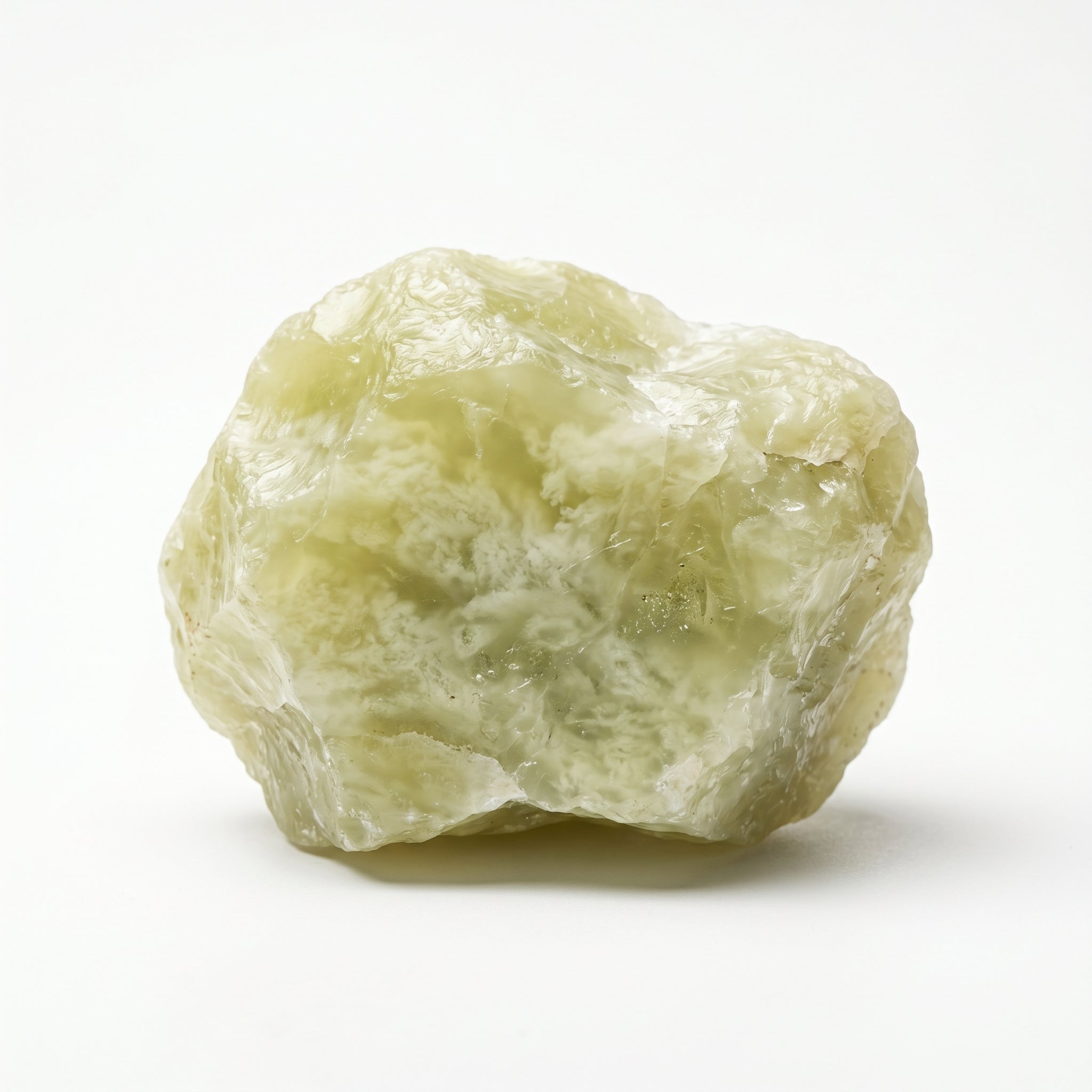
    外观上,绿岫玉有区别于翡翠和和田玉的特征:它的光泽是油脂光泽而不是玻璃光泽,整体颜色温润,从嫩黄绿到深翠绿都有。部分岫玉内部有黑色磁铁矿包裹体,产生天然的纹路变化。主要产地包括韩国、阿富汗、美国、加拿大、新西兰等。

    常见仿冒和混淆品:翡翠(硬玉 NaAlSi₂O₆,Mohs 6.5-7,硬度明显更高,玻璃光泽是主要区分依据);软玉/和田玉(透闪石,Mohs 6-6.5,同样油脂光泽但硬度和成分不同);染色大理石(Mohs 3,CaCO₃,颜色不均匀,酸腐蚀测试可鉴别)。

    五行属性和用神角色

    五行(Wu Xing) 体系里,绿岫玉属木。木对应生长、稳定向上的推动力和持续输出的韧性,绿色调的矿石在五行体系里归木属。

    Mio&Gem 工具里,绿岫玉对应 wealth 意图下的木属性主石。当 BaZi(Eight Characters,八字) 算法判定你的 用神(Yong Shen) 是木,且你当前 INTENT 选的是 wealth,工具推荐的主石就是绿岫玉。

    同为木属性,绿岫玉(wealth)和 绿萤石(general / love)的五行方向相同,INTENT 对应的场景不同。wealth 意图下工具推绿岫玉,对应的是用神为木的命盘在重要场合里”稳得住、撑得住”的状态需求,木元素的持续韧性,在 wealth 场景里对应的是中长期的稳定在场感。

    用神不是简单的”哪个五行占比低就补哪个”,是综合日主旺衰、月令能量、五行相生相克之后的整体判断。具体逻辑见 用神是什么

    适合什么命盘的人戴

    绿岫玉的核心适配条件:用神为木,INTENT 为 wealth。

    用神为木,意味着命盘整体结构里,木是最需要补的那股能量。木行人是什么 那篇有具体的状态描述:木元素偏低时,持续把事情推进的韧性供给不足,在重要场合里容易感觉撑不住或耗完得太快。wealth 意图下的绿岫玉,对应的正是”在关键场合稳住、不提前散”的方向。

    如果你命盘里木已经偏强,用神不是木,工具不会推绿岫玉。工具根据完整命盘判断用神,用神是什么,wealth 场景下主石就是对应元素的水晶。跑一次 BaZi 测算 就能知道你当前的用神和 wealth 场景下对应的主石是什么。

    搭配和冲突

    绿岫玉是木属性,和水属性水晶搭配的逻辑是水生木。水属性水晶给木持续供给,蓝虎眼(水属性,wealth 意图)是 wealth 场景下的叠戴选项,两颗都在 wealth 方向上,五行上也是生助关系。

    跟金属性水晶(白水晶、白幽灵、白月光)同戴时,金克木,用神为木的命盘同时戴大量金属性水晶,方向上有冲突。如果对自己命盘喜忌不确定,建议先完成 BaZi 测算,再决定搭配。

    土属性水晶(黄水晶、黄塔金、橙月光)和绿岫玉是木克土的关系,方向上有冲突,不适合搭配。

    绿萤石(木属性,general / love 意图)和绿岫玉五行方向相同,同戴不产生冲突,选哪一颗取决于当前的 INTENT 需求。五行生克关系详见 五行相生相克

    怎么选、怎么戴

    选绿岫玉时,颜色的均匀度和油脂光泽是主要参考。绿岫玉的油脂光泽是区别于翡翠的重要特征,真正的油脂感摸上去温润,不是玻璃那种冰凉硬光。颜色越均匀、油润感越强,通常品质越稳定。内部有天然黑色包裹体纹路是正常的,不是问题。

    最关键的注意点:绿岫玉莫氏硬度 2.5-5.5,是这 14 颗水晶里硬度偏低的类型之一。它比绿萤石的上限还软,比石英系水晶(硬度 7)软很多。选购手链款时优先考虑珠型完整、打磨均匀的,这类款式受力更均匀,不容易在佩戴中出现裂损。存放时单独用软袋装,不要和硬度更高的石头混放,也不要和金属饰品叠放。

    Mio&Gem 木属性手链 里有绿岫玉款式,可以对照看具体的颜色和光泽呈现。你当前的用神是不是木,在 BaZi 测算 跑一次能确认。

    FAQ

    绿岫玉和翡翠有什么区别?

    主要区别在硬度和光泽。翡翠(硬玉)莫氏硬度 6.5-7,玻璃光泽;绿岫玉莫氏硬度 2.5-5.5,油脂光泽。摸起来,翡翠有明显的冰凉感和硬光,绿岫玉更温润。价格上翡翠通常也高很多。

    绿岫玉和软玉(和田玉)是一回事吗?

    不是。软玉(和田玉)的矿物成分是透闪石(Ca₂Mg₅Si₈O₂₂(OH)₂),Mohs 6-6.5,化学式和绿岫玉完全不同。两者都有油脂光泽,但软玉硬度更高,颜色更白绿,价格通常也差很多。

    wealth 场景为什么选绿岫玉而不是绿萤石?

    工具的 INTENT 系统里,绿萤石覆盖 general 和 love 两种意图,wealth 意图下的木元素主石是绿岫玉。两颗都是木属性,五行方向相同,Mio&Gem 根据 INTENT 场景分配不同的主石。如果你当前选的是 wealth,工具推绿岫玉;如果选 general 或 love,工具推绿萤石。

    绿岫玉这么软,戴手链会不会很快磨坏?

    日常正常佩戴一般没问题,主要避免碰撞和硬物摩擦。如果你的日常活动涉及重体力或手腕接触硬面,可以在重体力时段摘下。正常办公、日常外出佩戴没有额外风险,注意存放时单独装袋就好。


    你的用神是不是木,在 BaZi 测算 跑一次能看到。如果 wealth 场景工具推了绿岫玉,说明木是你当前命盘最需要补的方向。