Blog

  • Xiu Jade Meaning: Wood Element Crystal

    Xiu Jade Meaning: Wood Element Crystal

    What Is Xiu Jade

    Xiu jade is a serpentine-group mineral (Mg₃Si₂O₅(OH)₄), with a Mohs hardness of 2.5-5.5. In the Wu Xing (五行) Five Elements system, it belongs to Wood. When BaZi (Eight Characters, 八字) identifies your Yong Shen (用神) as Wood, Xiu jade is the recommended main stone for a wealth intent.

    You’ve probably seen Xiu jade and found it appealing. But few sources explain what it represents in the BaZi Five Elements system, which birth charts it suits, or which crystals create directional conflicts with it. This piece breaks it down from both a mineralogy angle and a BaZi framework angle.

    Contents

    • Mineral basics
    • Five Elements role and Yong Shen
    • Which BaZi charts benefit
    • Pairing and conflicts
    • How to choose and wear

    Mineral Basics

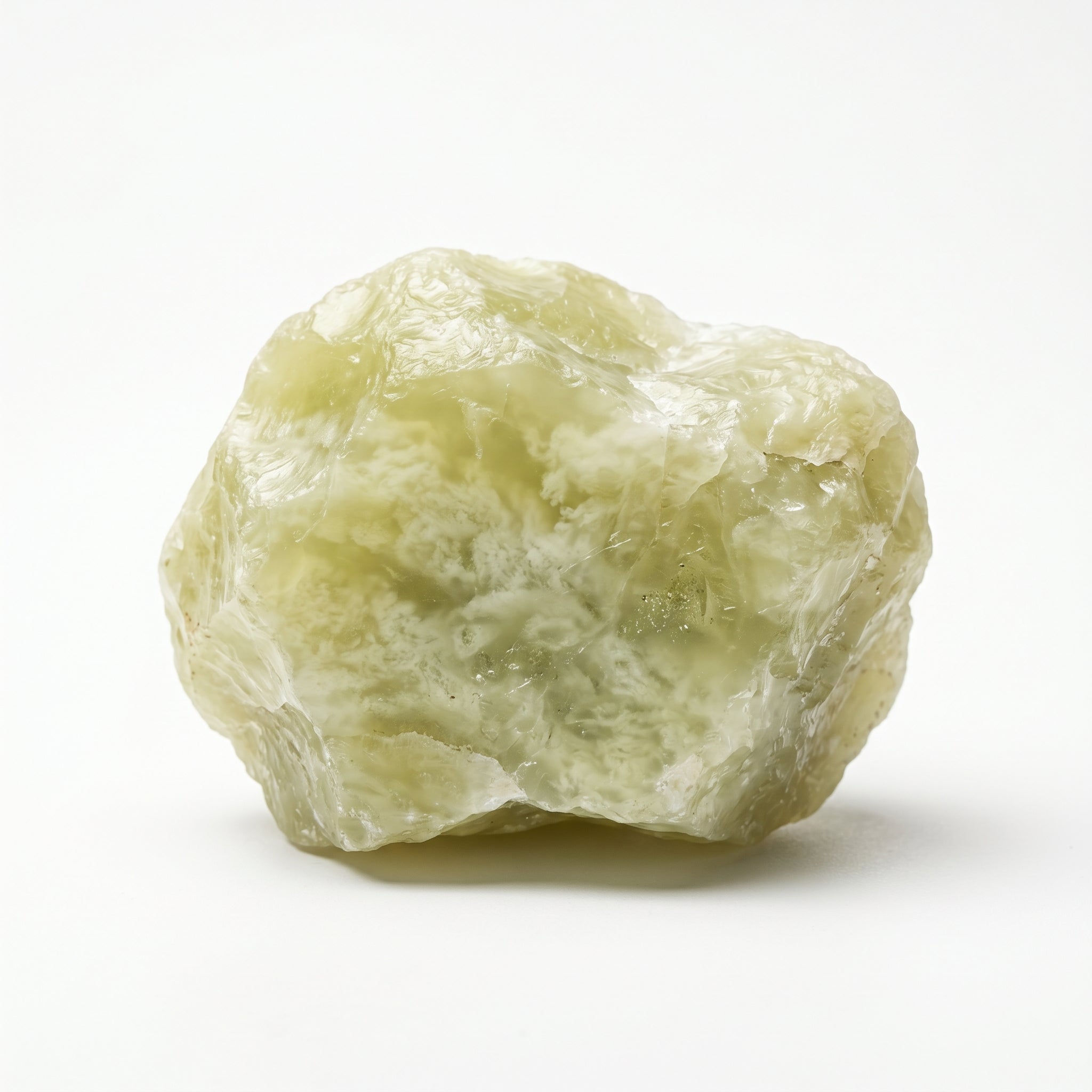
    Xiu jade belongs to the serpentine mineral group, primarily composed of antigorite or lizardite, two closely related sheet silicate minerals. Chemical formula: Mg₃Si₂O₅(OH)₄, monoclinic crystal system (some sub-varieties triclinic). Mohs hardness ranges from 2.5 to 5.5, varying depending on the specific mineral composition and specimen. This wide hardness range is a distinctive property of serpentine group minerals, and it has practical implications for how Xiu jade should be worn and stored.

    Serpentine jade has a documented history as a jade carving material across East Asia and other regions. Ancient East Asian jade carving traditions included serpentine jade as one of the earliest carving materials, alongside other jade varieties. Serpentine jade carving traditions also developed independently in the Korean peninsula and among various North American indigenous cultures, each arriving at similar uses for the material through separate paths.

    Visually, Xiu jade has a characteristic waxy-to-greasy luster that distinguishes it from jadeite (which has a glassy luster) and nephrite (which is typically denser and less translucent). Colors range from pale yellow-green to deep emerald-like green. Some specimens contain black magnetite inclusions that create natural pattern variation through the stone. Major producing regions include South Korea, Afghanistan, the United States, Canada, and New Zealand.

    Common confusions and imitations: jadeite (NaAlSi₂O₆, Mohs 6.5-7, significantly harder, glassy luster); nephrite/Hetian jade (tremolite, Ca₂Mg₅Si₈O₂₂(OH)₂, Mohs 6-6.5, also waxy luster but different composition); dyed marble (Mohs 3, CaCO₃, uneven color distribution). The most reliable distinguishing factor for Xiu jade versus jadeite is hardness and luster: Xiu jade’s softness and waxy surface feel are noticeably different from jadeite’s harder, cooler glassy surface.

    Five Elements Role and Yong Shen

    In the Wu Xing (五行) Five Elements system, Xiu jade belongs to Wood. Wood corresponds to growth, upward momentum, and the sustained drive to keep pushing through over time. It maps to the liver, spring, and the east direction in traditional Chinese frameworks. Green-toned minerals are attributed to Wood in the Five Elements system.

    In the Mio&Gem tool, Xiu jade is the main stone for Wood element with a wealth intent. When the BaZi algorithm determines your Yong Shen (用神) is Wood and your selected INTENT is wealth, Xiu jade is the recommended stone.

    Both Xiu jade (wealth) and green fluorite (general and love) are Wood-element stones. The elemental direction is the same; the difference is INTENT context. Xiu jade maps to wealth scenarios because Wood’s quality of steady, durable output corresponds well to the wealth intent’s orientation toward sustained presence and staying power in high-stakes situations.

    Yong Shen is not simply “the element with the lowest percentage.” It is a composite judgment based on Day Master strength, monthly command energy, and generation-restraint dynamics. The full logic is in What Is Yong Shen.

    Which BaZi Charts Benefit

    The core condition for Xiu jade: Yong Shen is Wood, INTENT is wealth.

    Yong Shen being Wood means the chart’s overall structure identifies Wood as the energy most needed. The What Wood Element Means post describes the common experience for people with low Wood energy: sufficient starting momentum but difficulty sustaining effort through middle stages, especially when feedback or visible results are slow to arrive. In wealth scenarios, this pattern shows up as difficulty maintaining presence and composure in extended high-stakes situations. Xiu jade’s role in the wealth intent addresses exactly that quality: steadiness over duration.

    If Wood is already strong in your chart, the Yong Shen won’t be Wood, and the tool won’t recommend Xiu jade. The tool evaluates the full chart; the main stone follows the Yong Shen. Run a BaZi reading to see your current Yong Shen and what the wealth-intent stone is for your specific chart.

    Pairing and Conflicts

    Xiu jade is Wood. Pairing with Water-element crystals follows Water-feeds-Wood logic. Blue tiger’s eye (Water element, wealth intent) is a natural wealth-scenario layering companion: both stones are in the wealth direction, and the elemental relationship is generative.

    Pairing with Metal-element crystals (clear quartz, white phantom quartz, white moonstone) brings Metal-restrains-Wood dynamics. If your Yong Shen is Wood, carrying significant Metal-element energy in the same set creates a directional conflict. Complete a BaZi reading if you’re unsure of your chart’s avoidances before deciding on combinations.

    Earth-element crystals (citrine, golden topaz, peach moonstone) sit in a Wood-restrains-Earth relationship with Xiu jade: Wood controls Earth in the restraint cycle. This creates a conflict direction and makes Earth-element crystals a poor pairing for Xiu jade.

    Green fluorite (Wood element, general and love intents) shares Xiu jade’s elemental direction. Wearing both creates no elemental conflict; which one you choose depends on your current INTENT. For the full picture of elemental interactions, see Wu Xing Generation and Restraint.

    How to Choose and Wear

    When selecting Xiu jade, color evenness and the quality of the waxy luster are the main reference points. The greasy-to-waxy surface quality is a defining characteristic: it should feel warm and smooth rather than slippery or glassy. Even color distribution throughout the stone typically indicates better material quality. Black inclusions (magnetite) are natural and not a defect.

    The most important practical note: Xiu jade’s Mohs hardness of 2.5-5.5 puts it among the softer stones in the Mio&Gem crystal lineup. This is softer than green fluorite’s maximum (4) and significantly softer than quartz-family stones (7). Specific precautions: choose bracelet styles where beads are evenly polished and well-rounded, these distribute wear forces more evenly; store Xiu jade separately in a soft pouch away from harder stones and metal jewelry; avoid wearing it during activities where the wrist is likely to make hard contact with surfaces. For normal daily wear at a desk or in social settings, these precautions are straightforward to follow.

    To confirm whether Wood is your Yong Shen, run a BaZi reading. If the reading returns Xiu jade, check the wood element collection to see available styles.

    FAQ

    What’s the difference between Xiu jade and jadeite?

    The key differences are hardness and luster. Jadeite has a Mohs hardness of 6.5-7 and a glassy, cool luster. Xiu jade has a Mohs hardness of 2.5-5.5 and a waxy, warmer luster. You can feel the difference by touch: jadeite feels harder and cooler; Xiu jade feels softer and more matte. Jadeite is also significantly more expensive.

    Is Xiu jade the same as nephrite or Hetian jade?

    No. Nephrite (Hetian jade) is composed of tremolite (Ca₂Mg₅Si₈O₂₂(OH)₂), with a Mohs hardness of 6-6.5. Xiu jade is serpentine-group (Mg₃Si₂O₅(OH)₄), with a hardness of 2.5-5.5. Both have waxy luster, which is a common source of confusion, but the mineral composition and hardness are different. Nephrite is harder and denser.

    Why is Xiu jade recommended for wealth intent rather than green fluorite?

    In the Mio&Gem INTENT system, green fluorite covers general and love intents for the Wood element; Xiu jade covers wealth. Both are Wood-element stones. The tool assigns which stone to show based on your selected INTENT. If you choose wealth, the tool shows Xiu jade; if you choose general or love, it shows green fluorite.

    Xiu jade is soft, will it wear out quickly as a bracelet?

    Normal daily wear in typical office and social settings is fine with appropriate precautions: store separately in a soft pouch, avoid layering with harder stones on the same wrist, and remove it for heavy physical activity. The softer hardness means Xiu jade needs a bit more attention than quartz-family stones, but it’s not fragile in the sense of falling apart under normal use conditions.


    To find out whether Wood is your Yong Shen, run a BaZi reading. If the tool returns Xiu jade under wealth intent, Wood is the direction your chart needs most right now.
  • 白幽灵是什么:五行含义与用法

    白幽灵是什么水晶

    白幽灵是含层叠白色幻影包裹体的石英(SiO₂),莫氏硬度 7,在 五行(Wu Xing) 体系里属金。BaZi(Eight Characters,八字) 算法判定 用神(Yong Shen) 为金时,wealth 意图下的主石推荐是白幽灵。

    你或许见过白幽灵,觉得它好看。但很少有人告诉你它在 BaZi 五行体系里具体代表什么、适合什么命盘的人戴、跟哪些水晶搭配会产生冲突。这一篇从矿物学和 BaZi 框架两个角度拆给你看。

    目录

    • 矿物基础
    • 五行属性和用神角色
    • 适合什么命盘的人戴
    • 搭配和冲突
    • 怎么选、怎么戴

    矿物基础

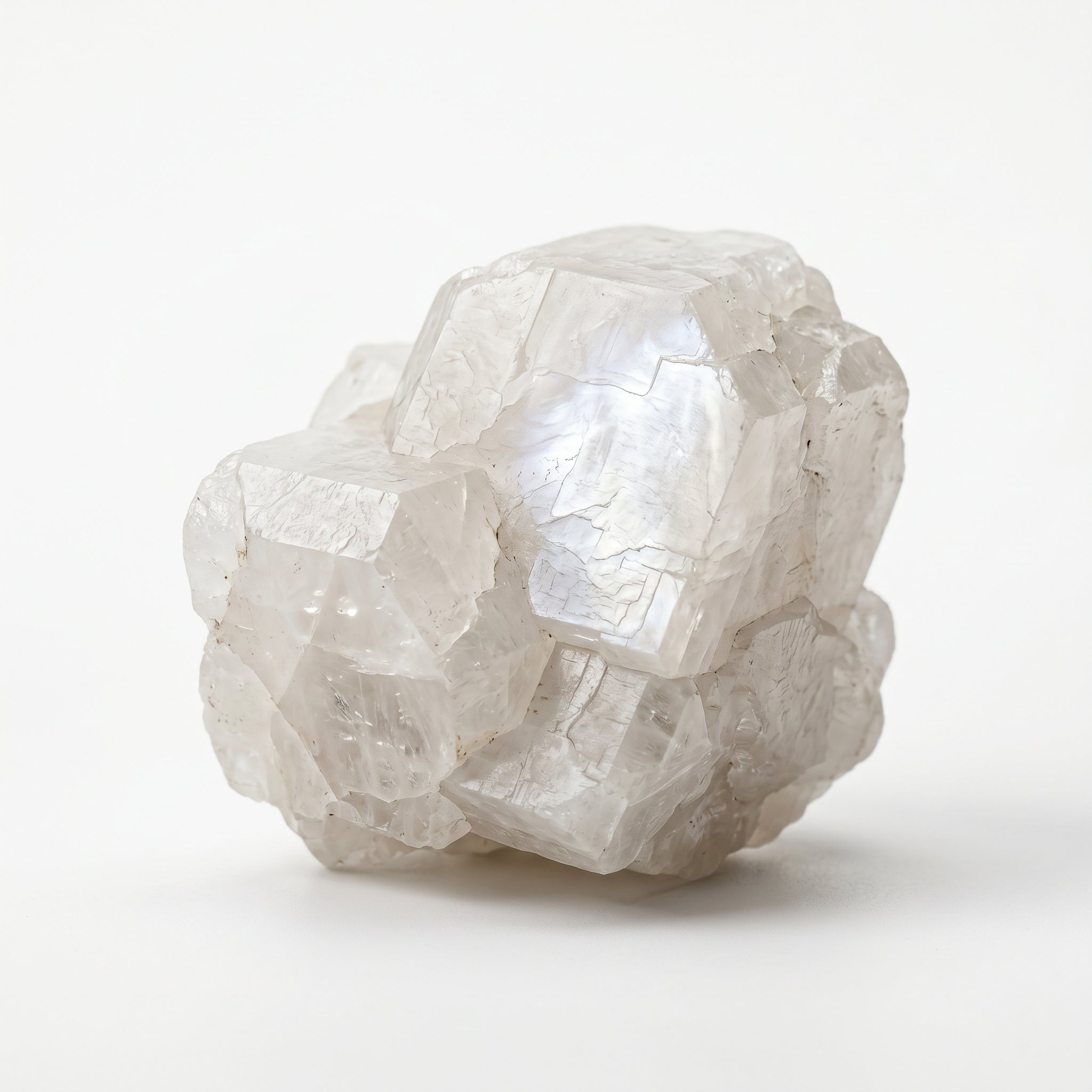
    白幽灵英文名 White Phantom Quartz,是幻影水晶(Phantom Quartz)的白色变体。矿物学上,它是石英族矿物(SiO₂),化学式和普通白水晶相同,硬度 Mohs 7,三方晶系,折射率 1.544-1.553。白幽灵的核心特征是内部的幻影层(phantom)结构。

    幻影的成因:石英晶体在热液脉中生长时,生长过程会出现间歇性中断。在中断期间,白色矿物沉积在已经形成的石英晶体表面,随后新一轮石英生长在这层白色沉积上继续覆盖,将其包裹在内。重复多次,就形成层层嵌套的白色幻影。每一层幻影对应一次生长停止和重新开始的记录,是晶体生长历史的可见截面。

    白幽灵和其他幻影水晶的分类:绿幽灵(包裹绿色绿泥石)、红幽灵(包裹红色赤铁矿)、白幽灵(包裹白色矿物),都是幻影水晶(Phantom Quartz)的不同颜色变体。幻影水晶作为矿物学现象在 19 世纪的矿物学文献里已有记录,”白幽灵”这个中文名称是现代水晶市场的命名惯例。主要产地包括巴西、马达加斯加、美国等。

    常见混淆和仿冒品:普通白水晶(Clear Quartz,无内部幻影层);含包裹石英(包裹物随机分布,不是层状幻影);玻璃仿冒品(Mohs 5.5,内部无真实幻影结构)。实用鉴别:真品白幽灵的幻影有层次感和空间深度,每层边界清晰;玻璃仿品没有这种内部层叠结构。层数越多、越清晰,品质参考价值越高。

    五行属性和用神角色

    五行(Wu Xing) 体系里,白幽灵属金。金对应精炼、收敛、清晰判断的能量,以及在复杂场合里维持核心定力的能力。无色系含白色内含物的矿石在五行体系里归金属。

    Mio&Gem 工具里,白幽灵是金元素 wealth 意图下的主石。当 BaZi(Eight Characters,八字) 算法判定你的 用神(Yong Shen) 是金,且当前 INTENT 选的是 wealth,工具推荐的主石是白幽灵。金元素下三颗主石各覆盖不同 INTENT:白水晶 对应 general,白幽灵对应 wealth,白月光 对应 love。

    金属性对应 wealth 意图的逻辑:金在五行里是精准和收敛的能量,wealth 场景需要的不是扩散式的发散,而是在关键场合里边界清晰、判断精准、不因外部干扰而失焦。白幽灵在 wealth 意图下,对应的是在高要求场合里保持清醒判断力和内部秩序感的方向。

    用神不是简单的”哪个五行占比低就补哪个”,是综合日主旺衰、月令能量、五行相生相克的整体判断。具体逻辑见 用神是什么

    适合什么命盘的人戴

    白幽灵的核心适配条件:用神为金,INTENT 为 wealth。

    用神为金,意味着命盘整体结构里,金是最需要补的那股能量。金行人是什么 那篇有具体的状态描述:金元素偏低时,在需要边界清晰和精准判断的场合里,定力和清晰度容易不够,在复杂的重要事务里可能出现失焦或摇摆的状态。wealth 意图下的白幽灵,对应的正是在这类场合里维持清晰判断力的方向。

    如果你命盘里金已经偏强,用神不是金,工具不会推白幽灵。工具根据完整命盘判断用神。跑一次 BaZi 测算 就能知道你当前的用神和 wealth 场景下对应的主石是什么。

    搭配和冲突

    白幽灵是金属性,和土属性水晶搭配的逻辑是土生金。黄水晶、黄塔金、橙月光都是土属性水晶,给金提供生助输入,和白幽灵同戴方向上不冲突。

    跟火属性水晶(紫水晶、草莓晶、粉水晶)同戴时,火克金,用神为金的命盘同时戴大量火属性水晶,方向上有冲突。如果对自己命盘喜忌不确定,建议先完成 BaZi 测算 再决定搭配。

    木属性水晶(绿萤石、绿岫玉)和白幽灵是金克木的关系,金木相克,方向上有冲突,用神为金的命盘不适合同戴大量木属性水晶。

    水属性水晶(海蓝宝、蓝虎眼、蓝月光)和白幽灵是金生水的关系,白幽灵在输出端,方向上不冲突,但 wealth 场景的主力仍以金属主石为核心。

    白水晶(金属性,general 意图)和 白月光(金属性,love 意图)与白幽灵五行方向相同,同戴不产生冲突,选哪一颗取决于当前的 INTENT 需求。五行生克关系详见 五行相生相克

    怎么选、怎么戴

    选白幽灵时,幻影的层次感和清晰度是主要参考。好的白幽灵幻影层叠分明,每层边界清晰,在不同角度下可以看到层层嵌套的空间感。幻影层数越多、越规整,通常品质参考价值越高。幻影颜色纯白的品质稳定,略带透明感的也是正常品。从外壳石英的角度看,透明度越高,幻影的视觉层次越突出。

    莫氏硬度 7 让白幽灵在日常手链佩戴上没有额外的硬度风险,正常使用和存放即可。和白水晶一样,白幽灵的化学稳定性很高,不受日常光线、湿度变化的影响。存放时不需要特别防护,避免与硬度更高的宝石(Mohs 8+)在同一袋子里随意摩擦即可。

    Mio&Gem 金属性手链 里有白幽灵款式,可以对照看具体的幻影层次呈现。你当前的用神是不是金,在 BaZi 测算 跑一次能确认。

    FAQ

    白幽灵和白水晶有什么区别?

    矿物成分相同(SiO₂,Mohs 7),区别在内部结构。白水晶是纯净透明的石英;白幽灵内部有层叠的白色幻影,是石英晶体生长停歇时白色矿物沉积形成的记录。五行属性上都属金,INTENT 不同:白幽灵对应 wealth,白水晶对应 general。

    幻影是怎么形成的?

    石英晶体在热液脉中生长时,生长过程会出现间歇性中断。中断期间白色矿物沉积在晶体表面,之后新一轮石英生长覆盖上去,将白色矿物层包裹在内。这个过程重复多次,形成层层嵌套的幻影结构。幻影本质上是晶体生长历史的可见记录。

    wealth 场景为什么选白幽灵而不是白水晶?

    Mio&Gem 的 INTENT 系统里,金元素三颗主石各对应一种意图:白幽灵对应 wealth,白水晶对应 general,白月光对应 love。三颗都是金属性,五行方向相同,工具根据你当前的 INTENT 推荐对应的主石。

    幻影层越多越好吗?

    幻影层数越多,形成过程越复杂,稀有度通常越高。但最终是否喜欢,还是看个人的审美偏好。单层幻影清晰明显的品质也很好,多层幻影叠加的空间感更强。以幻影清晰度和层次感为参考,而不是单纯以层数论优劣。


    你的用神是不是金,在 BaZi 测算 跑一次能看到。如果 wealth 场景工具推了白幽灵,说明金是你当前命盘最需要补的方向。

  • White Phantom Quartz Meaning and Five Elements

    What Is White Phantom Quartz

    White phantom quartz is a variety of silicon dioxide (SiO₂) containing layered white phantom inclusions formed by mineral deposits during crystal growth interruptions. Mohs hardness is 7. In the Wu Xing (五行) Five Elements system, it belongs to Metal. When BaZi (Eight Characters, 八字) identifies your Yong Shen (用神) as Metal, white phantom quartz is the recommended main stone for a wealth intent.

    You’ve probably seen white phantom quartz and found it appealing. But few sources explain what it represents in the BaZi Five Elements system, which birth charts it suits, or which crystals create directional conflicts with it. This piece breaks it down from both a mineralogy angle and a BaZi framework angle.

    Contents

    • Mineral basics
    • Five Elements role and Yong Shen
    • Which BaZi charts benefit
    • Pairing and conflicts
    • How to choose and wear

    Mineral Basics

    White phantom quartz is a variety of phantom quartz (SiO₂), sharing the same chemical formula and hardness as clear quartz. The distinction is internal: white phantom quartz contains one or more layered white phantom structures inside the transparent quartz body. Crystal system: trigonal. Refractive index: 1.544-1.553. Mohs hardness: 7.

    The phantom formation mechanism is one of the more visually distinct processes in crystal growth. During hydrothermal growth in mineral-rich fluids, a quartz crystal’s growth can pause temporarily. During that pause, white minerals deposit as a thin layer on the existing crystal surface. When growth resumes, new quartz grows over the deposited layer, enclosing it inside the crystal. This cycle can repeat multiple times, creating the layered nested phantom structures visible inside the finished stone. Each phantom layer is a preserved record of one pause-and-restart event in the crystal’s formation history.

    Phantom quartz as a mineralogical phenomenon has been documented in scientific literature since the nineteenth century. The designation “white phantom quartz” and its Chinese market equivalent (白幽灵) are more recent naming conventions in the gemstone trade, distinguishing white-phantom specimens from green phantom (green chlorite inclusions) and red phantom (hematite inclusions) varieties. Major producing regions include Brazil and Madagascar.

    Common imitations and confusions: plain clear quartz (no internal phantom layers); included quartz with random mineral distribution (not layered phantoms); glass imitations (Mohs 5.5, no internal layer structure). A practical check: genuine phantom layers have defined boundaries, spatial depth, and a layered three-dimensional quality visible when the stone is rotated under light. Glass imitations have no internal structure of this kind.

    Five Elements Role and Yong Shen

    In the Wu Xing (五行) Five Elements system, white phantom quartz belongs to Metal. Metal corresponds to refinement, clarity, precise judgment, and the capacity to maintain internal order and focus under complex or high-pressure conditions. Colorless and white-toned minerals are attributed to Metal in the Five Elements system.

    In the Mio&Gem tool, white phantom quartz is the main stone for Metal element with a wealth intent. When the BaZi algorithm determines your Yong Shen (用神) is Metal and your selected INTENT is wealth, white phantom quartz is the recommended stone. All three Metal-element stones cover different intents: clear quartz for general, white phantom quartz for wealth, and white moonstone for love.

    The Metal-wealth alignment follows the nature of Metal energy in high-stakes contexts: not expansive output but precision, defined scope, and clarity of judgment under pressure. In wealth scenarios, when Metal energy is low, the pattern often involves difficulty maintaining sharp focus and clear-edged decisions over time. White phantom quartz in the wealth intent addresses that clarity and order directly.

    Yong Shen is not simply “the element with the lowest percentage.” It is a composite judgment based on Day Master strength, monthly command energy, and generation-restraint dynamics. Full logic is in What Is Yong Shen.

    Which BaZi Charts Benefit

    The core condition for white phantom quartz: Yong Shen is Metal, INTENT is wealth.

    Yong Shen being Metal means the chart’s overall structure identifies Metal as the energy most needed. The What Metal Element Means post describes the pattern: when Metal energy is low, the sustained capacity for precise judgment and boundary-maintenance under demanding conditions tends to run thin. In wealth-scenario contexts, this can show up as difficulty staying focused and decisive through extended high-stakes situations. White phantom quartz’s wealth intent addresses that internal order directly.

    If Metal is already strong in your chart, the Yong Shen won’t be Metal, and the tool won’t recommend white phantom quartz. Run a BaZi reading to see your current Yong Shen and what the wealth-intent stone is for your specific chart.

    Pairing and Conflicts

    White phantom quartz is Metal. Pairing with Earth-element crystals follows Earth-feeds-Metal logic. Citrine, golden topaz, and peach moonstone are Earth-element stones that provide generative input to Metal. If your Yong Shen is Metal, Earth is a generative direction and creates no directional conflict.

    Pairing with Fire-element crystals (amethyst, strawberry quartz, rose quartz) brings Fire-restrains-Metal dynamics. If your Yong Shen is Metal, carrying significant Fire-element energy in the same set creates a directional conflict. Complete a BaZi reading if you’re unsure of your chart’s avoidances before deciding on combinations.

    Wood-element crystals (green fluorite, Xiu jade) sit in a Metal-restrains-Wood relationship with white phantom quartz. Metal and Wood are opposing elements in the restraint cycle; if your Yong Shen is Metal, carrying significant Wood-element energy creates a directional conflict.

    Water-element crystals (aquamarine, blue tiger’s eye, blue moonstone) sit in a Metal-feeds-Water relationship with white phantom quartz: white phantom quartz is on the giving side. No directional conflict, but in the wealth scenario the primary focus should remain on Metal-element stones.

    Clear quartz (Metal, general intent) and white moonstone (Metal, love intent) share white phantom quartz’s elemental direction. Wearing them together creates no elemental conflict; which you choose depends on which intent context fits your current situation. For the full picture of elemental interactions, see Wu Xing Generation and Restraint.

    How to Choose and Wear

    When selecting white phantom quartz, the quality of the phantom layers is the primary reference. High-quality specimens have clearly defined phantom boundaries with visible spatial depth, so the nested layers are distinctly readable when the stone is rotated under light. More phantom layers generally indicate a more complex formation history; each additional layer represents one more growth pause-and-restart cycle. Phantom color should be clean white; the surrounding quartz body should be transparent enough that the internal phantom structure is visible.

    Mohs hardness 7 places white phantom quartz in the standard quartz hardness range, meaning daily bracelet wear does not require special hardness precautions. White phantom quartz is chemically stable under normal environmental conditions. Storage in a pouch away from harder gemstones (Mohs 8 and above) is sufficient to prevent surface scratching over time.

    To confirm whether Metal is your Yong Shen, run a BaZi reading. If the reading returns white phantom quartz, check the metal element collection to see available styles.

    FAQ

    What’s the difference between white phantom quartz and clear quartz?

    Same mineral (SiO₂, Mohs 7), different internal structure. Clear quartz is transparent without internal layering. White phantom quartz contains one or more white phantom layers inside, each representing a pause in crystal growth followed by white mineral deposition and resumed quartz growth. Both belong to Metal in the Five Elements system; the difference is intent: white phantom quartz for wealth, clear quartz for general.

    How are the phantom layers formed?

    During hydrothermal growth, quartz crystal development pauses temporarily. White minerals deposit as a thin layer on the paused crystal surface. When growth resumes, new quartz grows over that layer and encases it. Repeated cycles produce multiple nested phantom layers. Each layer is a preserved cross-section of a growth pause event.

    Why is white phantom quartz the wealth stone rather than clear quartz?

    In the Mio&Gem INTENT system, each Metal-element stone maps to one intent: white phantom quartz for wealth, clear quartz for general, white moonstone for love. All three are Metal-element stones with the same elemental direction. The tool assigns which stone to show based on your selected INTENT.

    Does more phantom layers mean better quality?

    More layers indicate a more complex formation history and are generally rarer. But quality also depends on how clearly defined each layer boundary is and how well they’re visible through the transparent quartz body. A single clearly defined phantom can be as visually striking as multiple less-distinct layers. Clarity and definition of the phantom structure, rather than layer count alone, is the more meaningful quality reference.


    To find out whether Metal is your Yong Shen, run a BaZi reading. If the tool returns white phantom quartz under wealth intent, Metal is the direction your chart needs most right now.
  • 白月光是什么:水元素水晶

    白月光是什么:水元素水晶

    白月光是什么水晶

    白月光是正长石族矿物(KAlSi₃O₈),莫氏硬度 6,内部微观分层结构散射光线,产生银白色月晕光效(adularescence),在 五行(Wu Xing) 体系里属金。BaZi(Eight Characters,八字) 算法判定 用神(Yong Shen) 为金时,love 意图下的主石推荐是白月光。

    你或许见过白月光,觉得它好看。但很少有人告诉你它在 BaZi 五行体系里具体代表什么、适合什么命盘的人戴、跟哪些水晶搭配会产生冲突。这一篇从矿物学和 BaZi 框架两个角度拆给你看。

    目录

    • 矿物基础
    • 五行属性和用神角色
    • 适合什么命盘的人戴
    • 搭配和冲突
    • 怎么选、怎么戴

    矿物基础

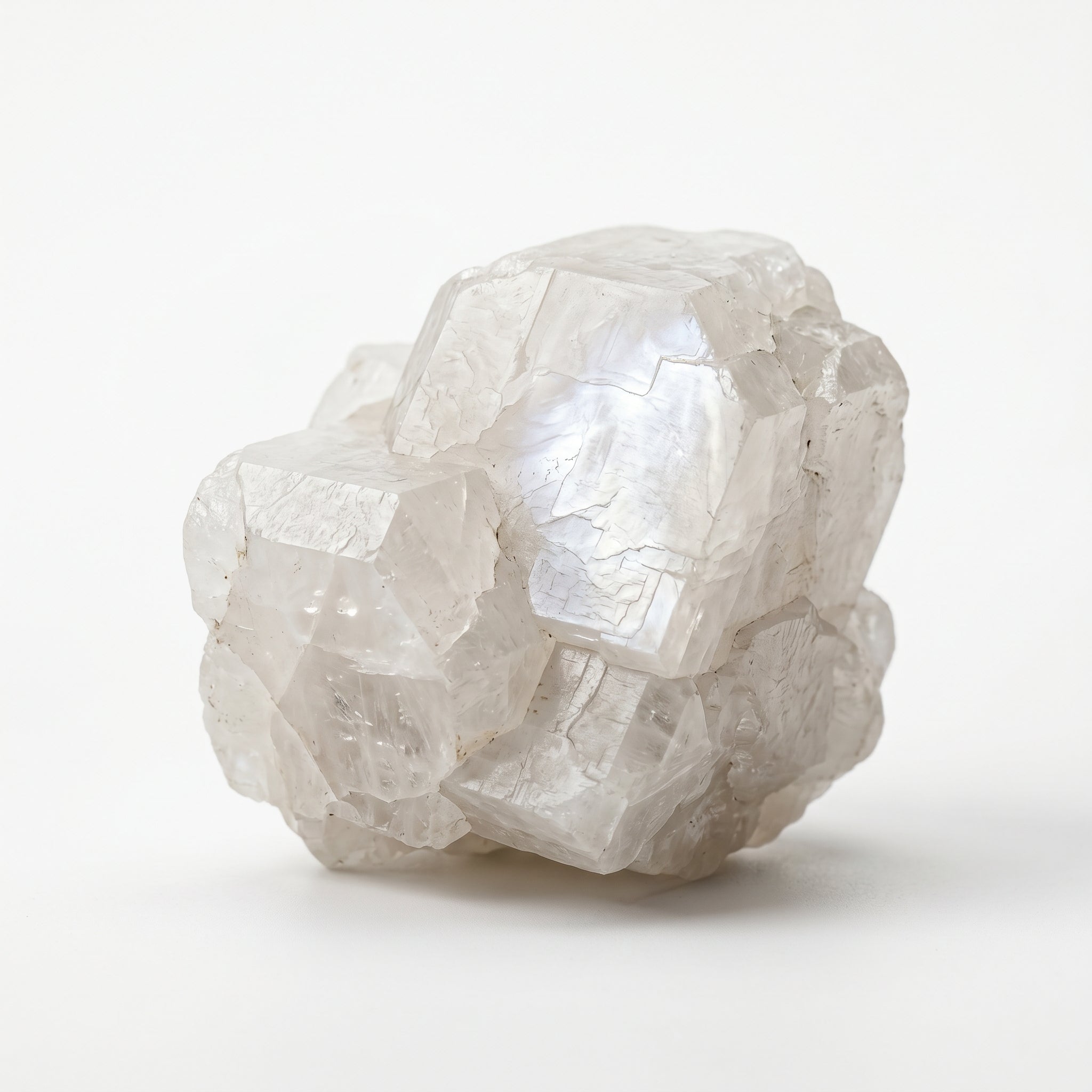
    白月光英文名 White Moonstone,属长石族矿物,化学式 KAlSi₃O₈(正长石/冰长石),与 蓝月光橙月光 同属月光石(Moonstone)。三者矿物成分相同,月晕颜色不同:白月光的月晕是银白至淡蓝色,底色为奶白至灰白,整体比蓝月光更内敛、比橙月光更冷调。

    月晕光效(adularescence)的成因与蓝月光相同:正长石与钠长石约 100-200 纳米厚度的薄层交替叠层,光线穿透时薄层界面散射特定波长,产生浮现在石头表层以下的光晕。白月光的薄层厚度略厚于蓝月光,散射的波长偏向更长的银白段,所以光晕呈银白而非蓝色。

    矿物参数:莫氏硬度 6,单斜晶系,折射率 1.518-1.526,半透明。主要产地包括斯里兰卡、印度、缅甸、马达加斯加等。天然月光石常见蜈蚣纹(centipede inclusions)内含物,是长石结晶生长过程中的自然特征,不影响品质判断。

    古罗马博物学家普林尼《自然史》里提到月光石颜色会随月相变化,是现存较早将月光石与月亮关联的西方文字记录。新艺术运动时期(约 1890-1910 年),月光石是珠宝设计标志性材料,René Lalique 和 Louis Comfort Tiffany 的设计中均有使用。常见混淆和仿冒品:拉长石(Labradorite,光晕多色彩,成分为斜长石);蛋白石(Opal,光效为整体多色);玻璃仿冒品(Mohs 5.5,光效是表面涂层,没有从内部浮现的月晕感)。

    五行属性和用神角色

    五行(Wu Xing) 体系里,白月光属金。金对应收敛、清晰、边界感,以及在感情关系里不轻易因外部干扰而失去自我的清醒质地。银白色系矿石在五行体系里归金属。

    Mio&Gem 工具里,白月光是金元素 love 意图下的主石。当 BaZi(Eight Characters,八字) 算法判定你的 用神(Yong Shen) 是金,且当前 INTENT 选的是 love,工具推荐的主石是白月光。金元素下三颗主石各覆盖不同 INTENT:白水晶 对应 general,白幽灵 对应 wealth,白月光对应 love。

    金属性对应 love 意图的逻辑:金在五行里是收敛和清醒的能量,love 意图下白月光对应的不是给予的热情,而是在感情关系里”能清楚知道自己是谁、需要什么,不轻易被关系拉扯到失去边界”的定力。

    用神不是简单的”哪个五行占比低就补哪个”,是综合日主旺衰、月令能量、五行相生相克的整体判断。具体逻辑见 用神是什么

    适合什么命盘的人戴

    白月光的核心适配条件:用神为金,INTENT 为 love。

    用神为金,意味着命盘整体结构里,金是最需要补的那股能量。金行人是什么 那篇有具体的状态描述:金元素偏低时,在感情关系里保持边界感和清醒自我的能力容易不够,容易出现容易被关系定义、难以清晰表达自己需求的状态。love 意图下的白月光,对应的是补充金元素里”清醒、有边界”的方向,在关系里有稳定的自我感知。

    在 love 意图的搭配方向上,橙月光(土属性,love 意图)是土生金的方向,土属性给金提供生助,两者都在 love 方向上,同戴不产生冲突。

    如果你命盘里金已经偏强,用神不是金,工具不会推白月光。跑一次 BaZi 测算 就能知道你当前的用神和 love 场景下对应的主石是什么。

    搭配和冲突

    白月光是金属性,和土属性水晶搭配的逻辑是土生金。黄水晶、黄塔金、橙月光都是土属性水晶,给金提供生助输入,和白月光同戴方向上不冲突。love 意图的橙月光和白月光都在 love 方向上,搭配尤为自然。

    跟火属性水晶(紫水晶、草莓晶、粉水晶)同戴时,火克金,用神为金的命盘同时戴大量火属性水晶,方向上有冲突。如果对自己命盘喜忌不确定,建议先完成 BaZi 测算 再决定搭配。

    木属性水晶(绿萤石、绿岫玉)和白月光是金克木的关系,金木相克,方向上有冲突,用神为金的命盘不适合同戴大量木属性水晶。

    水属性水晶(海蓝宝、蓝虎眼、蓝月光)和白月光是金生水的关系,白月光在输出端,方向上不冲突。注意月光石族的三个品种五行属性不同:白月光是金属性,蓝月光是水属性,橙月光是土属性。三者矿物成分相同(KAlSi₃O₈),但在 Mio&Gem 系统里五行归属和用神方向各异。五行上白月光(金)与蓝月光(水)是金生水的关系。

    白水晶(金属性,general 意图)和 白幽灵(金属性,wealth 意图)与白月光五行方向相同,同戴不产生冲突。五行生克关系详见 五行相生相克

    怎么选、怎么戴

    选白月光时,月晕的质量和银白色的纯净度是主要参考。好的白月光月晕浮在石头表层以下,银白光晕有明显的纵深感,转动时随角度自然流动。底色越奶白通透,月晕对比度越高。有蜈蚣纹内含物是月光石的天然特征,不影响品质判断。

    莫氏硬度 6 低于石英系水晶(硬度 7),比石英族更容易被划伤,碰撞后也更容易产生裂损。佩戴时注意:避免与硬度更高的手链或金属饰品在同一只手腕上反复摩擦,存放时单独用软袋装,重体力活动时建议摘下。正常办公和日常社交场合佩戴没有额外风险。

    你当前的用神是不是金,在 BaZi 测算 跑一次能确认。如果 love 场景工具推了白月光,可以在 Mio&Gem 金属性手链 里对照看款式。

    FAQ

    白月光和蓝月光有什么区别?

    两者都是月光石(正长石族,KAlSi₃O₈),月晕颜色不同。白月光月晕为银白色,底色奶白;蓝月光月晕为蓝色,底色更透白。五行属性上,Mio&Gem 工具里白月光属金,蓝月光属水,属性不同,适合不同用神方向的命盘。

    白月光和橙月光是一样的吗?

    矿物成分相同,颜色和五行属性不同。白月光月晕银白,属金;橙月光月晕橙黄,属土。两者都是月光石,但适合不同用神的命盘,INTENT 也不同(白月光和橙月光都覆盖 love,但针对的是不同元素的用神)。

    love 场景为什么选白月光而不是橙月光?

    橙月光是土属性的 love 意图主石,适合用神为土的命盘;白月光是金属性的 love 意图主石,适合用神为金的命盘。两颗都覆盖 love 意图,但主石的元素属性需要匹配命盘用神方向,工具根据你的完整命盘判断推哪一颗。

    白月光和白水晶哪个更适合日常佩戴?

    从硬度角度,白水晶(Mohs 7)比白月光(Mohs 6)更耐划伤,日常佩戴的维护需求更低。五行属性和 INTENT 角度,两者都属金,INTENT 不同:白月光对应 love,白水晶对应 general。选哪一颗,主要根据工具推荐的 INTENT 场景决定。


    你的用神是不是金,在 BaZi 测算 跑一次能看到。如果 love 场景工具推了白月光,说明金是你当前命盘最需要补的方向。

  • White Moonstone Meaning: Water Element Crystal

    White Moonstone Meaning: Water Element Crystal

    What Is White Moonstone

    White moonstone is a variety of orthoclase feldspar (KAlSi₃O₈) with a Mohs hardness of 6. Its internal microscale layered structure scatters light, producing a silver-white floating glow called adularescence. In the Wu Xing (五行) Five Elements system, it belongs to Metal. When BaZi (Eight Characters, 八字) identifies your Yong Shen (用神) as Metal, white moonstone is the recommended main stone for a love intent.

    Few sources explain what white moonstone represents in the BaZi Five Elements system, which birth charts it suits, or which crystals create directional conflicts with it. This piece covers both the mineralogy and the BaZi framework.

    Contents

    • Mineral basics
    • Five Elements role and Yong Shen
    • Which BaZi charts benefit
    • Pairing and conflicts
    • How to choose and wear

    Mineral Basics

    White moonstone belongs to the feldspar group, chemical formula KAlSi₃O₈ (orthoclase/adularia), the same mineral family as blue moonstone and peach moonstone. All three share the same mineral composition; what differs is the color of the adularescence. White moonstone’s glow is silver-white to faint blue, set against an ivory-white to grey-white body. It sits between blue moonstone (crisper, more luminous body) and peach moonstone (warmer, more saturated) in overall visual tone.

    The adularescence mechanism: alternating thin layers of orthoclase and albite feldspar (roughly 100-200 nanometers thick) scatter specific wavelengths of light, producing a glow that floats just beneath the stone’s surface. In white moonstone, the interlayer thickness is slightly greater than in blue moonstone, shifting the scattered wavelength toward silver-white rather than blue.

    Mineral parameters: Mohs hardness 6, monoclinic crystal system, refractive index 1.518-1.526, translucent. Major producing regions include Sri Lanka, India, Myanmar, and Madagascar. Natural moonstone commonly contains centipede inclusions, a term describing elongated internal features formed during feldspar crystallization. These are a characteristic of natural moonstone and do not affect quality assessment.

    Pliny the Elder in Natural History recorded that moonstone’s color appeared to shift with the lunar cycle, one of the earliest Western accounts linking moonstone to the moon. During the Art Nouveau period (approximately 1890-1910), moonstone was a defining material in jewelry design, used by René Lalique and Louis Comfort Tiffany. Common imitations: labradorite (multi-colored schiller, plagioclase feldspar); opal (full-body play of color); glass imitations (Mohs 5.5, surface coating only, no internal adularescence depth).

    Five Elements Role and Yong Shen

    In the Wu Xing (五行) Five Elements system, white moonstone belongs to Metal. Metal corresponds to refinement, clarity, defined edges, and the capacity to know one’s own position clearly in complex or emotionally demanding situations. Silver-white minerals are attributed to Metal in the Five Elements system.

    In the Mio&Gem tool, white moonstone is the main stone for Metal element with a love intent. When the BaZi algorithm determines your Yong Shen (用神) is Metal and your selected INTENT is love, white moonstone is the recommended stone. All three Metal-element stones cover different intents: clear quartz for general, white phantom quartz for wealth, and white moonstone for love.

    The Metal-love alignment: Metal energy is clarifying and self-defining rather than expansive. In a love context, white moonstone addresses not warmth or emotional output but the capacity to stay grounded in a relationship: knowing what you need and maintaining a stable sense of self without being reshaped by relational pressure. When Metal energy is low, that internal clarity tends to run thin.

    Yong Shen is not simply “the element with the lowest percentage.” It is a composite judgment based on Day Master strength, monthly command energy, and generation-restraint dynamics. Full logic is in What Is Yong Shen.

    Which BaZi Charts Benefit

    The core condition for white moonstone: Yong Shen is Metal, INTENT is love.

    Yong Shen being Metal means the chart’s overall structure identifies Metal as the energy most needed. The What Metal Element Means post covers the pattern: when Metal energy is low, self-awareness, clear personal boundaries, and stable self-definition under relational pressure tend to be where things break down. White moonstone’s love intent addresses that grounding directly.

    Among the love-intent stones, peach moonstone (Earth element, love intent) pairs naturally with white moonstone. Earth feeds Metal in the generation cycle, and both cover the love intent, so wearing them together aligns on both elemental and intent levels.

    If Metal is already strong in your chart, the Yong Shen won’t be Metal, and the tool won’t recommend white moonstone. Run a BaZi reading to see your current Yong Shen and which stone is recommended for your love scenario.

    Pairing and Conflicts

    White moonstone is Metal. Earth-element crystals pair with it through Earth-feeds-Metal logic. Citrine, golden topaz, and peach moonstone are Earth-element stones that provide continuous generative input to Metal. If your Yong Shen is Metal, Earth is a supportive direction and creates no conflict. Peach moonstone, as the Earth-element love-intent stone, is an especially natural companion given the shared love direction.

    Fire-element crystals (amethyst, strawberry quartz, rose quartz) bring Fire-restrains-Metal dynamics. If your Yong Shen is Metal, wearing significant Fire-element energy in the same set creates a directional conflict. Complete a BaZi reading if you’re unsure of your chart’s avoidances before deciding on combinations.

    Wood-element crystals (green fluorite, Xiu jade) sit in a Metal-restrains-Wood relationship with white moonstone. Metal and Wood are opposing elements in the restraint cycle. If your Yong Shen is Metal, combining significant Wood-element energy creates a directional conflict.

    Water-element crystals (aquamarine, blue tiger’s eye, blue moonstone) sit in a Metal-feeds-Water relationship with white moonstone: white moonstone is on the giving side. No directional conflict, though the primary focus in a love scenario should remain on the Metal-element main stone.

    A note on moonstone varieties: white moonstone, blue moonstone, and peach moonstone share the same mineral composition (KAlSi₃O₈) but belong to different Five Elements in the Mio&Gem system. White moonstone is Metal, blue moonstone is Water, peach moonstone is Earth. Same mineral family, different elemental function and Yong Shen direction. For the full picture of elemental interactions, see Wu Xing Generation and Restraint.

    Clear quartz (Metal, general intent) and white phantom quartz (Metal, wealth intent) share white moonstone’s elemental direction. Wearing them together creates no elemental conflict; which stone you focus on depends on which intent context fits your current situation.

    How to Choose and Wear

    When selecting white moonstone, adularescence quality and silver-white purity are the primary references. High-quality specimens show a glow that floats distinctly beneath the surface with visible depth as the stone is rotated, shifting naturally with angle. A cleaner, more ivory-white body produces higher contrast against the glow. Centipede inclusions are a natural moonstone characteristic and are not a quality defect.

    Mohs hardness 6 is below the quartz family (Mohs 7), making white moonstone more susceptible to surface scratching and chipping under impact than quartz-based stones. In daily wear: avoid pairing white moonstone on the same wrist as harder bracelets or metal jewelry that may repeatedly rub against it. Store separately in a soft pouch. Remove before physical labor or high-impact activities. Ordinary desk work and social settings carry no particular risk.

    To confirm whether Metal is your Yong Shen, run a BaZi reading. If the reading returns white moonstone under love intent, check the metal element collection to see available styles.

    FAQ

    What’s the difference between white moonstone and blue moonstone?

    Both are moonstone (orthoclase feldspar, KAlSi₃O₈) and share the same mineral composition. The adularescence color differs: white moonstone’s glow is silver-white; blue moonstone’s glow is blue, typically set against a clearer, more translucent body. In the Five Elements system, white moonstone belongs to Metal and blue moonstone belongs to Water. They suit different Yong Shen directions and are not interchangeable within the Mio&Gem tool.

    Is white moonstone the same as peach moonstone?

    Same mineral composition, different color and Five Elements attribution. White moonstone has a silver-white glow and belongs to Metal. Peach moonstone has an orange-yellow glow and belongs to Earth. Both cover the love intent but suit different Yong Shen directions: white moonstone for Metal charts, peach moonstone for Earth charts. The tool selects which to recommend based on your complete chart.

    Why does love intent use white moonstone rather than peach moonstone?

    Both cover love intent, but each stone’s elemental attribution must match the chart’s Yong Shen direction: white moonstone for Metal charts, peach moonstone for Earth charts. The tool selects which to recommend from your full BaZi reading.

    White moonstone vs. white phantom quartz: what’s the difference for daily wear?

    Different mineral families. White phantom quartz is quartz (SiO₂, Mohs 7), harder and more scratch-resistant. White moonstone is feldspar (KAlSi₃O₈, Mohs 6), softer and needing more care in daily wear. Both are Metal in the Five Elements system; intent differs: white moonstone for love, white phantom quartz for wealth. Choose based on your INTENT context.


    To find out whether Metal is your Yong Shen, run a BaZi reading. If the tool returns white moonstone under love intent, Metal is the direction your chart needs most right now.
  • Which hand to wear a crystal bracelet on?

    The traditional answer for which hand to wear a crystal bracelet is the left, because in Chinese tradition the left side receives energy and the right side releases it. In practice, the choice of stone matters more than the choice of wrist, and comfort decides the rest.

    Which hand to wear a crystal bracelet on is the question every new crystal owner asks, usually while standing with the bracelet already half on. The short answer fits in a sentence: tradition says left. The useful answer takes a page, because the tradition has more nuance than the one-liner, and because the wrist is honestly the smaller half of the decision.

    In this guide:

    Which hand to wear a crystal bracelet: the short answer

    Wear it on the left hand if you follow the traditional rule, and on whichever wrist is comfortable if you don’t. That is the whole answer for most people, most stones, most days.

    The traditional reasoning, in one line: the left side is the receiving side, so a stone worn to draw something toward you (calm, warmth, steadiness) goes on the left. The right side is the releasing side, associated with letting go and giving out. Neither is a law of physics; both are a very old habit of thought that many wearers still find meaningful, in the same way some people still say a toast before drinking.

    If you are left-handed, or you wear a watch on your left wrist, or the bracelet simply sits better on the right: wear it on the right. No tradition is served by a bracelet that annoys you into a drawer.

    Where does the left-right rule come from?

    The left-receives, right-releases rule comes from classical Chinese ideas about the body’s energy flow, in which the left side is the intake side and the right side is the outflow side. In that frame, you wear a stone on the left when you want to take its quality in, and on the right when you want to discharge something you are done carrying.

    Worth saying plainly: this is a traditional view, not a measurable mechanism, and different traditions disagree. Some folk practices reverse the rule for specific stones; others assign wrists by gender; others ignore wrists entirely and care about which day you first wear the piece. When rules multiply like this, it usually means the honest core is smaller than the rulebook: wearing the stone with intention is the part every version agrees on.

    Mio&Gem’s own view follows from how our pairing works. We put the precision where it can actually be calculated, in which stone your chart needs, and treat the wrist as yours to choose. A calculated stone on the “wrong” wrist beats a random stone on the correct one, every day of the week.

    Does the wrist matter more than the stone?

    No. The stone is the decision with a method behind it; the wrist is a preference. If you have limited attention for this, spend it in this order:

    1. The element. Which of the five elements your chart needs is calculable from your birth date, time, and place. The BaZi calculator does it in about two minutes, and the logic is explained in the BaZi crystal bracelet guide. This is the step where getting it right actually means something.
    2. The stone. Your paired element plus your intention (everyday, career, or love) points to one specific crystal in the pairing table.
    3. The fit. A bracelet that is too tight gets left at home; too loose and it knocks on every desk edge. Measuring takes a minute; our sizing guide shows how.
    4. The wrist. Last, and freely yours. Left if the tradition speaks to you, right if your life argues for it.

    Notice what this ordering does to the worry behind the question. If the wrist were the make-or-break step, wearing a bracelet would be a daily test you could fail. It isn’t. Once the stone is right, both wrists are right.

    Practical reasons to pick one wrist

    Beyond tradition, the wrist decision is mostly about protecting the bracelet and your own comfort:

    • Non-dominant hand wins by default. Your dominant hand writes, chops, lifts, and knocks against ten surfaces an hour. A bracelet on the non-dominant wrist collects fewer hits. For most people this conveniently agrees with the left-hand tradition.
    • Hardness decides how much this matters. Crystals vary in scratch resistance, measured on the Mohs scale. Quartz stones like amethyst, rose quartz, and clear quartz sit at 7 and shrug off daily contact. Aquamarine is harder still at 7.5 to 8. Moonstones are feldspar at 6, and green fluorite is a soft 4: these two deserve the calmer wrist and a little distance from metal watch bands.
    • Watches and stacking. A metal watch case ranks above most crystals in practice and will win any long-term rubbing contest. Give a soft stone its own wrist, or stack it only with softer company.
    • Desk workers’ note. If you type all day, the wrist that rests on the laptop edge is the rough one; the bracelet prefers the other side, whichever that is.

    When should you take it off?

    Take a crystal bracelet off for anything that combines impact, chemicals, or water pressure. Specifically:

    • Gym, tennis, climbing. Impact is the main way bracelets die; even a Mohs 7 stone can chip on a barbell, and the cord takes the strain.
    • Swimming and long showers. Less about the stone, more about the elastic cord, which soaking gradually tires out.
    • Perfume and lotion time. Put the bracelet on last, after skincare has settled. Residue films dull a stone’s surface even when it doesn’t chemically harm it.
    • Sleep, optionally. Some people wear theirs to bed; side-sleepers usually regret it. The stone does not require overnight duty.

    Routine care is simple: lukewarm water, a soft cloth, and it looks new. The fuller routine, including how often and what to avoid for softer stones like fluorite, is in how to cleanse and care for your crystal bracelet.

    FAQ

    Which hand should I wear a crystal bracelet on?

    Tradition says the left hand, which is considered the receiving side in classical Chinese thought, so stones worn to draw in calm or warmth go on the left. Practically, either wrist works; comfort and protecting the stone from knocks matter more than the side.

    Can I wear my crystal bracelet on the right hand?

    Yes. The right side is traditionally the releasing side, and some wearers deliberately choose it when they are working on letting something go. If the right wrist is simply more comfortable, that is reason enough; the choice of stone matters more than the wrist.

    Can I wear a crystal bracelet and a watch together?

    On the same wrist, be careful: metal watch cases rub and can scratch softer stones like moonstone (Mohs 6) or fluorite (Mohs 4). Quartz stones at Mohs 7 tolerate it better. The safest arrangement is watch on one wrist, bracelet on the other.

    Does it matter which wrist for different crystals?

    Not by stone type in any consistent tradition, no. What does vary by stone is hardness: softer crystals such as fluorite and the moonstones benefit from the non-dominant wrist, where they take fewer knocks. Harder quartz-family stones handle either side.

    Should I take my crystal bracelet off at night?

    It is optional. Nothing in the pairing requires overnight wear, and side-sleepers often find a bead bracelet uncomfortable. Many wearers take it off with their watch and put it on after skincare in the morning, which also keeps lotion residue off the beads.

    The wrist is your call; the stone doesn’t have to be a guess. Two minutes with the BaZi calculator shows the element your chart needs and the exact bracelet it points to.

  • Which Crystal for Your Element (BaZi Guide)


    Which crystal should you wear for your element? In Wu Xing (Five Elements, 五行), each element pairs with crystals that carry the same energy: Wood with green stones, Fire with purple and pink, Earth with yellow, Metal with white, Water with blue. The right stone for you is the one matching your favorable element (Yong Shen, 用神), which is set by your BaZi (Eight Characters, 八字) chart, not by your zodiac sign alone.

    The five elements and their crystals

    Here is the core element-to-crystal map. These are the everyday pairings the Mio&Gem BaZi engine uses:

    Element Colors Everyday crystal Supports
    Wood (木) Green Green Fluorite Growth, planning, adaptability
    Fire (火) Purple, pink, red Amethyst Focus, drive, visibility
    Earth (土) Yellow, beige Citrine Stability, grounding, accumulation
    Metal (金) White, gold tone Clear Quartz Clarity, structure, focus
    Water (水) Blue, black Aquamarine Flow, wisdom, communication

    How is your favorable element decided?

    This is where most “crystal for your zodiac” advice goes wrong. Your favorable element is not simply the element you were born under, and it is not simply the element you lack. It is set by whether your Day Master (the element that represents you) is strong or weak:

    • If your Day Master is strong, your favorable element is the one that channels or disciplines that strength. A strong chart is balanced by elements that draw energy out or keep it in order, not by piling on more of the same.
    • If your Day Master is weak, your favorable element is the one that supports and feeds it, the element that generates yours, plus your own element for reinforcement.

    This is why two people who share the same zodiac animal can need opposite crystals. The Mio&Gem BaZi engine reads Day Master strength first, then sets the favorable element, then matches the stone. Find yours with the free BaZi calculator.

    Does your intent change the crystal?

    Yes. Once your favorable element is set, the specific stone is refined by what you want to work on. The same element points to different stones for everyday balance, wealth, or love:

    Element Everyday Wealth Love
    Wood (木) Green Fluorite Xiu Jade Green Fluorite
    Fire (火) Amethyst Strawberry Quartz Rose Quartz
    Earth (土) Citrine Golden Topaz Peach Moonstone
    Metal (金) Clear Quartz Blue Moonstone White Moonstone
    Water (水) Aquamarine Blue Tiger’s Eye Blue Moonstone

    Main stone and supporting stone

    A full pairing often uses two stones, not one. The main stone carries your favorable element. A supporting stone carries the element that generates your favorable element in the Wu Xing cycle (for example Water generates Wood, 水生木), so it keeps feeding the main stone from upstream. This is how the tool builds a recommendation: a main stone for your element, plus a supporting stone that sustains it.

    How to choose your crystal in three steps

    1. Find your Day Master and favorable element with the BaZi calculator.
    2. Match the main stone to your favorable element using the table above.
    3. Refine by intent: everyday, wealth, or love.

    The crystals named here are gold-plated pieces made in our studio. You can see the crystals once you know your element.

    Frequently asked questions

    How do I know which crystal is right for me?
    Find your favorable element with a BaZi calculator, then match the crystal to that element: Green Fluorite for Wood, Amethyst for Fire, Citrine for Earth, Clear Quartz for Metal, Aquamarine for Water.

    Is my crystal decided by my zodiac sign?
    No. It is decided by your BaZi favorable element, which depends on whether your Day Master is strong or weak, not by zodiac animal alone.

    What is a favorable element (Yong Shen)?
    The favorable element is the element that balances your Day Master. If your Day Master is strong, it is the element that channels that strength; if weak, the element that supports it.

    Why are two stones recommended?
    The main stone carries your favorable element, and a supporting stone carries the element that generates it in the Wu Xing cycle, sustaining the main stone from upstream.

    Find your favorable element and matching crystal with the free BaZi calculator.

  • 草莓晶是什么:五行含义与用法

    草莓晶是什么:五行含义与用法

    草莓晶是什么水晶

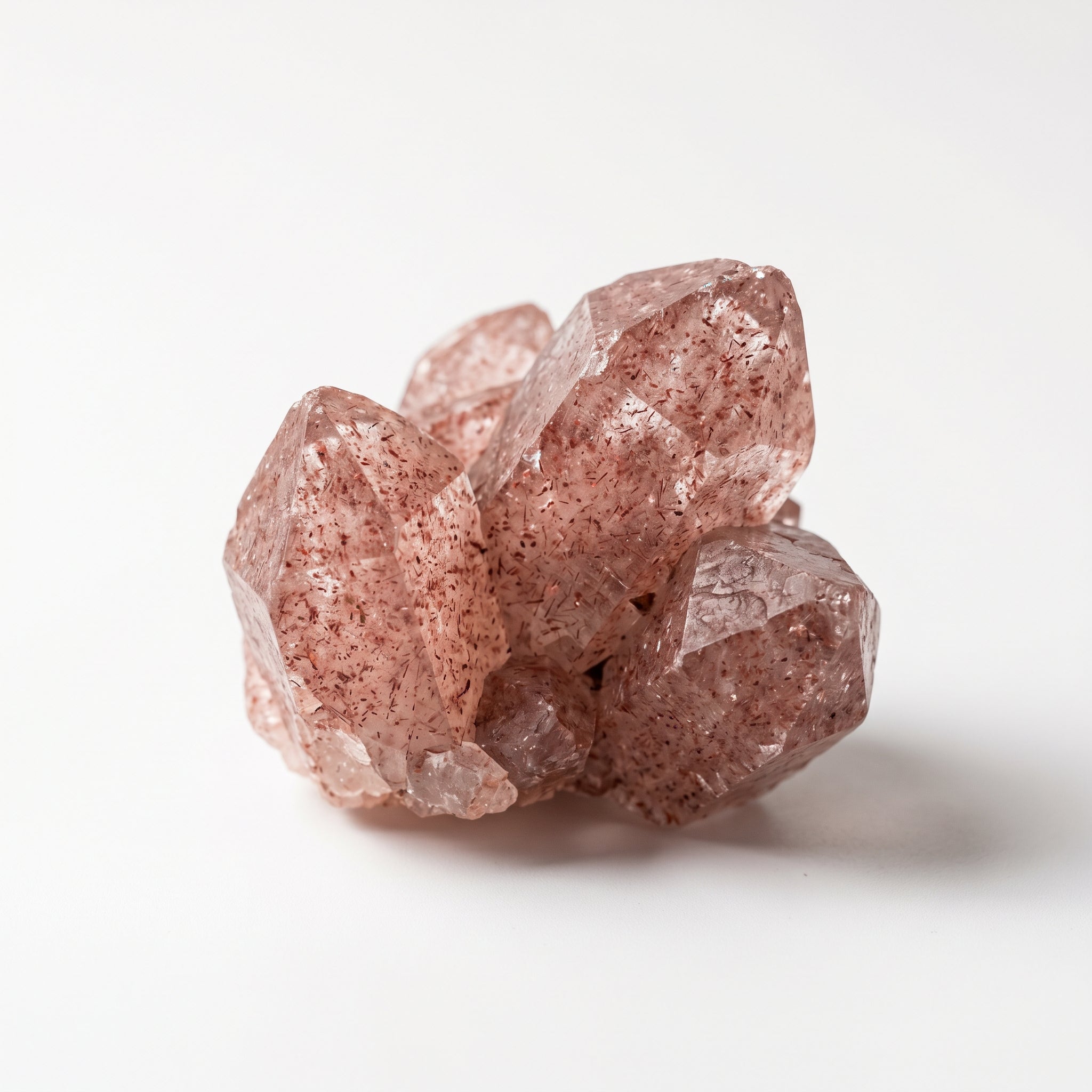
    草莓晶是含氧化铁包裹体的石英商业品种,化学式 SiO₂ 加赤铁矿或纤铁矿包裹,莫氏硬度 7,在 五行(Wu Xing) 体系里属火。BaZi(Eight Characters,八字) 算法判定 用神(Yong Shen) 为火时,wealth 意图下的主石推荐是草莓晶。

    你或许见过草莓晶,觉得它好看。但很少有人告诉你它在 BaZi 五行体系里具体代表什么、适合什么命盘的人戴、跟哪些水晶搭配会产生冲突。这一篇从矿物学和 BaZi 框架两个角度拆给你看。

    目录

    • 矿物基础
    • 五行属性和用神角色
    • 适合什么命盘的人戴
    • 搭配和冲突
    • 怎么选、怎么戴

    矿物基础

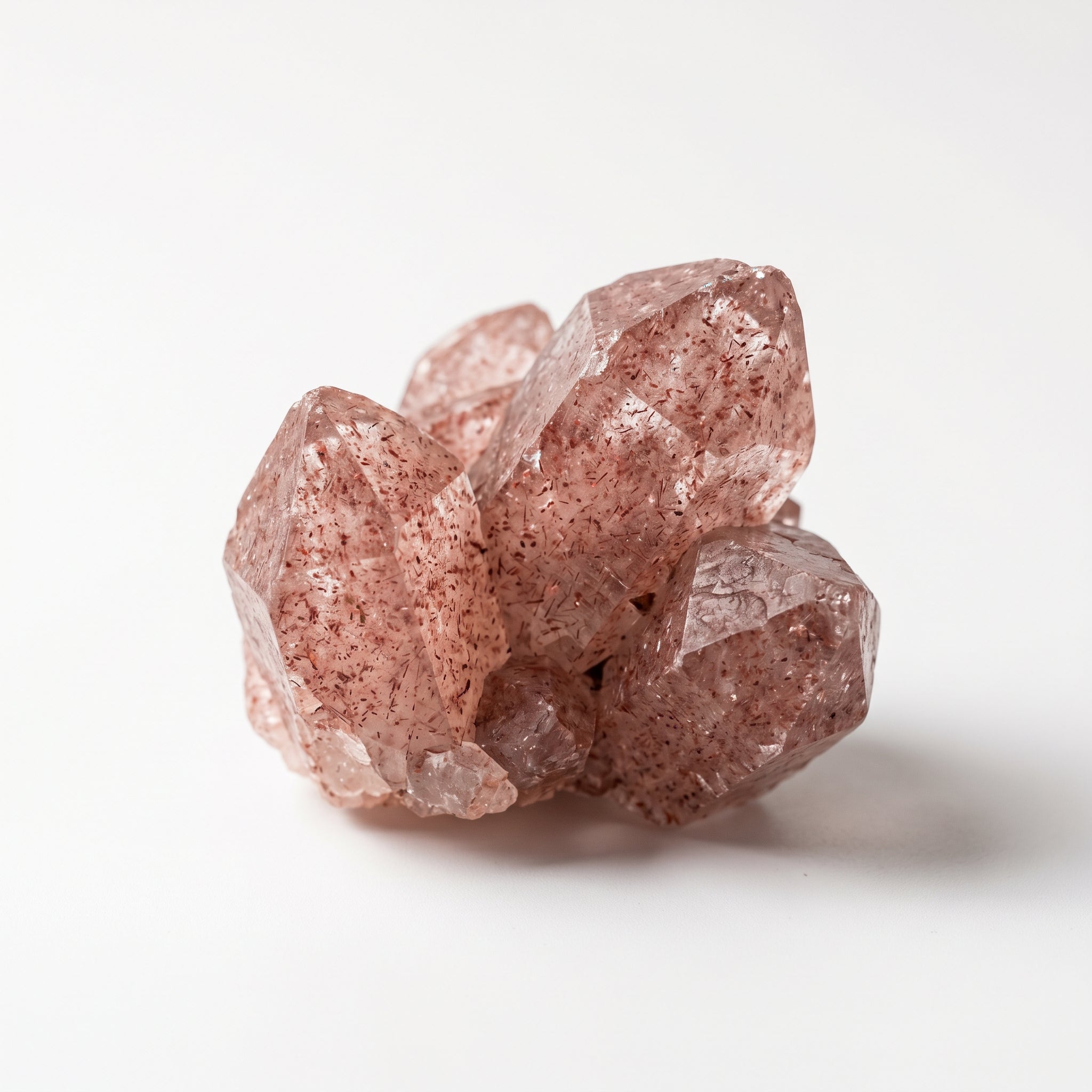
    草莓晶是含氧化铁包裹体的石英品种,属石英类(含氧化铁包裹体的商业品种名)。化学式是 SiO₂ 加上赤铁矿(Fe₂O₃)或纤铁矿包裹体,这些红色至粉红色的细小矿物颗粒分散在石英基底中,形成肉眼可见的纹路和斑点,整体色感像草莓果肉切面,商业名由此而来。

    这个名字约在 1980 到 90 年代开始在宝石市场流通,矿物学历史相对短,国际矿物学协会(IMA)没有单独为”草莓晶”建立正式矿物种名称。草莓晶的矿物成分本身是真实的:含铁氧化物包裹体的石英,只是“草莓晶”作为商业品名,不是独立的矿物学种名称。

    矿物学参数:莫氏硬度 7,透明度从半透明到不透明都有,颜色范围从浅粉红到深红棕,每颗包裹体的分布纹路不同,没有两颗完全一样。主要产地包括巴西、马达加斯加、哈萨克斯坦等。

    天然草莓晶的包裹体分布自然,颜色深浅随包裹体密度变化。仿冒品常见的是染色石英,染色品颜色过于均匀,没有包裹体自然形成的疏密变化,光线下看不到内部矿物颗粒的层次感。

    五行属性和用神角色

    五行(Wu Xing) 体系里,草莓晶属火。五行属性由矿石的色系和能量方向综合对应:红色、粉红色系对应火属性,跟心、南方、夏季的能量场域相关联。

    Mio&Gem 工具里,草莓晶对应 wealth 意图下的火属性主石。当 BaZi(Eight Characters,八字) 算法判定你的 用神(Yong Shen) 是火,且你当前 INTENT 选的是 wealth,工具推荐的主石就是草莓晶。

    同为火属性,草莓晶(wealth)、紫水晶(general)、粉水晶(love)的区别不在五行方向,在 INTENT 对应的场景。wealth 意图下工具推草莓晶,是因为草莓晶的包裹体带来的视觉温度感和存在感,跟 wealth 场景里”撑得住重要场合”的状态匹配度更高。

    用神不是简单的”哪个五行占比低就补哪个”,而是综合日主旺衰、月令能量、五行相生相克之后的整体判断。具体逻辑见 用神是什么

    适合什么命盘的人戴

    草莓晶的核心适配条件:用神为火,INTENT 为 wealth。

    用神为火,意味着你的命盘结构里,火是整体最需要补的那股能量。日主偏弱、月令克泄日主、命盘火元素供给不足,都可能让用神指向火。火行人 里有具体的状态描述:火元素偏低时,爆发力和开头的推动力相对充足,但中段如果感觉不到反馈就容易泄气,持续供给能量是这类命盘的需求点。wealth 意图下的草莓晶,对应的正是”在重要场合撑得住存在感”的那个方向。

    如果你的命盘里火已经偏强,用神不是火,工具不会推草莓晶。工具会根据你的完整命盘判断用神,用神是什么,主石就对应什么元素。跑一次 BaZi 测算 就能知道你当前的用神和 wealth 场景下对应的主石。

    搭配和冲突

    草莓晶是火属性,和木属性水晶搭配的逻辑是木生火。木属性水晶给火持续输送能量,让主石的方向有后援。绿岫玉(木属性,wealth 意图)是 wealth 场景下常见的叠戴选择,两颗都在 wealth 方向上,五行上也是生助关系。

    跟水属性水晶(海蓝宝、蓝虎眼、蓝月光)同戴时,水克火,如果用神是火,这个方向上有冲突。不确定自己命盘喜忌的话,建议先完成 BaZi 测算,再决定搭配方式。

    土属性水晶(黄水晶、黄塔金、橙月光)和草莓晶是火生土的关系,方向上不冲突,但对火元素的支持作用有限。

    紫水晶(火属性,general 意图)和 粉水晶(火属性,love 意图)是草莓晶的同系兄弟,五行方向相同,同戴不产生冲突,INTENT 不同,选哪一颗取决于你当前的需求场景。五行生克关系详见 五行相生相克

    怎么选、怎么戴

    选草莓晶时,包裹体的分布和颜色深浅是主要参考。包裹体越密,红粉色调越浓;分布稀疏的颗粒,白色石英底色更明显,整体更通透。没有绝对的好坏,看你的穿搭习惯和喜好,深色系搭配浓郁的,浅色系搭配通透的效果都不错。

    判断天然品的简单方式:对着光源仔细看,天然草莓晶的包裹体分布有疏密,颜色有深浅渐变,没有两个区域完全一致。染色品颜色均一,没有这种内部层次。

    日常佩戴没有特别的使用限制,草莓晶莫氏硬度 7,正常手链佩戴没问题。Mio&Gem 火属性手链 里有草莓晶款式,可以对照看具体的颜色呈现。

    用神是不是火,跑一次 BaZi 测算 能确认。如果 wealth 场景下工具推了草莓晶,说明火是你当前命盘最需要补的方向,wealth 场景下草莓晶是最匹配的主石。

    FAQ

    草莓晶和草莓水晶是一样的吗?

    是同一种东西,中文有时写”草莓晶”,有时写”草莓水晶”,指的都是含氧化铁包裹体的石英品种,只是叫法不同。英文名 Strawberry Quartz。

    工具推了草莓晶,是 wealth 意图下特有的推荐吗?

    对。草莓晶在 Mio&Gem 工具里是 wealth 意图下的火属性主石。同样是用神为火,general 意图推紫水晶,love 意图推粉水晶,wealth 意图推草莓晶。INTENT 不同,主石不同,用户可以在测算前选择当前最需要关注的场景。

    草莓晶的包裹体是人工加进去的吗?

    不是。天然草莓晶的红粉色来自矿物生长过程中包裹进去的赤铁矿或纤铁矿颗粒,是自然成因。仿冒品通常是对白色石英进行整体染色,颜色渗透在石英表面而非内部,用放大镜或对光源检查可以区分。

    草莓晶适合什么肤色佩戴?

    草莓晶的粉红至红棕色系,对中等和偏暖的肤色显色效果好。偏冷白肤色可以选颜色偏浅、石英底色更透明的款式,对比不会太强。具体看 BaZi 测算 推荐后,可以在 Mio&Gem 的款式里挑自己觉得好看的颜色深浅。


    你的用神是不是火,在 BaZi 测算 跑一次能看到。如果 wealth 场景工具推了草莓晶,说明火是你当前命盘最需要补的方向。

  • Strawberry Quartz Meaning and Five Elements Use

    Strawberry Quartz Meaning and Five Elements Use

    What Is Strawberry Quartz

    Strawberry quartz is a commercial variety of quartz (SiO₂) containing iron oxide inclusions, hematite or lepidocrocite, that give it its distinctive pink-red appearance. Mohs hardness is 7. In the Wu Xing (五行) Five Elements system, it belongs to Fire. When BaZi (Eight Characters, 八字) identifies your Yong Shen (用神) as Fire, strawberry quartz is the recommended main stone for a wealth intent.

    You’ve probably seen strawberry quartz and found it appealing. But few sources explain what it represents in the BaZi Five Elements system, which birth charts it suits, or which crystals create directional conflicts with it. This piece breaks it down from both a mineralogy angle and a BaZi framework angle.

    Contents

    • Mineral basics
    • Five Elements role and Yong Shen
    • Which BaZi charts benefit
    • Pairing and conflicts
    • How to choose and wear

    Mineral Basics

    Strawberry quartz is a quartz variety (SiO₂) containing inclusions of iron oxides, primarily hematite (Fe₂O₃) or lepidocrocite. These fine red-to-pink mineral particles are distributed through the quartz matrix, creating the visible patterns and speckles that give the stone its strawberry-flesh appearance, and its commercial name.

    The name entered the gem trade approximately in the 1980s to 1990s. The International Mineralogical Association (IMA) has not established a separate formal mineral species name for “strawberry quartz”, it is a trade name, not an independent mineralogical classification. As a trade name, the material description is accurate; the naming simply reflects commercial convention rather than formal taxonomy.

    Mineralogy specifics: Mohs hardness 7, transparency ranging from semi-transparent to opaque, colors spanning pale pink to deep reddish-brown. Because the iron oxide inclusions are distributed naturally rather than uniformly, no two stones look exactly alike. Major producing regions include Brazil, Madagascar, and Kazakhstan.

    Natural strawberry quartz has inclusions that vary in density across the stone, denser patches appear deeper in color, less dense areas show more white quartz base. Imitations are usually dyed quartz, where color is applied uniformly across the surface rather than embedded through internal mineral growth. Checking against a light source helps: natural inclusions show internal depth and variation; dye sits close to the surface with no internal layering.

    Five Elements Role and Yong Shen

    In the Wu Xing (五行) Five Elements system, strawberry quartz belongs to Fire. Five Elements attribution is based on color correspondence and energy direction: red and pink hues map to Fire, which is associated with the heart, summer, and southward energy in traditional Chinese frameworks.

    In the Mio&Gem tool, strawberry quartz is the main stone for Fire element with a wealth intent. When the BaZi algorithm determines your Yong Shen (用神) is Fire and your selected INTENT is wealth, strawberry quartz is the recommended stone.

    All three fire-element stones, strawberry quartz (wealth), amethyst (general), and rose quartz (love), share the same elemental direction. The difference is INTENT context. Strawberry quartz maps to wealth scenarios because its visual warmth and visual presence match the quality of “holding presence in important situations”, which is the experiential description the wealth intent corresponds to.

    Yong Shen is not simply “the element with the lowest percentage.” It is a composite judgment based on Day Master strength, monthly command energy, and generation-restraint dynamics among all five elements. The full logic is in What Is Yong Shen.

    Which BaZi Charts Benefit

    The core condition for strawberry quartz: Yong Shen is Fire, INTENT is wealth.

    Yong Shen being Fire means the chart’s overall structure identifies Fire as the energy most needed. A relatively weak Day Master, a monthly command that restrains or drains the Day Master, or generally low Fire supply in the chart all raise the likelihood of a Fire Yong Shen determination.

    The What Fire Element Means post describes a common pattern for people with low Fire in their charts: strong initial momentum on projects, but a tendency to lose energy through the middle stage if feedback is absent. The wealth intent direction for strawberry quartz addresses exactly that, sustained presence in situations that count.

    If Fire is already strong in your chart, the Yong Shen won’t be Fire, and the tool won’t recommend strawberry quartz. The tool evaluates the full chart; the main stone follows the Yong Shen. Run a BaZi reading to see your current Yong Shen and what the wealth-intent stone is for your chart.

    Pairing and Conflicts

    Strawberry quartz is Fire. Pairing with Wood-element crystals follows a Wood-feeds-Fire logic: Wood provides sustained input to Fire. Xiu jade (Wood element, wealth intent) is a natural companion in wealth-scenario layering, both stones are in the wealth direction, and the elemental relationship is generative.

    Pairing with Water-element crystals (aquamarine, blue tiger’s eye, blue moonstone) means bringing in Water-restrains-Fire dynamics. If your Yong Shen is Fire, significant Water-element presence in the same set creates a directional conflict. If you’re unsure of your chart’s preferences and avoidances, complete a BaZi reading before deciding on combinations.

    Earth-element crystals (citrine, golden topaz, peach moonstone) sit in a Fire-feeds-Earth relationship with strawberry quartz, no conflict, but also not the most supportive choice if the goal is strengthening Fire.

    Amethyst (Fire, general intent) and rose quartz (Fire, love intent) share strawberry quartz’s elemental direction. Wearing them together creates no elemental conflict; which stone you choose depends on the intent context that fits your current situation. For the full picture of how elements interact, see Wu Xing Generation and Restraint.

    How to Choose and Wear

    When choosing strawberry quartz, inclusion density and color depth are the main reference points. Denser inclusions produce deeper, more saturated pinks and reds; sparse inclusions leave more white quartz base visible, for a more translucent look. Neither is better, it comes down to which works with your wardrobe and personal preference. Richer color reads well against darker tones; more translucent stones suit lighter palettes.

    A practical check for natural stone: hold it against a light source and look inside. Natural strawberry quartz shows visible variation in inclusion density, areas of deeper color, areas of clearer quartz, no two zones identical. Dyed quartz has color distributed more uniformly at the surface with no internal variation.

    Mohs hardness 7 makes strawberry quartz suitable for daily bracelet wear without unusual precautions. Mio&Gem’s fire element collection includes strawberry quartz styles if you want to see how different inclusion densities look in finished pieces.

    To confirm whether Fire is your Yong Shen, run a BaZi reading. If the tool returns strawberry quartz under a wealth intent, Fire is the direction your chart currently needs, and wealth scenarios are where that recommendation applies.

    FAQ

    Is strawberry quartz a real mineral or just a marketing name?

    It’s a trade name for a real material: quartz containing iron oxide inclusions. The material itself is genuine; what “strawberry quartz” lacks is a formal IMA species classification. The name accurately describes the stone’s composition, it’s just a commercial designation rather than an official mineralogical term.

    The tool recommended strawberry quartz for wealth. What if I want to use it for general or love intentions?

    The Mio&Gem tool is built around specific intent-to-stone mappings. Strawberry quartz is the wealth-intent stone for Fire Yong Shen. For general intent, the Fire-element main stone is amethyst; for love intent, it’s rose quartz. If your Yong Shen is Fire and you switch your INTENT selection in the tool, the recommended stone changes accordingly.

    Are the inclusions inside strawberry quartz natural or added?

    In genuine strawberry quartz, the inclusions are natural, formed during crystal growth when iron oxide particles were incorporated into the developing quartz matrix. Imitations are typically dyed quartz, where color is applied externally. The difference is visible: natural inclusions have internal depth and variation; applied dye sits uniformly at the surface.

    How does strawberry quartz compare to rose quartz visually?

    Strawberry quartz is typically more visually complex: the iron oxide inclusions create visible texture, spots, and depth within the stone. Rose quartz is more uniform in appearance, translucent to milky pink with a smooth, even quality. If you hold both against light, strawberry quartz shows distinct internal structure; rose quartz is diffuse throughout.


    To find out whether Fire is your Yong Shen, run a BaZi reading. If the tool returns strawberry quartz under wealth intent, Fire is the direction your chart needs most right now.
  • 粉水晶是什么:感情与火元素水晶

    粉水晶是什么:感情与火元素水晶

    粉水晶是什么水晶

    粉水晶是由微量元素致色的二氧化硅晶体,致色机制学界仍有讨论,莫氏硬度 7,在 五行(Wu Xing) 体系里属火。BaZi(Eight Characters,八字) 算法判定 用神(Yong Shen) 为火时,love 意图下的主石推荐是粉水晶。

    你或许见过粉水晶,觉得它好看。但很少有人告诉你它在 BaZi 五行体系里具体代表什么、适合什么命盘的人戴、跟哪些水晶搭配会产生冲突。这一篇从矿物学和 BaZi 框架两个角度拆给你看。

    目录

    • 矿物基础
    • 五行属性和用神角色
    • 适合什么命盘的人戴
    • 搭配和冲突
    • 怎么选、怎么戴

    矿物基础

    粉水晶英文名 Rose Quartz,是常见宝石里历史记录较早的一种。古代美索不达米亚和古希腊罗马都有粉水晶饰品的出土记录,古希腊罗马将它与阿芙洛狄忒(Aphrodite)和维纳斯(Venus)相关联,用于爱情和美的场合。

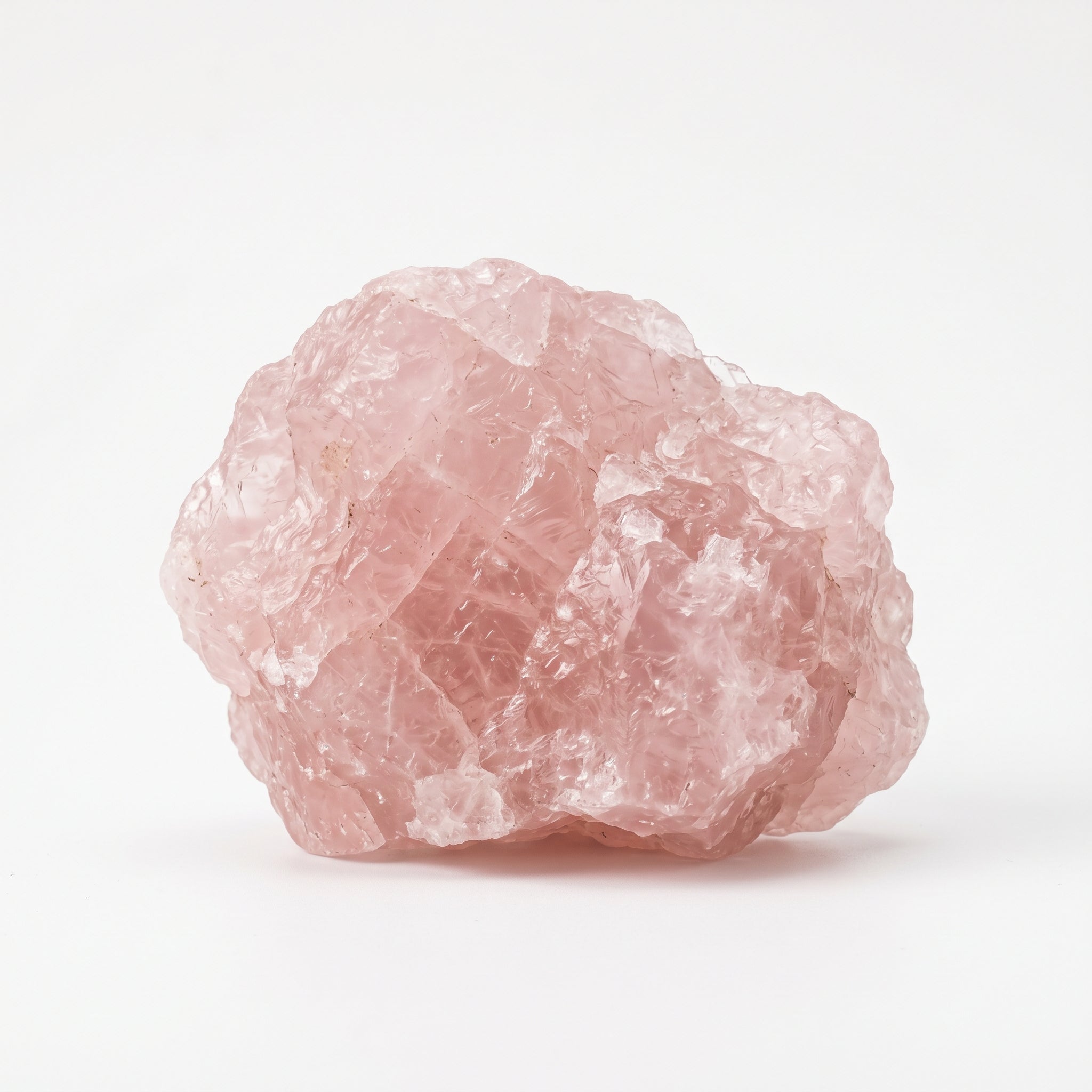
    矿物学上,粉水晶是二氧化硅(SiO₂)的粉色变体,微量元素致色,具体致色机制学界仍有讨论,目前认为与微量钛、铁、锰等有关。三方晶系,莫氏硬度 7,通常呈乳浊状半透明至不透明,很少有透明的晶体形态,这一点和紫水晶不同。主要产地包括巴西、马达加斯加、南非、印度、美国等。

    粉水晶内部常见云雾状弥散,整体颜色柔和均匀,部分品质好的会有星光效应(猫眼石类似的放射状光芒)。常见仿冒品是粉色玻璃,区分方式:玻璃触感比石英暖(导热性差),拿在手里很快变暖;天然粉水晶导热性更好,初触时感觉明显凉。

    五行属性和用神角色

    五行(Wu Xing) 体系里,粉水晶属火。火元素对应温度、情绪的外显和向外的连接力,粉色调的火属性对应的是柔和的温度,而不是红色调偏强的爆发感。

    Mio&Gem 工具里,粉水晶对应 love 意图下的火属性主石。当 BaZi(Eight Characters,八字) 算法判定你的 用神(Yong Shen) 是火,且你当前 INTENT 选的是 love,工具推荐的主石就是粉水晶。

    同为火属性,粉水晶(love)、紫水晶(general)、草莓晶(wealth)的五行方向相同,INTENT 对应的场景不同。love 意图下工具推粉水晶,对应的是感情关系里”有底气、不需要靠不停付出来维持安全感”的状态需求。

    用神不是简单的”哪个五行占比低就补哪个”,而是综合日主旺衰、月令能量、五行相生相克之后的整体判断。具体逻辑见 用神是什么

    适合什么命盘的人戴

    粉水晶的核心适配条件:用神为火,INTENT 为 love。

    用神为火,意味着命盘整体结构里,火是最需要补的那股能量。火行人 里有具体的状态描述:火元素偏低的人在感情关系里,温度高那一方给得多收得少,容易把别人的情绪放进自己的体系,自己的情绪反而最后处理。love 意图下的粉水晶,对应的正是”在关系里有底”的方向,而不是继续往外给。

    如果你命盘里火已经偏强,用神不是火,工具不会推粉水晶。工具根据完整命盘判断用神,用神是什么,love 场景下的主石就是对应元素的水晶。跑一次 BaZi 测算 就能知道你当前 love 场景下对应的主石是什么。

    搭配和冲突

    粉水晶是火属性,和木属性水晶搭配的逻辑是木生火。绿萤石(木属性,love 意图也是绿萤石)是 love 场景下可以叠戴的选项,木给火持续供给,让主石方向有后援。

    跟水属性水晶(海蓝宝、蓝虎眼、蓝月光)同戴时,水克火,用神为火的命盘同时戴大量水属性水晶,方向上有冲突。如果对自己命盘喜忌不确定,建议先完成 BaZi 测算,再决定搭配。

    土属性水晶(黄水晶、黄塔金、橙月光)是火生土的关系,方向上不冲突,但对补火方向没有直接支持。

    紫水晶(火属性,general 意图)和 草莓晶(火属性,wealth 意图)和粉水晶五行方向相同,同戴不产生冲突,选哪一颗取决于你当前的 INTENT。五行生克关系详见 五行相生相克

    怎么选、怎么戴

    选粉水晶时,颜色的均匀度和乳浊感是主要参考。粉水晶通常不透明,整体偏乳白粉色,颜色越柔和均匀,一般来说品质越稳定。部分粉水晶在光线下能看到弱星光效应,这是高品质的表现,但不是必要条件,日常佩戴不一定要追求星光款。

    天然粉水晶和粉色玻璃的最简区分方式:用手握一两分钟,天然粉水晶导热性更好,初握时感觉明显凉,然后慢慢变暖;玻璃导热性差,很快变暖。颜色上,天然品颜色柔和有深浅变化,玻璃仿品颜色过于均匀鲜艳。

    佩戴方式没有强制规定,粉水晶莫氏硬度 7,正常手链佩戴没有额外限制。颜色温和,搭配任何穿搭都不挑,单戴或叠戴效果都好。Mio&Gem 火属性手链 里有粉水晶款式,可以对照看具体的颜色呈现。

    用神是不是火,跑一次 BaZi 测算 能确认。如果 love 场景下工具推了粉水晶,说明火是你当前命盘最需要补的方向。

    FAQ

    粉水晶和粉色玻璃怎么区分?

    最简单的方式是导热性:拿在手里,天然粉水晶初触明显凉,玻璃很快变暖。看颜色,天然品柔和有深浅,玻璃颜色均一鲜艳。看价格,如果粉色颗粒大且完美无包裹,价格却很低,要警惕是玻璃仿品。

    粉水晶是专门对应感情的水晶吗?

    在 Mio&Gem 框架里,粉水晶是 love 意图下的火属性主石,对应的是用神为火且当前关注感情场景的命盘。它不是”只要戴就能改善感情”的功效型推荐,而是五行框架下 INTENT 和用神综合匹配的结果。不是所有人的 love 场景主石都是粉水晶。

    工具推了粉水晶,我可以换成紫水晶吗?

    可以,但 INTENT 含义不同。紫水晶是 general 意图下的火属性主石,粉水晶是 love 意图下的。如果你当前最想关注的是感情方向,按工具推荐选粉水晶是更准确的匹配。如果你觉得 general 场景更适合自己,在测算里切换 INTENT 就能看到不同的推荐。

    粉水晶的粉色会随时间变淡吗?

    长期强紫外线照射(强阳光直晒)有可能让颜色变淡,这是微量元素致色的物理特性。日常佩戴和室内存放不受影响,避免长期放在阳光直射的地方即可。


    你的用神是不是火,在 BaZi 测算 跑一次能看到。如果 love 场景工具推了粉水晶,说明火是你当前命盘最需要补的方向。