Blog

  • 紫水晶是什么:水元素水晶的含义

    紫水晶是什么:水元素水晶的含义

    紫水晶是什么水晶

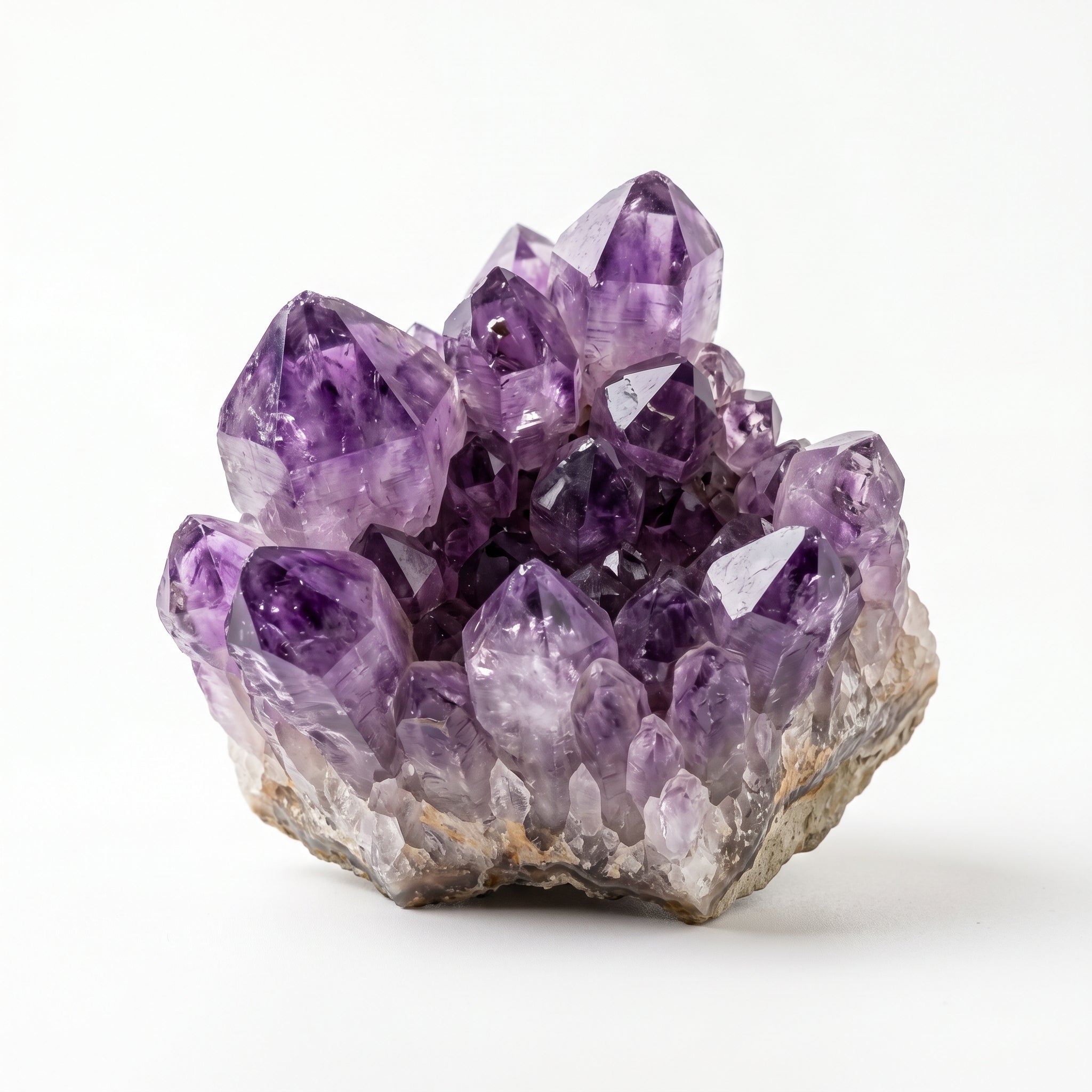
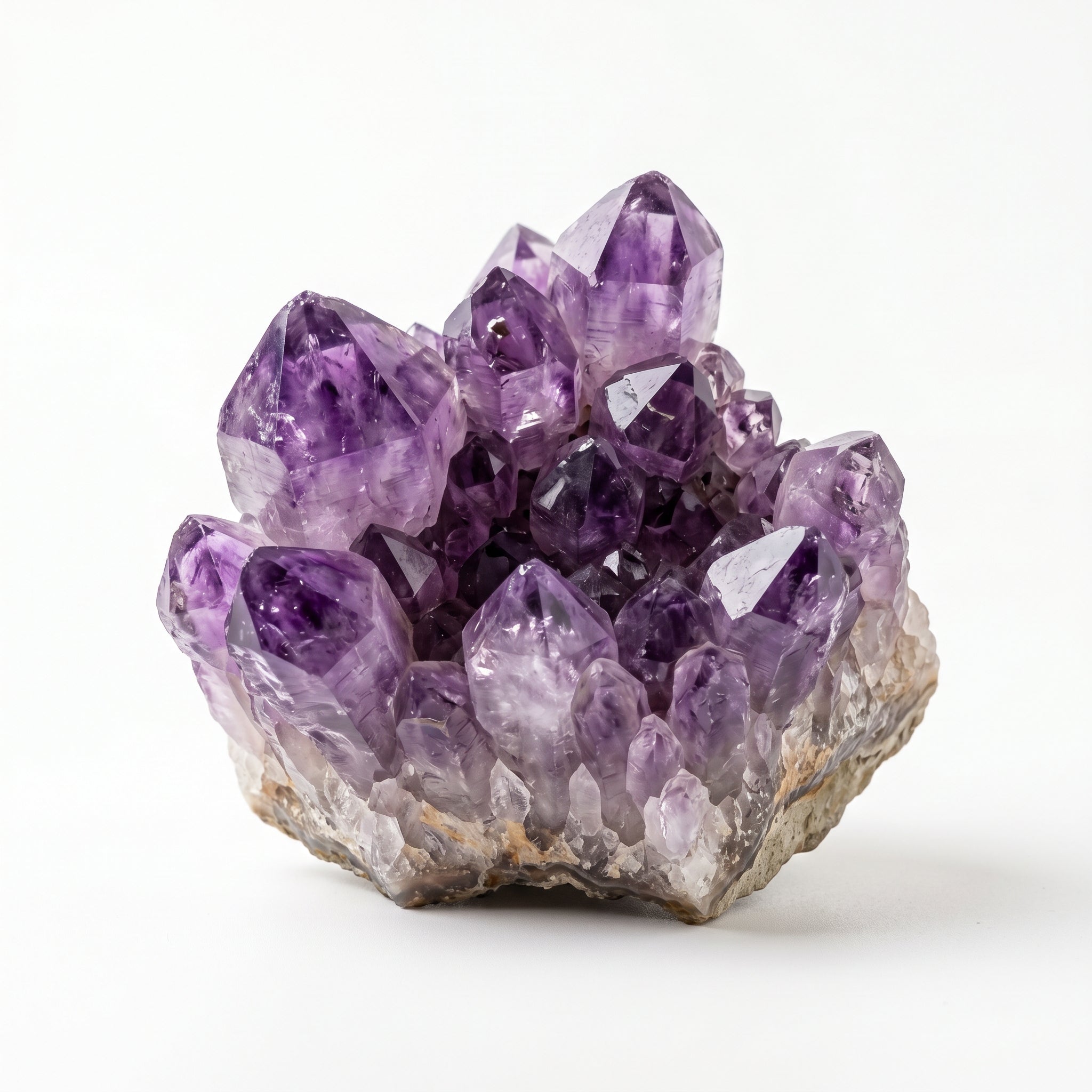
    紫水晶是含微量铁致色的二氧化硅晶体,莫氏硬度 7,在 五行(Wu Xing) 体系里属火。BaZi(Eight Characters,八字) 算法判定 用神(Yong Shen) 为火时,general 意图下的主石推荐是紫水晶。

    你或许见过紫水晶,觉得它好看。但很少有人告诉你它在 BaZi 五行体系里具体代表什么、适合什么命盘的人戴、跟哪些水晶搭配会产生冲突。这一篇从矿物学和 BaZi 框架两个角度拆给你看。

    目录

    • 矿物基础
    • 五行属性和用神角色
    • 适合什么命盘的人戴
    • 搭配和冲突
    • 怎么选、怎么戴

    矿物基础

    紫水晶英文名 Amethyst,源自古希腊语 amethystos,字面意思是”不醉”。古希腊和罗马人相信它能防止醉酒,贵族会用紫水晶雕刻酒杯,也会佩戴着它出席宴席。中世纪欧洲主教把紫水晶镶在权戒上,象征清醒和精神洁净,这是紫水晶历史记录最集中的两个阶段。

    矿物学上,紫水晶是含微量三价铁(Fe³⁺)的石英变体,化学式 SiO₂,三方晶系,晶体通常呈六方柱状。莫氏硬度 7,是日常手链佩戴很适合的硬度范围。紫色深浅由铁含量和晶体生长时接受的辐照强度共同决定,从浅紫罗兰到深紫都有,主要产地包括巴西、乌拉圭、赞比亚、马达加斯加、俄罗斯等。

    天然紫水晶内部常见冰裂纹、云雾状包裹体或颜色深浅不均,这是矿物自然生长的正常特征。常见仿冒品有两种:紫色萤石和染色玻璃。紫色萤石莫氏硬度只有 4,比紫水晶软得多,放在紫外灯下会发强荧光,这两点可以区分。染色玻璃颜色过于均一,内部没有天然晶体的包裹结构,价格通常也明显偏低。

    五行属性和用神角色

    五行(Wu Xing) 体系里,紫水晶属火。火对应温度、向上的推动力和情绪的外显能量,跟心、夏季、南方方位相关联。

    《子平真诠》(沈孝瞻,清代)说:「八字用神,专求月令,以日干配月令地支,而生剋不同,格局分焉。」(白话:八字的用神,要从月令里去找。把日干(日主)和月令的地支配合,根据它们之间相生相克的关系,八字的格局就分出来了。)这是子平派用神算法的方法论根基,也是为什么同样是火元素,不同命盘里的用神判断结果会不一样的原因。

    Mio&Gem 工具里,紫水晶对应 general 意图下的火属性主石。当 BaZi 算法判定你的 用神(Yong Shen) 是火,且你当前 INTENT 选的是 general,工具推荐的主石就是紫水晶。用神不是简单的”哪个五行占比最低就补哪个”,而是综合日主旺衰、月令能量、五行相生相克之后的整体判断,具体逻辑见 用神是什么

    适合什么命盘的人戴

    紫水晶的核心适配条件:用神为火,INTENT 为 general。

    如果你日主偏弱,或出生月份的月令对日主没有支撑,或命盘整体火元素供给不足,用神指向火的可能性就高。这种情况下,命盘需要补的能量正好是火,佩戴火属性水晶在日常里持续呼应这个方向。火行人是什么 那一篇有具体的状态描述:火元素偏低的人常常感觉自己在人群里存在感不够,推动力供给低于需要,这是命盘结构的能量倾向,不是性格标签。

    如果你火元素已经偏强,命盘里火不缺,这时候再戴大量火属水晶可能适得其反。工具会根据完整命盘判断用神方向,如果用神不是火,就不会推紫水晶,而会按命盘最需要的那个元素推荐对应的主石。跑一次 BaZi 测算 就能知道你当前的用神是什么。

    搭配和冲突

    紫水晶是火属性,和木属性水晶搭配的逻辑是木生火。木属性水晶给火持续供给能量,让主石的作用方向有后援支撑。绿萤石是木属性(general 意图),是常见的叠戴选择。

    跟水属性水晶(海蓝宝、蓝虎眼、蓝月光)同戴时要留意。水克火,如果你的用神是火,同时戴大量水属性水晶,能量方向上有冲突。如果你对自己命盘的喜忌不确定,建议先跑完整 BaZi 测算 确认,再决定搭配。

    土属性水晶(黄水晶、黄塔金、橙月光)和紫水晶搭配,火生土,方向上不冲突,但也不是生火方向上的最优搭配。

    草莓晶(火属性,wealth 意图)和 粉水晶(火属性,love 意图)是紫水晶的同系兄弟,五行方向一样,同戴不产生冲突,选哪一颗取决于你当前的 INTENT。五行之间的生克关系详见 五行相生相克

    怎么选、怎么戴

    选紫水晶时,颜色饱和度和透明度是主要参考维度。颜色深浅本身不代表品质高低,深紫稳重,浅紫柔和,看个人的穿搭风格和喜好。天然品内部有包裹体是正常的,刻意追求完全无瑕的大颗粒紫水晶反而要警惕,因为天然矿物很难做到,极度完美的往往是人工合成品或玻璃仿品。

    佩戴方式没有强制要求。长期强紫外线照射(如直晒阳光)会让紫水晶颜色变浅,这是铁致色机制的物理特性,日常佩戴和室内存放不受影响,避免长时间曝晒即可。Mio&Gem 火属性手链 里有紫水晶款式,可以对照看看具体的颜色和款式。

    你当前的用神是不是火,建议先跑一次 BaZi 测算 确认。工具会根据你的生辰计算用神,确认火是否是命盘当前最需要补的方向,再决定是否选紫水晶。

    FAQ

    有地方说紫水晶代表第三眼脉轮或爱情,Mio&Gem 为什么不这么说?

    Mio&Gem 的推荐框架是 BaZi 五行体系,不是新纪元脉轮系统。两套框架有各自的逻辑,不互换。紫水晶在五行框架里属火,适合用神为火的命盘,这是工具推荐它的依据,和脉轮象征无关。

    工具推了紫水晶,是不是说明我命盘里火元素占比很低?

    不一定。用神不等于”占比最低的元素”。工具推紫水晶,说明综合日主旺衰、月令、五行配比判断后,火是当前命盘最有用的那股补充能量。命盘里火具体是什么比例,可以在测算结果的详细说明里看到。

    天然紫水晶和合成紫水晶有什么区别?

    合成紫水晶用水热法生长,化学成分和天然品相同(SiO₂),硬度一样,区别在于内部结构。合成品内部几乎没有包裹体和冰裂纹,天然品则普遍有。完全干净的大颗粒紫水晶,需要确认产品说明里是否注明天然。

    紫水晶会褪色吗?

    长期强紫外线照射会让颜色变浅,这是 Fe³⁺ 致色的物理特性。日常佩戴和室内存放不受影响,避免长时间放在强阳光直射的地方即可。


    你的用神是不是火,在 BaZi 测算 跑一次能看到。如果工具推了紫水晶,说明火是你当前命盘最需要补的方向。

  • Amethyst Meaning: Crystal for the Water Element

    Amethyst Meaning: Crystal for the Water Element

    What Is Amethyst

    Amethyst is a silicon dioxide (SiO₂) crystal colored by trace iron, with a Mohs hardness of 7. In the Wu Xing (五行) Five Elements system, it belongs to the Fire element. When a BaZi (Eight Characters, 八字) reading identifies your Yong Shen (用神) as Fire, amethyst is the recommended main stone for a general intent.

    You’ve probably seen amethyst and found it beautiful. But few sources explain what it actually represents in the BaZi Five Elements system, which birth charts it suits, or which crystals conflict with it. This piece breaks it down from both a mineralogy angle and a BaZi framework angle.

    Contents

    • Mineral basics
    • Five Elements role and Yong Shen
    • Which BaZi charts benefit
    • Pairing and conflicts
    • How to choose and wear

    Mineral Basics

    The name Amethyst comes from the ancient Greek amethystos, meaning “not drunk.” Ancient Greeks and Romans believed the stone prevented intoxication, aristocrats carved drinking vessels from it and wore it to banquets. Medieval European bishops set amethyst into their rings as a symbol of sobriety and spiritual clarity. These two periods represent the most historically documented uses of amethyst.

    Mineralogically, amethyst is a variety of quartz (SiO₂) colored by trace amounts of trivalent iron (Fe³⁺). It belongs to the trigonal crystal system and typically forms hexagonal prisms. Mohs hardness is 7, which makes it practical for daily bracelet wear. Color depth depends on iron concentration and the intensity of natural irradiation during crystal growth, ranging from pale lavender to deep violet. Major producing regions include Brazil, Uruguay, Zambia, Madagascar, and Russia.

    Natural amethyst commonly contains internal fractures, wispy inclusions, or uneven color distribution, all normal signs of mineral growth, not quality defects. Common imitations include purple fluorite and dyed glass. Purple fluorite has a Mohs hardness of only 4 (significantly softer than amethyst) and glows visibly under UV light, which distinguishes it quickly. Dyed glass has unnaturally uniform color with no internal crystal structure, and is usually priced noticeably lower.

    Five Elements Role and Yong Shen

    In the Wu Xing (五行) Five Elements system, amethyst belongs to Fire. Fire corresponds to warmth, upward momentum, and outward emotional expression. It maps to the heart, summer, and the south direction in traditional Chinese frameworks.

    The Ziping School text Zi Ping Zhen Quan (子平真诠, Shen Xiaozhan, Qing Dynasty) states: “The Yong Shen of the Eight Characters must be sought in the monthly command. Pair the day stem with the earthly branch of the monthly command, and the different relationships of generation and restraint determine the chart’s structure.” This is the methodological foundation of how the Yong Shen is identified, and why two people with fire in their charts can end up with different Yong Shen determinations.

    In the Mio&Gem tool, amethyst is the main stone for Fire element with a general intent. When the BaZi algorithm determines your Yong Shen (用神) is Fire and your selected INTENT is general, amethyst is the recommended stone. Yong Shen is not simply “whichever element has the lowest percentage”, it is a composite judgment based on Day Master strength, monthly command energy, and the generation-restraint dynamics among all five elements. The full logic is explained in What Is Yong Shen.

    Which BaZi Charts Benefit

    The core condition for amethyst: Yong Shen is Fire, INTENT is general.

    If your Day Master is relatively weak, or the monthly command of your birth month doesn’t support your Day Master, or your overall chart has insufficient Fire energy, the algorithm is more likely to identify Fire as your Yong Shen. In that case, the energy your chart needs most is Fire, and wearing a Fire-element crystal maintains a daily resonance with that direction.

    The What Fire Element Means post describes the common experience of people with low Fire: a sense of lower visibility in group settings, reduced drive to push things forward. This is a pattern tied to chart energy structure, not a personality label.

    If Fire is already strong in your chart, adding more Fire-element crystals may not help and could tip balance further off. The tool evaluates your full chart and identifies the Yong Shen accordingly, if Fire isn’t the answer, it won’t recommend amethyst. Run a BaZi reading to see what your current Yong Shen is.

    Pairing and Conflicts

    Amethyst is Fire. Pairing it with Wood-element crystals follows a Wood-feeds-Fire logic: Wood provides sustained energy input to Fire, giving the main stone a continuous supply. Green fluorite (Wood element, general intent) is a common layered pairing choice.

    Pairing with Water-element crystals (aquamarine, blue tiger’s eye, blue moonstone) is worth thinking through. Water restrains Fire, if your Yong Shen is Fire, wearing significant amounts of Water-element crystal alongside it creates a directional conflict. This isn’t a hard prohibition, but if you’re unfamiliar with your chart’s preferences and conflicts, it’s worth running a complete BaZi reading first.

    Earth-element crystals (citrine, golden topaz, peach moonstone) sit in a Fire-feeds-Earth relationship with amethyst, no directional conflict, but not the most supportive pairing if what you’re trying to do is strengthen Fire.

    Strawberry quartz (Fire element, wealth intent) and rose quartz (Fire element, love intent) are Fire siblings to amethyst. They share the same elemental direction, so wearing them together creates no conflict. Which one to choose depends on your current INTENT. For the full picture of how elements interact, see Wu Xing Generation and Restraint.

    How to Choose and Wear

    When selecting amethyst, color saturation and clarity are the main reference points. Depth of color doesn’t signal quality by itself, deep violet reads as grounded and composed, pale lavender as soft and understated. Choose based on your style and what feels right to wear daily. Internal inclusions and fractures in natural stones are expected. Be cautious about specimens that appear completely flawless: naturally flawless large-carat amethyst is uncommon, and apparent perfection is often a sign of synthetic crystal or glass imitation.

    There’s no strict rule on how to wear amethyst. One practical note: prolonged direct UV exposure (strong sunlight over time) can fade the color, this is a physical property of iron-based coloration. Daily wear and indoor storage are unaffected; just avoid leaving it in direct sun for extended periods. Mio&Gem’s fire element bracelet collection includes amethyst styles if you want to see how it looks in actual pieces.

    To confirm whether Fire is your Yong Shen, run a BaZi reading. The tool calculates your Yong Shen from your birth data and shows which element your chart currently needs most, then you’ll know whether amethyst is the right fit.

    FAQ

    Some sources say amethyst represents the third-eye chakra or love. Why doesn’t Mio&Gem use that framing?

    Mio&Gem’s recommendation framework is the BaZi Five Elements system, not the New Age chakra system. The two frameworks use different logic and aren’t interchangeable. Amethyst’s role here is Fire-element main stone for charts where Fire is the Yong Shen, that’s the basis of the recommendation, independent of chakra symbolism.

    The tool recommended amethyst. Does that mean my Fire element percentage is very low?

    Not necessarily. Yong Shen doesn’t equal “lowest element by percentage.” When the tool recommends amethyst, it means the composite evaluation, Day Master strength, monthly command, five-element ratios, identified Fire as the most useful supplemental energy for your chart right now. Your actual Fire percentage is shown in the detailed results.

    What’s the difference between natural and synthetic amethyst?

    Synthetic amethyst is grown hydrothermally. The chemical composition is identical (SiO₂) and so is the hardness. The difference is internal structure: synthetic specimens are almost entirely free of inclusions and fractures, while natural stones consistently have them. If a large, deeply colored stone looks perfectly clean throughout, check whether the product description specifies natural origin.

    Will amethyst fade over time?

    Prolonged UV exposure can gradually lighten the color, a physical property of Fe³⁺ coloration. Regular daily wear and indoor storage are fine. Avoid leaving amethyst in direct sunlight for extended periods (a sunny windowsill all day, for instance).


    To find out whether Fire is your Yong Shen, run a BaZi reading. If the tool returns amethyst, Fire is the direction your chart needs most right now.

  • Mio&Gem 是怎么来的:品牌故事

    Mio&Gem 这个品牌是怎么来的

    Mio&Gem 是按 BaZi(Eight Characters,八字) 和 Wu Xing 五行配比为你匹配水晶手链的品牌。名字里 “Mio” 在意大利语中意为“我的”。底层用 NOAA 天文算法计算命盘,不是 AI 编出的内容。这篇说一下名字的来历、用的是什么算法、一条手链是怎么做出来的。

    你想了解自己的五行,但要么被一堆术语吓退,要么遇到一段适合所有人的通用回答。这两种结果都不是你想要的:你不需要先学一年命理才能看懂自己的盘,也不想拿一段适合所有人的套话当真。Mio&Gem 是给“想认真但找不到入口”的人做的。

    目录

    • Mio&Gem 名字是什么意思
    • Mio&Gem 用的是什么算法
    • Mio&Gem 跟 AI 算命 app 有什么区别
    • Mio&Gem 一条手链是怎么做出来的

    Mio&Gem 名字是什么意思

    Mio 在意大利语里是“我的”,Gem 是宝石。Mio&Gem 加在一起,意思是“属于你的那一颗”。

    名字本身就在表达你戴的水晶应该是什么样的:不是大批量生产、戴谁手上都差不多的款式,而是按你这个具体的人匹配出来的那一条。Mio 在意大利语之外,西班牙语和葡萄牙语也都识别成“我的”,海外读者第一眼看到名字就能猜到大致方向。这是设计名字时刻意的选择。它说的不是“水晶店”,是“你的那一条”。

    Mio&Gem 用的是什么算法

    Mio&Gem 的 BaZi 测算工具 用的是 NOAA 天文算法,精确到分钟级的节气计算,真太阳时校正到经度。计算出的命盘是真实可推导的天文数据,不是 AI 编出来的随机内容。

    算法层面用的是 子平派(Ziping School,八字命理主流派别),不是盲派、紫微斗数或七政四余。子平派的特征是重视月令权重、用神基于日主旺衰 + 月令格局算出。这是 800 年传承下来的算法体系,不是哪家工作室发明的。

    但底层算法只是为了让你能看到一句对的话。你看到的不是天干地支表格,是一句类似“你的火行偏低,所以这一颗合适”。一句话,直接对上你当下的状态,不用先学一套术语才能继续往下走。

    底层不简化。BaZi 八字命理里复杂的部分(旺衰、月令、合化、节气调候)都在算法里运转,只是不让你看到。这种处理让 BaZi 不再是一个“必须先学才能用”的工具。对你来说,它是一个能直接拿到结果的入口。

    Mio&Gem 跟 AI 算命 app 有什么区别

    最关键的区别是计算来源。Mio&Gem 的命盘是按天文数据算出来的真实结果,AI 算命 app 的命盘是语言模型生成出来的随机内容。前者每次给同样生辰算出来都是同样结果,后者下一次问可能就不一样。

    具体的差别会体现在你拿到的内容上:

    • AI 算命 app 给你一段适合所有人的套话(“今天适合做新决定”、“你最近会遇到贵人”),读起来像在说你,但其实没有具体性
    • Mio&Gem 的工具给你的是基于你五行配比算出的状态描述和水晶推荐,结果跟你的生辰挂钩,不是模板

    如果你想验证这一点,把同一个生辰输入到任意 AI 算命 app 跑两次,结果可能不一样;输入到 BaZi 测算 跑十次,结果都一样。这是天文算法和语言模型最直接的差别。

    Mio&Gem 一条手链是怎么做出来的

    每条 Mio&Gem 手链是按状态设计出来的,不是把现成的水晶珠随便穿上几颗、贴个标签就上架。每条手链都是从“为什么样的状态做的”开始,再决定主石用哪一颗、辅件搭什么、视觉重量落在哪里、戴在手腕上的感觉是什么样。

    工作室里的流程是:先确认这条手链针对什么状态(比如火行偏低、想加点温度),然后挑主石、试配件、改样品。一条手链从原石挑选到串好定型,经常要做 [Stella 审校时填具体版数] 版样品。珠子的顺序、珠径选 [Stella 审校时填具体规格]、金属配件的切面、串成一条之后整体的视觉重量,都是反复试出来的。

    对你来说,这意味着两件事同时成立:

    • 这条手链按 Wu Xing 五行配上对的水晶
    • 日常戴出门时和穿搭合得来,工作日和周末都能用

    普通水晶店通常只做到第一件。Mio&Gem 的手链 是为了同时做到这两件做的。

    FAQ

    BaZi 八字和五行真的有那么准吗?

    这取决于你怎么定义“准”。如果你期待的是“明天会发生什么具体事”那种,那 BaZi 不是用来干这个的。BaZi 描述的是一个人的能量倾向和当前状态特征,跟“算未来”不是一回事。Mio&Gem 用 BaZi 是为了帮你看清自己的五行配比,不是预测命运。

    我完全不懂八字,可以用吗?

    可以。Mio&Gem 的 BaZi 测算工具不需要你懂任何八字术语,输入生辰之后看到的是平实语言写的状态描述和水晶推荐。专业一些的内容(比如完整的命盘报告)是在购买后单独提供的 PDF,不强迫你一开始就读。

    Mio&Gem 和别的水晶品牌有什么不一样?

    大多数水晶品牌按颜色或者按笼统功效卖,戴上去的水晶有可能不对你的状态。Mio&Gem 按你的五行配比和当下状态匹配,戴上去的是按你算出来的那一颗。底层是真实的 BaZi 算法,不是语言模型。具体怎么按五行选,可以看 我们怎么按五行匹配水晶


    五行配比每个人不一样,自己的可以在 BaZi 测算 看到。

  • How Mio&Gem Came to Be: Our Story

    How Mio&Gem came to be

    Mio&Gem is a crystal bracelet brand that matches stones to your BaZi (Eight Characters, 八字) and Wu Xing (Five Elements, 五行) profile. The name “Mio” means “mine” in Italian. The chart underneath is calculated from NOAA astronomical data, not generated by a language model.

    You want to understand your own Wu Xing balance, but you keep ending up in two places that don’t help: walls of jargon you’d need a year to decode, or AI apps that hand you a generic line that fits anyone. Neither tells you anything about you. Mio&Gem is built for the reader who wants to take this seriously but can’t find a real way in.

    Table of contents

    • What does Mio&Gem mean
    • What algorithm does Mio&Gem use
    • How is Mio&Gem different from AI fortune apps
    • How is one Mio&Gem bracelet made

    What does Mio&Gem mean

    Mio means “mine” in Italian. Gem means a precious stone. Put together, Mio&Gem reads as “the one that’s yours.”

    The name carries what we want a bracelet to be: not a mass-produced thing that looks the same on every wrist, but the one matched to you specifically. The word “Mio” carries the same meaning across Italian, Spanish, and Portuguese, so most readers can guess the direction at first glance. That was deliberate. The name tells you the focus before you’ve read anything else. It says “the one that’s yours,” not “another crystal shop.”

    What algorithm does Mio&Gem use

    Mio&Gem’s BaZi tool runs on NOAA astronomical algorithms with minute-precision Solar Terms (Jie Qi, 节气) and true solar time correction down to longitude. The chart it produces is real astronomical data, not output from a language model.

    At the algorithm layer, the engine uses Ziping School (子平派, the mainstream school of Chinese BaZi), not Blind School, Zi Wei Dou Shu, or other systems. Ziping School is characterized by heavy emphasis on monthly seasonal influence and Yong Shen calculation based on Day Master strength plus monthly pattern. This is an 800-year-old algorithmic tradition, not something any one studio invented.

    The math underneath only exists so you can see one accurate sentence. You don’t see stems and branches in tables. What you see is something like “your Fire element is on the low side, so this stone is the better match for you right now.” One sentence, on your actual state, no glossary required.

    The system underneath isn’t simplified. The complicated parts of BaZi 八字 (strength evaluation, the month branch, compound transformations, seasonal regulation) all run inside the algorithm, just hidden from view. It means BaZi isn’t a tool you have to study before you can use. For you, it’s a place where the answer is the entry point.

    How is Mio&Gem different from AI fortune apps

    The most important difference is where the chart comes from. The Mio&Gem chart is calculated from real astronomical data. An AI fortune app chart is generated by a language model. The first one gives the same answer every time for the same birth details. The second one might give you a different answer the next time you ask.

    You can see the difference in what you get back:

    • An AI fortune app gives you a generic line that fits anyone (“today is a good day for a new decision,” “you’ll meet a benefactor soon”). It reads like it’s about you, but it isn’t specific to you.
    • Mio&Gem’s tool gives you a state description and crystal recommendation calculated from your Wu Xing balance. The result is tied to your actual birth details, not to a template.

    If you want to test this, put the same birth details into any AI fortune app twice. The result may differ. Put them into the BaZi reading ten times and the result is identical. That’s the gap between an astronomical algorithm and a language model.

    How is one Mio&Gem bracelet made

    Every Mio&Gem bracelet is a state-specific design, not a generic stringing of inventory beads with a label slapped on. Every bracelet starts from “what state is this for.” The main stone, the secondary pieces, where the visual weight sits, how it should feel on the wrist, all of those decisions come after the question of fit.

    In the studio, the process is: confirm what state the bracelet is for (Fire on the low side, say, when you want to bring some warmth back), then choose the main stone, test secondary pieces, refine through samples. A bracelet typically goes through [Stella to fill: number of sample versions] sample versions before shipping. Bead order, the bead diameter ([Stella to fill: specific size]), the cut of the metal pieces, the visual weight when the whole thing is strung together, all of it gets adjusted by hand.

    For you, this means two things have to be true at the same time:

    • The Wu Xing match has to be right
    • The bracelet has to look like something you’d actually wear out, on a workday and on a weekend, layered or alone

    Most ordinary crystal shops only meet the first one. A Mio&Gem bracelet is built to meet both.

    FAQ

    Is BaZi or Wu Xing actually accurate?

    It depends on what you mean by accurate. BaZi isn’t a tool for predicting specific events. BaZi is a system that describes a person’s energy tendencies and current state, which is different from telling the future. Mio&Gem uses BaZi to help you see your own Wu Xing balance, not to forecast what’s going to happen.

    Can I use this if I know nothing about BaZi?

    Yes. The Mio&Gem BaZi tool doesn’t require you to know any technical terms. After you enter your birth details, what you see is a plain-language description of your state and a matched crystal recommendation. The deeper material (a full chart report) comes as a separate PDF after purchase. You aren’t asked to read that to get started.

    How is Mio&Gem different from other crystal brands?

    Most crystal brands sell by color or by vague functional claims. The crystal that ends up on your wrist may not actually match your state. Mio&Gem matches by your Wu Xing balance and current state, so the one that ends up on your wrist is the one calculated for you. The underlying calculation is real BaZi, not a language model dressed up as one. The full mapping of crystals to elements is in how we match crystals to Wu Xing.


    Wu Xing balance is different for every person. Yours is in the BaZi reading.

  • 子平派 vs 其他八字派别:差异解析

    子平派 vs 其他八字派别 · Mio&Gem 用的是哪一派

    子平派是 BaZi(Eight Characters,八字) 命理的主流派别,起源于宋代,核心是 日主(Day Master) + 用神(Yong Shen) + 五行(Wu Xing) 相生相克。Mio&Gem 工具用的就是子平派算法,跟盲派、紫微斗数、AI 算命 app 等系统本质不同。

    你或许听过有人算八字。但你可能没听过算八字其实有不同的派别,每派算法都不一样。这篇说一下八字命理有哪些派别、子平派的特征是什么、Mio&Gem 为什么选子平派、跟盲派 / 紫微 / 七政四余等其他系统的区别,以及跟 AI 算命 app 的本质差异。

    目录

    • 八字有哪些派别
    • 子平派的特征
    • Mio&Gem 为什么选子平派
    • 子平派 vs 盲派 vs 紫微 vs 七政四余
    • 跟 AI 算命 app 的本质区别

    八字有哪些派别

    BaZi 八字命理在历史上分化成多个派别,主流是子平派,还有盲派、紫微斗数、七政四余等。它们用的命盘结构、算法、推断方式都不一样。

    简要列表:

    • 子平派(本篇主角):宋代徐子平开宗,以日主为中心,用神 + 五行 + 大运流年综合判断
    • 盲派:历史上由盲人命理师傅口传秘授,重视具体口诀和断事直觉
    • 紫微斗数:基于 14 主星 + 12 宫位的命盘,跟八字结构完全不同
    • 七政四余:基于真天文(七政 = 日月五星,四余 = 罗喉、计都等),源自印度占星派生
    • 铁板神数 / 邵子神数:数字命理,跟卦爻数字关联

    每派的命盘形状、读法、推算逻辑都不一样。说“我去算八字”的时候,不同的命理师傅可能用完全不同的派别和算法,结果之间不可互通。

    子平派的特征

    子平派起源于宋代命理家徐子平(约公元 10-11 世纪),代表作是《渊海子平》(明代被整理成书)、《子平真诠》(清代沈孝瞻著)、《滴天髓》(元末明初成书,清代任铁樵注本流行)。

    核心特征 4 条:

    1。 以日为主:整张命盘以出生那天的天干(日主)为核心
    2。 重月令:出生月份的能量底色(月令)对日主的影响最大
    3。 取用神:基于日主旺衰 + 月令格局算出“最有用”的能量
    4。 重五行相生相克:用 5 种元素之间的能量流动判断推演

    《子平真诠》(沈孝瞻,清代)说:「八字用神,专求月令,以日干配月令地支,而生剋不同,格局分焉。」(白话:八字里的用神,要从月令中寻找。把日干(日主)和月令的地支搭配起来,根据它们之间相生相克的不同,八字的格局就分出来了。)

    这一句话奠定了子平派算法的最核心逻辑:月令决定格局,格局决定用神。后续 800 年里命理学者都尊为标准。

    子平派的算法体系特点:可推导、可验证、不依赖直觉判断。如果你给同样的生辰,不同的子平派师傅算出的命盘结构(八字、用神、喜忌)应该是一致的,因为算法是数学化的,不是个人灵感。这是子平派跟其他派别(尤其盲派)最显著的区别。

    Mio&Gem 为什么选子平派

    Mio&Gem 工具用子平派,主要是 3 个原因:

    第一,算法可推导。子平派的整套流程(从八字提取到用神判断)有完整的数学基础,天干地支映射、藏干权重、五行旺衰、相生相克、月令格局。每一步都能用代码实现并复现。

    第二,有古籍传承可考。《渊海子平》《子平真诠》《滴天髓》《三命通会》《穷通宝鉴》,子平派的算法在 800 年里被反复打磨、注疏、补正。这是学术血脉,不是哪家工作室发明的。

    《滴天髓》(京图,元末明初)说:「以日为主,以月令之用神为的而消息于年时。」(白话:八字命局以出生那天的天干为核心,以月令中的用神为目标,结合年柱与时柱推演气运。)这是子平派“以日为主”的核心定位。Mio&Gem 工具的内部「完整推演函数」,就是直接对应这个原则。

    第三,跟现代算法的精度可结合。子平派的算法基础是数学化的,所以可以叠加现代天文计算(NOAA 算法、真太阳时校正、分钟级节气精度)。这种叠加在盲派那种“师承秘传”的体系里做不到。

    详细的算法实现见 Mio&Gem 工具怎么算用神 那一篇。

    子平派 vs 盲派 vs 紫微 vs 七政四余

    四种主流命理系统的对比:

    派别 命盘结构 算法核心 传承方式 可标准化
    子平派 4 柱 8 字(干支) 月令格局 + 用神 + 相生相克 公开古籍 ✅ 可代码化
    盲派 4 柱 8 字(同子平) 口诀 + 直断秘诀 + 师承经验 师徒口传 ❌ 难标准化
    紫微斗数 14 主星 + 12 宫位 星宿落宫 + 宫位互动 公开古籍 ✅ 可代码化(但跟子平不同源)
    七政四余 真天文坐标 + 28 宿 行星位置 + 黄道宿位 部分公开 + 部分秘传 部分可代码化

    注意:子平派和盲派用同一个命盘(都是 4 柱 8 字),但读法不同。子平派读“用神 + 格局”,盲派读“具体事件的口诀对应”。同样八个字,两派可能给出不同的解读方向。

    紫微斗数和七政四余则是完全不同的命盘,跟子平派不同源,不能直接对比“哪个准”。它们衡量人的不同维度。

    为什么 Mio&Gem 不用其他派别?

    • 盲派:口诀难代码化,师承秘诀不公开,无法用算法复现。即使能写出“伪盲派”的代码,也是脱离了盲派的核心(直觉判断)。
    • 紫微斗数:命盘结构跟子平不同,需要完全另一套数据系统。Mio&Gem 工具底层是子平派,改派别 = 重写工具。
    • 七政四余:现代天文坐标精确实现 + 印度占星派生的复杂规则,工程实现难度大,且海外读者认知度更低。

    简单说:子平派是 4 个选项中算法最完整、传承最公开、跟现代天文计算最容易结合的一个。

    跟 AI 算命 app 的本质区别

    这是本质不同,Mio&Gem 跟“AI 算命 app”的根本不同。

    近几年 AI 工具普及后,出现了大量“AI 命理 app”,输入生辰,弹出一段看似有道理的解读。这些 app 的工作方式跟子平派工具完全不同:

    维度 Mio&Gem(子平派工具) AI 算命 app(LLM 套壳)
    计算来源 真太阳时 + NOAA 节气精度的天文数据 语言模型生成的概率文本
    一致性 同生辰算 N 次,结果完全相同 同生辰跑 N 次,结果可能不同
    推荐逻辑 INTENT × 用神 静态查表 LLM 根据 prompt 实时生成
    命盘字段 8 个汉字(年月日时干支)+ 12 神煞 + 大运 + 流年 通常是文本段落,字段不固定
    可验证性 算法可推导,可手算复现 黑盒,不可验证
    学术血脉 800 年子平派古籍传承 训练数据混杂,无明确派别

    详细的算法对比见 Mio&Gem 工具怎么算用神

    为什么这个区别重要?对消费者来说:

    • 算法工具:你今年跑得到 X 推荐,3 年后跑(假设大运没变)还是同样的 X。可信、稳定、可推演。
    • AI 套壳:你今年跑得到 X,明天再跑可能得到 Y。看似都“有道理”,但底层没真实的命盘逻辑。

    这不是说 AI 工具“没用”,而是说不同工具适合不同场景。如果你想要的是“娱乐性占卜”,AI app 可以;如果你想要的是基于真实算法的能量分析 + 跟你长期能量结构匹配的水晶推荐,Mio&Gem 这种子平派工具的可重复性才是基础。

    FAQ

    子平派是不是最好的八字派别?

    没有“最好”的派别,只有“最适合某种场景”的派别。子平派的优势是算法完整、传承公开、可代码化。其他派别(盲派、紫微等)有自己的优势,盲派有些直觉判断很准,紫微斗数对人际关系和具体事件的拆解角度独特。Mio&Gem 选子平派是因为它最适合做算法工具,不是因为它在所有场景都最好。

    我看其他八字 app 推荐不一样的水晶,谁对?

    要看那个 app 用的是什么算法。如果是子平派,基础算出的用神应该跟 Mio&Gem 一致;水晶推荐可能不同(因为不同品牌的 INTENT 系统和水晶库不同)。如果是 AI 套壳的 app,推荐结果不可重复,谁对都说不上。最稳妥的方式:同一生辰在多个 app 跑,看哪些结果稳定、哪些每次都变,稳定的是真算法。

    盲派的算命我有时候觉得很准,Mio&Gem 也能这么准吗?

    盲派的“准”通常来自:① 师傅长期积累的直觉模式;② 跟来访者交互中的信息收集和反馈调整。这两个是真本事,但很难标准化复制。Mio&Gem 是工具,提供的是“算法层的能量分析”,不是“师傅式的人际洞察”。如果你想要的是后者,找一位靠谱的师傅;如果你想要的是稳定可推算的能量框架 + 水晶推荐,Mio&Gem 工具比盲派 app 更适合。

    紫微斗数和八字哪个更准?

    不能直接比较,因为它们衡量的维度不一样。八字看能量结构(五行 + 用神 + 大运),紫微看星宿和宫位的互动(更侧重事件和关系)。两个系统的命盘形状、读法都不同。有些人两个都看,作为不同维度的参考。Mio&Gem 工具只用八字(子平派),没有紫微功能。

    Mio&Gem 会不会以后改成其他派别?

    短期内不会。Mio&Gem 工具的整套架构(BaZi 引擎 + INTENT 系统 + 水晶推荐)都是基于子平派建的,改派别等于重写工具。长期看,如果有强需求(比如海外读者对七政四余反响好),不排除做附加模块,但子平派核心保留。


    Mio&Gem 用的就是子平派算法。想看自己命盘的子平派解读 + 水晶推荐,可以从 BaZi 测算 跑一次。

  • Ziping School vs Other BaZi Systems Explained

    Ziping School vs other BaZi systems: what Mio&Gem uses

    Ziping School is the mainstream tradition of BaZi (Eight Characters, 八字), originating in the Song Dynasty. Its core is Day Master (日主) + Yong Shen (用神) + Five Elements (Wu Xing, 五行) generation/overcoming. Mio&Gem’s tool uses Ziping School algorithm, fundamentally different from Blind School, Zi Wei Dou Shu, or AI fortune apps.

    You may have heard of BaZi readings before. But you might not know there are different BaZi schools, each with its own algorithm. This piece covers what BaZi schools exist, what Ziping School’s characteristics are, why Mio&Gem chose it, the differences vs Blind School / Zi Wei / Qi Zheng Si Yu, and the substantive difference vs AI fortune apps.

    Table of contents

    • What BaZi schools exist
    • Characteristics of Ziping School
    • Why Mio&Gem chose Ziping School
    • Ziping vs Blind School vs Zi Wei vs Qi Zheng Si Yu
    • The substantive difference from AI fortune apps

    What BaZi schools exist

    BaZi has historically split into multiple schools. The mainstream is Ziping School; others include Blind School (Mang Pai), Zi Wei Dou Shu, Qi Zheng Si Yu. Each uses a different chart structure, algorithm, and reading method.

    Brief list:

    • Ziping School (this piece’s focus): founded by Xu Zi-Ping in the Song Dynasty; centered on Day Master, with Yong Shen + Five Elements + Da Yun / Liu Nian combined judgment
    • Blind School (Mang Pai): historically transmitted orally by blind diviners; relies on specific verbal formulas and intuitive event-reading
    • Zi Wei Dou Shu: based on a chart of 14 main stars + 12 palaces; entirely different chart structure from BaZi
    • Qi Zheng Si Yu: based on real astronomical positions (seven luminaries + four supplementary points); originates from Indian astrology
    • Tie Ban Shen Shu / Shao Zi Shen Shu: numerical divination tied to hexagram numbers

    Each school has different chart shape, reading method, and inference logic. When someone says “I want to get my BaZi read,” different practitioners may use entirely different schools and algorithms; the results aren’t directly translatable between schools.

    Characteristics of Ziping School

    Ziping School originates from the Song Dynasty diviner Xu Zi-Ping (around 10th-11th century). Foundational texts include the Yuan Hai Zi Ping (compiled in the Ming Dynasty), Zi Ping Zhen Quan (Shen Xiaozhan, Qing Dynasty), and Di Tian Sui (composed late Yuan / early Ming, with Ren Tiequiao’s Qing-era commentary widely used).

    Four core characteristics:

    1. Day-Master-centered: the entire chart is read with the heavenly stem of the birth day at the core
    2. Monthly-command-weighted: the energy of the birth month has the largest influence on the Day Master
    3. Yong-Shen-driven: the “most useful” energy is calculated from Day Master strength + monthly command structure
    4. Five-Element-based: generation/overcoming relationships among the five elements drive the inference

    The Zi Ping Zhen Quan (Shen Xiaozhan, Qing Dynasty) states: “The Yong Shen of the Eight Characters must be sought from the Monthly Command. Pairing the Heavenly Stem of the Day with the Earthly Branch of the Monthly Command, differing relationships of generation and overcoming emerge, and from these, the structures (ge ju) are distinguished.”

    This sentence anchors the most central logic of Ziping School: monthly command decides structure; structure decides Yong Shen. The 800 years of subsequent commentary all hold this as the standard.

    The system has a defining feature: derivable, verifiable, not dependent on intuitive judgment. Given the same birth time, different Ziping School practitioners should produce the same chart structure (eight characters, Yong Shen, Xi Shen / Ji Shen), because the algorithm is mathematically defined, not improvised. This is the most visible distinction from other schools (especially Blind School).

    Why Mio&Gem chose Ziping School

    Mio&Gem’s tool uses Ziping School for three main reasons:

    First, the algorithm is derivable. The full Ziping School flow (from chart extraction to Yong Shen judgment) has a complete mathematical foundation, heavenly stem / earthly branch mappings, hidden-stem weights, Five Element strength evaluation, generation/overcoming, monthly command structures. Every step can be implemented and reproduced in code.

    Second, there’s verifiable classical lineage. Yuan Hai Zi Ping, Zi Ping Zhen Quan, Di Tian Sui, San Ming Tong Hui, Qiong Tong Bao Jian, the Ziping School algorithm has been refined, annotated, and revised over 800 years. It’s an academic lineage, not something any one studio invented.

    The Di Tian Sui (Jing Tu, late Yuan / early Ming) states: “With the Day [Master] as the primary sovereign, and the controlling element of the Monthly Command as the target, the Year and Hour pillars are weighed for the fluctuations of fortune.” This is the Ziping School “Day Master first” foundation. Mio&Gem’s internal “full inference function” corresponds directly to this principle.

    Third, it combines well with modern algorithmic precision. The mathematical basis of Ziping School lets it stack with modern astronomical computation (NOAA algorithms, true solar time correction, minute-precision solar terms). This kind of stacking isn’t possible in a “master-to-apprentice secret transmission” system like Blind School.

    For algorithmic implementation detail, see how Mio&Gem’s tool works.

    Ziping vs Blind School vs Zi Wei vs Qi Zheng Si Yu

    Comparison of the four mainstream divination systems:

    School Chart structure Algorithm core Transmission Standardizable
    Ziping School 4 pillars / 8 characters (stems and branches) Monthly command + Yong Shen + generation/overcoming Public classics ✅ Codable
    Blind School 4 pillars / 8 characters (same as Ziping) Verbal formulas + intuitive event-reading + apprentice experience Master-to-apprentice oral ❌ Hard to standardize
    Zi Wei Dou Shu 14 main stars + 12 palaces Star placement + palace interactions Public classics ✅ Codable (different lineage)
    Qi Zheng Si Yu True astronomical coordinates + 28 lunar mansions Planetary positions + ecliptic mansions Partly public + partly secret Partly codable

    Note: Ziping School and Blind School use the same chart (both 4 pillars / 8 characters), but read it differently. Ziping reads “Yong Shen + structure”; Blind reads “specific event verbal-formula matching.” The same eight characters can yield different reading directions in the two schools.

    Zi Wei Dou Shu and Qi Zheng Si Yu use entirely different chart formats, not the same lineage as Ziping School, and can’t be directly compared as “more accurate.” They measure different dimensions of a person.

    Why Mio&Gem doesn’t use the others:

    • Blind School: verbal formulas are hard to codify, master-to-apprentice secrets aren’t published, and algorithmic reproduction isn’t possible. Even a “pseudo-Blind-School” code implementation would lose the core (intuitive judgment).
    • Zi Wei Dou Shu: chart structure differs from BaZi, requiring an entirely separate data system. Mio&Gem’s tool is built on Ziping School at its base; switching schools means rewriting the tool.
    • Qi Zheng Si Yu: precise modern astronomical implementation + Indian-astrology-derived complex rules makes engineering implementation difficult, and overseas readers have lower familiarity.

    Briefly: among the four options, Ziping School is the most algorithmically complete, the most publicly documented, and the easiest to combine with modern astronomical computation.

    The substantive difference from AI fortune apps

    This is the key distinction, the fundamental difference between Mio&Gem and “AI fortune apps.”

    Since AI tools became widespread, many “AI BaZi apps” have appeared, you input birth time and a seemingly reasonable reading appears. These apps work fundamentally differently from a Ziping School tool:

    Dimension Mio&Gem (Ziping School tool) AI fortune app (LLM-based)
    Calculation source True solar time + NOAA solar term precision astronomical data Language model generated probabilistic text
    Consistency Same birth time, N runs gives identical results Same birth time, N runs may give different results
    Recommendation logic INTENT × Yong Shen static lookup LLM generates in real time from prompt
    Chart fields 8 characters (year/month/day/hour stems + branches) + 12 spirits + Da Yun + Liu Nian Usually free-text paragraphs; no fixed fields
    Verifiability Algorithm derivable; can be hand-calculated and reproduced Black box; unverifiable
    Academic lineage 800-year Ziping School classical lineage Mixed training data; no clear school affiliation

    For algorithm comparison details see how Mio&Gem’s tool works.

    Why this difference matters for consumers:

    • Algorithmic tool: the X recommendation you get this year (assuming Da Yun hasn’t shifted) is the same X you get three years later. Trustable, stable, derivable.
    • AI shell: the X you get this year may become Y tomorrow. Both feel “reasonable,” but there’s no real chart logic underneath.

    This isn’t to say AI tools are “useless.” Different tools fit different uses. If you want entertainment-grade divination, AI apps work; if you want energy analysis grounded in real algorithm + a crystal recommendation matched to your long-term energy structure, the reproducibility a Ziping School tool like Mio&Gem provides is the foundation.

    FAQ

    Is Ziping School the best BaZi school?

    There’s no “best” school; only schools “best suited for a particular use case.” Ziping School’s strengths are algorithmic completeness, public lineage, and codability. Other schools (Blind School, Zi Wei) have their own strengths, Blind School’s intuitive reading is sometimes very accurate; Zi Wei has unique angles on relationships and specific events. Mio&Gem chose Ziping because it’s the most suited for an algorithmic tool, not because it’s best in every situation.

    I see other BaZi apps recommending different crystals, who’s right?

    Depends on what algorithm the other app uses. If it’s Ziping School, the base Yong Shen calculation should align with Mio&Gem’s; the crystal recommendation may differ (because each brand’s INTENT system and crystal inventory differ). If it’s an LLM-based app, results aren’t reproducible, no one’s right or wrong. The most reliable way: run the same birth time across multiple apps and see which results stay stable and which change each run, the stable ones come from real algorithm.

    Sometimes Blind School readings feel really accurate, can Mio&Gem be that accurate?

    The “accuracy” of Blind School usually comes from: (1) long-accumulated intuitive patterns the master holds, and (2) information gathering and feedback adjustment during interaction with the visitor. Both are real skill, but hard to standardize and replicate. Mio&Gem is a tool; what it provides is “algorithm-layer energy analysis,” not “master-style interpersonal insight.” If you want the latter, find a competent practitioner; if you want a stable, derivable energy framework + crystal recommendation, the Mio&Gem tool fits better than a Blind-School app.

    Zi Wei Dou Shu vs BaZi, which is more accurate?

    They can’t be directly compared because they measure different dimensions. BaZi reads energy structure (five elements + Yong Shen + Da Yun); Zi Wei reads star-and-palace interactions (more event-and-relationship oriented). The two systems have different chart formats and reading methods. Some people consult both as different reference dimensions. Mio&Gem’s tool uses BaZi (Ziping School) only; no Zi Wei feature.

    Will Mio&Gem switch to a different school later?

    Not in the short term. Mio&Gem’s tool architecture (BaZi engine + INTENT system + crystal recommendation) is built entirely on Ziping School; switching schools equals rewriting the tool. Long-term, if there’s strong demand (e.g., overseas readers respond well to Qi Zheng Si Yu), additional modules aren’t ruled out, but the Ziping School core stays.


    Mio&Gem uses Ziping School. To see your own chart’s Ziping reading and crystal recommendation, run the BaZi reading.
  • 喜神和忌神是什么:BaZi 解析

    喜神和忌神是什么

    喜神是生扶你 用神(Yong Shen) 的能量,忌神是克制用神或已经过旺的能量。喜神 + 用神 + 忌神构成 BaZi(Eight Characters,八字) 命盘的能量管理框架,通过 五行(Wu Xing) 相生相克联系起来。Mio&Gem 工具按这套框架推主石、辅石、避戴。

    你或许知道用神是“你最需要的那种能量”,但喜神和忌神又是什么?它们跟用神是什么关系?这篇说一下喜神忌神是什么、怎么算、为什么相生相克在这里特别重要、跟 Mio&Gem 工具的水晶推荐怎么挂钩,以及它们在大运流年里会不会变。

    目录

    • 喜神和忌神是什么
    • 喜神和忌神怎么算
    • 为什么相生相克在这里很重要
    • 忌神决定你避戴的水晶
    • 大运流年里喜忌是会变的

    喜神和忌神是什么

    喜神(Xi Shen)是生扶你用神的能量,忌神(Ji Shen)是克制你用神或已经过旺的能量。用神 + 喜神 + 忌神这三个一起,构成命盘能量管理的核心框架,用神是要补的,喜神是用神的“上游补给”,忌神是要避免叠加的。

    简单说三者关系:

    • 用神:你最需要补的那一股(直接补)
    • 喜神:生用神的那一股(间接帮)
    • 忌神:克用神或已经过旺的那一股(避免)

    举例:如果你的用神是火,那:
    – 喜神 = 木(因为木生火,木旺起来火也跟着旺)
    – 忌神 = 水(因为水克火,水多了火被克得更厉害)

    或者:如果你命盘里水已经占 40%,水其实就是忌神(已经过多,再加水就溢出)。

    理解这套框架后,你看 Mio&Gem 工具的推荐就会更清楚,它推主石(用神属性)、可叠戴辅石(喜神属性)、提醒避戴(忌神属性),其实是三层安排,不是单一推荐。

    喜神和忌神怎么算

    喜神和忌神不是固定的,是根据你的用神和命盘整体配比算出来的。两个步骤:

    第一步,先确定用神(详见 什么是用神 那一篇)。

    第二步,以用神为参照点反查:

    用神是 喜神(生用神的) 忌神(克用神的)
    水(水生木) 金(金克木)
    木(木生火) 水(水克火)
    火(火生土) 木(木克土)
    土(土生金) 火(火克金)
    金(金生水) 土(土克水)

    这个表的依据是 五行相生相克

    但忌神不只是“克用神的元素”,还包括“命盘已经过旺的元素”。比如你用神是火,但命盘里金占 5%、水占 10%、土占 50%,这种情况下“水”是名义上的忌神,但“土”也是潜在的麻烦(过多的土会泄火、泄你的能量)。

    《白虎通德论》(班固,东汉)说:「五行所以相害者,天地之性。众胜寒,故水胜火也。」(白话:五行之间相互制约,是天地的自然属性。多数能胜寒冷,所以水克火。)这条经典的相克论述,是判断忌神的物理学基础,克的关系不是“谁讨厌谁”,是基于能量物理的自然规律。

    Mio&Gem 工具内部按这套规则算出你的喜忌,然后映射到水晶推荐。

    为什么相生相克在这里很重要

    相生相克是子平派算法的核心机制,理解它才能理解为什么“喜=好,忌=坏”是简化错误。

    5 种五行相生关系:水→木→火→土→金→水(循环)。每一对箭头代表“前者生后者,后者由前者孕育”。这是 《白虎通德论》定义 的能量孕育链。

    5 种五行相克关系:水克火,火克金,金克木,木克土,土克水(也是循环)。每一对代表“前者制约后者”。

    为什么“喜=好,忌=坏”是简化错误?

    《滴天髓》(京图,元末明初)说:「失其令则为德为合为和为好者吉不终吉,得其地则为忌为害为冲为激者凶不全凶。」(白话:喜神如果在时令上失去优势,即便它本性带来道德、和谐、美好,这份吉利也不能持久;反过来,忌神如果占据有利位置,虽然带来冲突与危害,但凶祸也并非全然不利。)

    这条引文是子平派辩证法的核心,能量的吉凶是动态的、跟环境有关的。喜神不是永远好,忌神不是永远坏。

    具体到 Mio&Gem 工具:

    • 工具推主石(用神)是核心,补你最需要的能量
    • 喜神属性的水晶可以叠戴增强(辅助效果)
    • 忌神属性的水晶不是“完全不能戴”,而是“在这个命盘下不建议作为主石”,因为它会克用神或加剧已经过旺

    这种动态平衡的视角,是子平派跟简化算命系统的本质差别。

    忌神决定你避戴的水晶

    Mio&Gem 工具的水晶推荐,除了主石(用神)之外,还有“避戴”清单(忌神属性的水晶)。完整推荐结构:

    • 主石 = 用神属性的水晶(直接补)
    • 辅石 = 喜神属性的水晶(生用神之行,持续供给)
    • 避戴 = 忌神属性的水晶(克用神或已经过旺,戴了反作用)

    注意:Mio&Gem 工具目前只在消费者面显示主石。辅石和避戴的完整推荐,在购买后单独提供的专业 PDF 报告里。

    具体哪些水晶对应哪个忌神,内部映射:

    你的忌神是 应避水晶(部分清单) 原因
    白水晶、白幽灵、白月光 金属水晶,金克木
    海蓝宝、蓝虎眼、蓝月光 水属水晶,水克火
    绿萤石、绿岫玉 木属水晶,木克土
    紫水晶、草莓晶、粉水晶 火属水晶,火克金
    黄水晶、黄塔金、橙月光 土属水晶,土克水

    这个表来自工具内部的 WX_CRYSTAL_AVOID 数据(详见 Mio&Gem 工具怎么算用神)。

    如果你戴了忌神属性的水晶不会“出事”,但会跟你的用神方向相反,相当于你想给手机充电,却拔了充电器。短期没影响,长期效果跟你期待的方向相反。

    大运流年里喜忌是会变的

    喜神和忌神不是固定的,会随 大运(Da Yun)流年(Liu Nian) 的能量环境变化。

    举例:

    • 你原局用神是火,喜神是木,忌神是水
    • 进入新一步大运,这一步大运的天干地支带来大量水
    • 水大量增加 → 你的命盘整体水偏旺 → 用神可能变,忌神位置可能变

    这种动态性是子平派算法的精细之处。Mio&Gem 工具按你当前年龄(对应当前大运)实时计算用神 + 喜神 + 忌神,所以推荐会随时间微调。

    回到《滴天髓》那句:「失其令则……得其地则……」,同一个能量在不同时间是不同角色。所以你 30 岁时戴的水晶,到 40 岁可能就该换了,不是水晶坏了,是你的喜忌结构因为大运变化重新洗牌了。

    如果你想看自己当前喜忌结构,跑 BaZi 测算 看推荐说明。例如火属用神的人可以参考 Mio&Gem 火属性手链

    FAQ

    喜神和用神有什么不同?

    用神是“你最需要补的那一股能量”,直接补。喜神是“生用神的那一股”,间接帮,它本身不直接补你的命盘,但它供给用神,让用神更有力量。简单说:用神是你的目标,喜神是用神的上游补给。

    我可以同时戴喜神和用神的水晶吗?

    可以,这是更完整的搭配。主石(用神)是核心,辅石(喜神)增强用神。两者叠戴有协同效果,比如用神是火,主石戴紫水晶(火属),辅石戴绿萤石(木属,生火),效果比单戴一颗更稳定。

    忌神属性的水晶我永远不能戴吗?

    不是“永远不能”。在你当前命盘 + 当前大运下不建议作为主石。但如果纯审美喜欢某颗水晶(即使它是忌神属性),戴一颗作为装饰不会“出大事”,只是跟你用神方向相反,不会有“补能量”的效果。如果忌神属性水晶占你佩戴主力,长期会跟你的能量需求拉锯。

    工具为什么没告诉我我的忌神是什么?

    Mio&Gem 工具目前消费者面只显示主石(用神属性)。喜神 + 忌神的完整结构在购买后专业 PDF 报告里。这是商业决策,避免消费者面信息过载。如果你想知道当前忌神,可以根据这一篇的“忌神 = 克用神之行 OR 命盘已经过旺的元素”自己反查。

    喜神在大运里会变吗?

    会。原局喜神基于出生时命盘是固定的,但实际行运中喜神会随大运、流年微调。比如原局喜神是木,但新大运补了大量木,实际你需要的“额外补给”可能从木变成别的,因为木已经够了,加木就过头了。


    你自己的喜神、忌神是什么、对应哪些水晶,跑 BaZi 测算 看推荐说明。

  • Xi Shen and Ji Shen Explained in BaZi

    Xi Shen and Ji Shen explained

    Xi Shen (喜神) is the energy that generates your Yong Shen (用神); Ji Shen (忌神) is the energy that overcomes Yong Shen or is already over-abundant. Yong Shen + Xi Shen + Ji Shen form the energy management framework of a BaZi (Eight Characters, 八字) chart, connected through Five Elements (Wu Xing, 五行) generation/overcoming. Mio&Gem’s tool uses this framework to recommend main, supporting, and avoid stones.

    You may know Yong Shen is “the element you need most,” but what about Xi Shen and Ji Shen, and how do they relate? This piece covers what Xi Shen and Ji Shen are, how they’re calculated, why generation/overcoming matters here, how they connect to Mio&Gem’s crystal recommendations, and how they shift across Da Yun and Liu Nian.

    Table of contents

    • What are Xi Shen and Ji Shen
    • How Xi Shen and Ji Shen are calculated
    • Why generation and overcoming matter here
    • Ji Shen decides which crystals to avoid
    • Xi Shen and Ji Shen shift across Da Yun and Liu Nian

    What are Xi Shen and Ji Shen

    Xi Shen is the energy that generates your Yong Shen; Ji Shen is the energy that overcomes Yong Shen or is already over-abundant in the chart. Together with Yong Shen, they form the chart’s energy management framework, Yong Shen is what to fill, Xi Shen is the upstream supply, Ji Shen is what to avoid stacking.

    Briefly:

    • Yong Shen: the element you most need to fill (direct fill)
    • Xi Shen: the element that generates Yong Shen (indirect support)
    • Ji Shen: the element that overcomes Yong Shen, or one already over-abundant (avoid)

    Example: if your Yong Shen is Fire, then:
    – Xi Shen is Wood (Wood generates Fire; when Wood rises, Fire rises with it)
    – Ji Shen is Water (Water overcomes Fire; more Water means Fire gets overcome more)

    Or: if your chart already has Water at 40%, Water is itself Ji Shen (already over-abundant; adding more would overflow).

    Once you understand this framework, Mio&Gem’s tool recommendations make more sense, the tool recommends main stones (Yong Shen element), supports stack-able supporting stones (Xi Shen element), and warns against avoid stones (Ji Shen element). It’s a three-layer arrangement, not a single recommendation.

    How Xi Shen and Ji Shen are calculated

    Xi Shen and Ji Shen aren’t fixed; they’re calculated from your Yong Shen plus the chart’s overall ratio. Two steps:

    Step one, determine Yong Shen first (see what is Yong Shen).

    Step two, use Yong Shen as the reference and look up:

    If Yong Shen is Xi Shen (generates Yong Shen) Ji Shen (overcomes Yong Shen)
    Wood Water (Water generates Wood) Metal (Metal overcomes Wood)
    Fire Wood (Wood generates Fire) Water (Water overcomes Fire)
    Earth Fire (Fire generates Earth) Wood (Wood overcomes Earth)
    Metal Earth (Earth generates Metal) Fire (Fire overcomes Metal)
    Water Metal (Metal generates Water) Earth (Earth overcomes Water)

    This table comes from Five Elements generation and overcoming.

    But Ji Shen isn’t only “the element that overcomes Yong Shen,” it also includes “the element already over-abundant in the chart.” For example, if your Yong Shen is Fire but your chart shows Metal at 5%, Water at 10%, Earth at 50%, then Water is the named Ji Shen, but Earth is also a potential issue (too much Earth drains Fire and drains your energy).

    The Bai Hu Tong De Lun (Ban Gu, Han Dynasty) states: “The reason the Five Phases overcome one another is by the nature of Heaven and Earth. The numerous overcome the cold, hence Water overcomes Fire.” This classical statement on overcoming is the physical basis for identifying Ji Shen, the overcoming relationship isn’t “who dislikes whom,” it’s a natural law of energy physics.

    Mio&Gem’s tool runs this framework internally and maps it to crystal recommendations.

    Why generation and overcoming matter here

    Generation and overcoming are core mechanisms of Ziping School algorithm; understanding them is what reveals why “Xi = good, Ji = bad” is a simplification error.

    Five generation pathways: Water → Wood → Fire → Earth → Metal → Water (cyclical). Each arrow means the former generates the latter. This is the energy generation chain defined in Bai Hu Tong.

    Five overcoming pathways: Water overcomes Fire, Fire overcomes Metal, Metal overcomes Wood, Wood overcomes Earth, Earth overcomes Water (also cyclical). Each pair means the former restrains the latter.

    Why is “Xi = good, Ji = bad” a simplification error?

    The Di Tian Sui (Jing Tu, late Yuan / early Ming) states: “When the favorable loses its seasonal command, even bringing virtue, harmony, and goodness, its auspiciousness will not endure; when the unfavorable gains geographical advantage, even bringing detriment and clash, its inauspiciousness is not absolute.”

    This is the dialectic at the core of Ziping School, the auspicious or inauspicious nature of energy is dynamic and context-dependent. Xi Shen isn’t always good; Ji Shen isn’t always bad.

    For Mio&Gem’s tool specifically:

    • The tool recommends a main stone (Yong Shen) as the core, filling what you most need
    • Xi Shen-element crystals can be stacked for reinforcement (supporting effect)
    • Ji Shen-element crystals aren’t “absolutely never wear,” they’re “not recommended as your main in this chart,” because they overcome Yong Shen or amplify what’s already over-abundant

    This dynamic-balance perspective is the substantive difference between Ziping School and simplified fortune-telling systems.

    Ji Shen decides which crystals to avoid

    Mio&Gem’s tool recommendation, alongside the main stone (Yong Shen), also includes an “avoid” list (Ji Shen-element crystals). The full recommendation structure:

    • Main stone: Yong Shen-element crystal (direct fill)
    • Supporting stone: Xi Shen-element crystal (generates Yong Shen, sustained supply)
    • Avoid: Ji Shen-element crystal (overcomes Yong Shen or already over-abundant; counter-productive)

    Note: Mio&Gem’s tool currently shows only the main stone in the consumer interface. The full supporting + avoid recommendation is in the separate professional PDF report after purchase.

    The internal mapping of crystals to Ji Shen elements:

    If your Ji Shen is Crystals to avoid (partial list) Reason
    Wood Clear Quartz, White Phantom, White Moonstone Metal-element crystals; Metal overcomes Wood
    Fire Aquamarine, Blue Tiger’s Eye, Blue Moonstone Water-element crystals; Water overcomes Fire
    Earth Green Fluorite, Xiu Jade Wood-element crystals; Wood overcomes Earth
    Metal Amethyst, Strawberry Quartz, Rose Quartz Fire-element crystals; Fire overcomes Metal
    Water Citrine, Golden Topaz, Peach Moonstone Earth-element crystals; Earth overcomes Water

    This table comes from the tool’s internal WX_CRYSTAL_AVOID data (see how Mio&Gem’s tool works).

    If you wear a Ji Shen-element crystal, nothing dramatic happens. But it works against your Yong Shen direction, like trying to charge your phone while pulling out the cable. No short-term harm, but the long-term effect is opposite to what you wanted.

    Xi Shen and Ji Shen shift across Da Yun and Liu Nian

    Xi Shen and Ji Shen aren’t fixed; they shift with the energy environment of Da Yun (大运) and Liu Nian (流年).

    Example:

    • Your natal Yong Shen is Fire, Xi Shen is Wood, Ji Shen is Water
    • Entering a new Da Yun, the heavenly stem and earthly branch of that Da Yun bring substantial Water
    • Substantial Water added means your chart shifts toward Water-strong, your Yong Shen position may shift, and Ji Shen position may shift

    This dynamism is the precision of Ziping School algorithm. Mio&Gem’s tool calculates Yong Shen + Xi Shen + Ji Shen in real time based on your current age (the active Da Yun), so recommendations adjust over time.

    Back to that Di Tian Sui line: “When the favorable loses its seasonal command… when the unfavorable gains geographical advantage…” The same energy plays a different role at different times. So the crystal you wore at 30 might need to change at 40, not because the crystal is bad, but because your Xi Shen / Ji Shen structure has been reshuffled by Da Yun.

    To see your current Xi Shen / Ji Shen structure, run the BaZi reading. For example, Fire-Yong-Shen people can browse Mio&Gem’s Fire-element bracelets.

    FAQ

    What’s the difference between Xi Shen and Yong Shen?

    Yong Shen is “the element you most need to fill” (direct fill). Xi Shen is “the element that generates Yong Shen” (indirect support). Xi Shen doesn’t directly fill your chart; it supplies Yong Shen so Yong Shen has more strength to draw on. Briefly: Yong Shen is your target; Xi Shen is the upstream supply.

    Can I wear Xi Shen and Yong Shen crystals at the same time?

    Yes; that’s the more complete pairing. Main stone (Yong Shen) is the core; supporting stone (Xi Shen) reinforces Yong Shen. The two stack well together, e.g., if Yong Shen is Fire, the main stone could be Amethyst (Fire-element) and the supporting stone Green Fluorite (Wood-element, generates Fire); the result is more stable than wearing one alone.

    Can I never wear Ji Shen-element crystals?

    Not “never.” It’s “not recommended as your main stone in your current chart and Da Yun.” If you find a particular crystal aesthetically beautiful (even if it’s Ji Shen-element), wearing one as decoration won’t cause anything dramatic, just no “fill effect” in the direction you want. If Ji Shen-element crystals dominate your daily wear long-term, they pull against your energy needs.

    Why doesn’t the tool tell me what my Ji Shen is?

    Mio&Gem’s tool currently shows only the main stone (Yong Shen element) in the consumer interface. The full Xi Shen + Ji Shen structure is in the post-purchase professional PDF report. This is a business decision to avoid overloading consumer-facing information. To find your current Ji Shen, you can use this piece’s “Ji Shen = element that overcomes Yong Shen OR element already over-abundant” rule and check yourself.

    Does Xi Shen change with Da Yun?

    Yes. The natal Xi Shen based on your birth chart is fixed, but the operating Xi Shen shifts with Da Yun and Liu Nian. For example, if your natal Xi Shen is Wood, but a new Da Yun adds substantial Wood, your “additional supply” need may shift away from Wood (because Wood is already enough; adding more becomes excess).


    Your own Xi Shen, Ji Shen, and which crystals correspond to them are visible from the BaZi reading.

  • 什么是用神(Yong Shen):喜用神进阶

    什么是用神

    用神是 BaZi(Eight Characters,八字) 命盘整体结构里最需要补的那一股能量,不是简单“占比最低的元素”。它由 日主(Day Master,Ri Zhu) 旺衰、月令格局和 五行(Wu Xing) 相生相克综合判断。Mio&Gem 工具按用神决定主石属性。

    你或许测过一次 BaZi,工具告诉你“用神是火”,但那个词到底什么意思,工具没说清楚。这篇说一下用神是什么、子平派算法怎么把它算出来、跟“五行偏低”是不是一回事(关键澄清),以及它怎么决定 Mio&Gem 工具推荐的主石。

    目录

    • 什么是用神
    • 用神怎么算出来的
    • 用神跟“五行偏低”是不是一回事
    • 用神决定你的主石
    • 工具给你的用神不一定是占比最低的元素

    什么是用神

    用神(Yong Shen)是你 BaZi 命盘整体结构里最需要补的那种能量。它不是占比最低的元素,而是综合考虑命盘全部信息后选出的“最有用”的那一股。

    《子平真诠》(沈孝瞻,清代)说:「用神者,八字中所用之神也。」(白话:所谓“用神”,就是八字命局里被提取出来发挥关键作用的那一股能量。)简洁的定义背后,是一整套子平派算法逻辑,什么算“关键”、为什么这一股有用、怎么从命盘八个字里把它找出来。

    用神有 3 个核心属性:

    • 是命局所需:不是命盘已经有的,是命盘需要的
    • 是综合判断的结果:不是看单一指标(如占比),是综合 5-6 个维度
    • 是动态的:随大运、流年变化(详见 大运 那一篇)

    理解用神是理解 Mio&Gem 工具推荐逻辑的钥匙,工具推主石,推的就是你用神属性的水晶。

    用神怎么算出来的

    用神不是简单“看哪个五行占比最低就补哪个”,是基于日主旺衰 + 月令(出生月份的能量底色)+ 五行相生相克综合算出来的。

    《子平真诠》进一步说:「八字用神,专求月令,以日干配月令地支,而生剋不同,格局分焉。」(白话:八字里的用神,要从月令中寻找。把日干(日主)和月令的地支搭配起来,根据它们之间相生相克的不同,八字的格局就分出来了。)这是子平派用神算法的最权威源头,确立“月令决定格局,格局决定用神”的逻辑。

    具体到 Mio&Gem 工具,算用神看 5 个维度:

    1。 日主是什么五行:你的命盘核心(详见 日主
    2。 日主的旺衰程度:6 档(极旺到极弱)
    3。 月令的能量:出生月份对日主的支持或克泄
    4。 整张命盘的五行配比:每个元素的总权重
    5。 五行相生相克:这 5 个元素之间的能量流动方向

    这 5 个维度综合判断后,算法选出“补什么能让命盘最平衡”的那一股能量,就是你的用神。

    举例:如果你日主是丁火,出生在冬天(水旺月份),命盘里水多火少,那你的用神可能是木,因为木生火,既补了火又化了水(把克你的能量转化成生你的)。这种综合判断,是简单“补占比最低”做不到的。

    工具的具体算法是子平派标准流程:旺衰评估 → 取用基础 → 月令格局精修 → 用神方向确定。详见 Mio&Gem 工具怎么算用神 那一篇。

    用神跟“五行偏低”是不是一回事

    不是。这是用户最常问的问题,也是工具结果最容易被误读的地方。

    五行偏低(Wu Xing 配比里某元素占比最少)是一个图表数字,你打开命盘看到的那个百分比。

    用神是一个综合判断,基于日主旺衰、月令、五行相生相克算出来的“最有用”那一股。

    大多数情况下两者会一致,五行偏低的元素往往就是用神。但有些命盘不一致:

    • 你火占比 5%(看起来最缺火)
    • 但你日主弱火,而且月令是水(克火)
    • 这种情况下,直接补火可能反而被克得更弱
    • 工具的用神可能是木(木生火,先帮火“长起来”再说)

    这种“看起来缺什么,补的不一定是什么”的情况,就是子平派算法的精细之处,不是简单的“哪低补哪”。

    如果你看到工具给的用神跟你直觉不同,大概率是因为命盘整体结构(尤其月令)在起作用,工具看到了你单看占比看不到的东西。

    用神决定你的主石

    Mio&Gem 工具推荐的主石,直接对应你的用神属性。

    完整推荐结构:

    • 主石 = 用神属性的水晶(直接补用神)
    • 辅石 = 喜神 属性的水晶(生用神之行,持续供给)
    • 避戴 = 忌神 属性的水晶(克用神或已经过旺,戴了反作用)

    Mio&Gem 工具目前在消费者面只显示主石。辅石和避戴的完整推荐,在购买后单独提供的专业 PDF 报告里。

    主石的具体水晶名,工具会按你的用神 + 当前 INTENT(general / wealth / love)综合推:

    • 用神是火 + general → 紫水晶
    • 用神是火 + wealth → 草莓晶
    • 用神是火 + love → 粉水晶
    • 用神是木 + general → 绿萤石
    • 用神是金 + wealth → 白幽灵
    • 等等

    具体哪一颗对应你的命盘 + 当前状态,跑一次 BaZi 测算 就能看到。例如火属用神的人可以参考 Mio&Gem 火属性手链

    工具给你的用神不一定是占比最低的元素

    这是用户反复问的疑问:“我火占比 5%,工具为什么没让我补火?”

    回答:子平派算法不是“哪低补哪”,是综合判断。

    具体什么情况下工具会给“反直觉”的用神:

    你的疑问 工具的逻辑
    “我火占比最低,为什么不推火” 你日主弱火,月令水旺,直接补火被克得更狠。工具先推木(木生火)
    “我命盘里水占 30% 最高,为什么忌神不是水” 你日主属水,水其实是支持你的,不是忌神
    “工具上次推紫水晶,这次推白水晶” 你换了大运,命盘整体能量结构变了,用神跟着变

    在子平派的逻辑里,“什么是有用的”取决于“你是谁(日主)+ 你处在哪个能量环境(月令 / 大运 / 流年)+ 五行之间怎么互动”。这是 800 年传承下来的算法体系,不是一行公式能简化的。

    如果你想看自己当前用神是什么、为什么是这个,跑 BaZi 测算 看推荐说明。

    FAQ

    我的用神是怎么定下来的?

    通过 5 个维度综合判断:日主五行、日主旺衰、月令能量、五行配比、五行相生相克关系。子平派的标准算法,不是“看哪低补哪”的简化版。具体看 Mio&Gem 工具怎么算用神

    用神会变吗?(随大运 / 流年变化)

    会。命盘的“原局用神”是固定的(基于出生时间),但实际行运中的用神会随大运、流年微调。比如你原局用神是火,新大运补了大量火,实际你需要的可能变成“防止火过旺”的金或水。Mio&Gem 工具会按你当前年龄(对应当前大运)实时计算,所以推荐会随时间变化。

    用神是火,我是不是只能戴火属水晶?

    不是。工具推主石(用神属性,如火属紫水晶)是核心,但你也可以叠戴辅石(喜神属性,如木属绿萤石)增强用神能量。要避免的是大量戴忌神属性水晶(克用神或已经过旺的元素)。详见 喜神和忌神

    工具的用神跟其他八字 app 一样吗?

    如果其他 app 也走子平派,基础算法应该一致。但实际市场上很多“AI 算命 app”并非子平派,它们用 LLM 生成看起来像八字解读的文本,结果不可重复(同生辰跑两次答案不一样)。Mio&Gem 工具是真正的子平派算法 + NOAA 天文层 + 真太阳时校正,可推导可验证。

    我可以同时戴用神和喜神的水晶吗?

    可以。这其实是更完整的搭配。主石(用神)是核心,辅石(喜神)是后援。工具目前消费者面只显示主石,但你可以根据 喜神和忌神 那一篇的描述,自己加一颗喜神属性的水晶叠戴。


    你自己当前用神是什么、对应哪种水晶,可以从 BaZi 测算 看到。

  • What Is Yong Shen (the Favorable Element) in BaZi

    What is Yong Shen (the controlling element)

    Yong Shen (用神) is the energy your BaZi (Eight Characters, 八字) chart most needs to fill in. It’s not simply “the lowest-percentage element.” It’s a combined judgment based on Day Master (Ri Zhu, 日主) strength, monthly command, and Five Elements (Wu Xing, 五行) generation/overcoming. Mio&Gem’s tool selects your main crystal based on Yong Shen.

    You may have run a BaZi reading and seen “your Yong Shen is Fire,” but the tool didn’t fully explain what that means. This piece covers what Yong Shen is, how the Ziping School algorithm calculates it, whether it’s the same thing as “the lowest Wu Xing percentage” (a key clarification), and how it decides Mio&Gem’s main crystal recommendation.

    Table of contents

    • What is Yong Shen
    • How Yong Shen is calculated
    • Is Yong Shen the same as “the lowest Wu Xing element”
    • How Yong Shen decides your main crystal
    • Why your Yong Shen isn’t necessarily your lowest-percentage element
    • Finding your lucky element with a calculator

    What is Yong Shen

    Yong Shen is the energy your BaZi chart most needs to fill in. It’s not the lowest-percentage element; it’s a combined judgment of all chart information that selects “the most useful” energy.

    The Zi Ping Zhen Quan (Shen Xiaozhan, Qing Dynasty) states: “The Yong Shen (controlling element) is the spirit chosen for use within the Eight Characters.” Behind this concise definition is a full Ziping School algorithmic logic, what counts as “controlling,” why this particular energy is useful, and how to extract it from the eight characters of the chart.

    Yong Shen has three core properties:

    • It’s what the chart needs (not what the chart already has)
    • It’s a combined result (not a single-metric reading like “lowest percentage”)
    • It’s dynamic (changes with Da Yun (大运) and Liu Nian)

    Understanding Yong Shen is the key to understanding Mio&Gem’s recommendation logic. The main crystal the tool recommends is, at its core, a crystal of your Yong Shen element.

    How Yong Shen is calculated

    Yong Shen is not simply “find the lowest-percentage element and fill it.” It’s calculated from Day Master strength, monthly command (the energy of your birth month), and Five Elements generation/overcoming relationships, all considered together.

    The Zi Ping Zhen Quan goes further: “The controlling element (Yong Shen) of the Eight Characters must be sought from the Monthly Command. Pairing the Heavenly Stem of the Day (Day Master) with the Earthly Branch of the Monthly Command, differing relationships of generation and overcoming emerge, and from these, the structures (ge ju) are distinguished.” This is the most authoritative source for Ziping School Yong Shen calculation, establishing “monthly command decides structure, structure decides Yong Shen.”

    In Mio&Gem’s tool, calculating Yong Shen looks at five dimensions:

    1. What Five Element your Day Master is (the chart’s core; see Day Master)
    2. The Day Master’s strength level (six tiers, from extremely strong to extremely weak)
    3. The energy of the monthly command (whether the birth month supports or drains the Day Master)
    4. The full chart’s Five Element ratio (the total weight of each element)
    5. Five Elements generation/overcoming (how the five flow into each other)

    After combining these five dimensions, the algorithm selects “the energy whose addition would most balance the chart” as your Yong Shen.

    Example: if your Day Master is Ding Fire, born in winter (a Water-strong month), and your chart has lots of Water but little Fire, your Yong Shen might be Wood, because Wood generates Fire (filling Fire) and absorbs Water (transforming what overcomes you into what supports you). This kind of combined judgment is something simple “fill the lowest” can’t do.

    The tool’s algorithm is the standard Ziping School flow: strength evaluation, controlling-element baseline, monthly-command pattern refinement, Yong Shen direction. For details, see how Mio&Gem’s tool works.

    Is Yong Shen the same as “the lowest Wu Xing element”

    No. This is the most common reader question, and the place where tool output is most often misread.

    The lowest Wu Xing element (the smallest-percentage element in your chart’s ratio) is a chart number, the percentage you see when you open your chart.

    Yong Shen is a combined judgment based on Day Master strength, monthly command, and Five Element generation/overcoming.

    In most cases the two align, the lowest-percentage element is often the Yong Shen. But for some charts they diverge:

    • Your chart shows Fire at 5% (looks lowest)
    • But your Day Master is weak Fire, and the monthly command is Water (which overcomes Fire)
    • In this case, adding Fire directly may make it weaker (Water keeps overcoming it)
    • The tool’s Yong Shen might be Wood (Wood generates Fire, “growing” Fire first before adding it directly)

    This pattern, where what you “need to fill” isn’t what the percentage suggests, is the precision Ziping School algorithm offers, not a simple “fill the lowest.”

    If the tool’s Yong Shen differs from your intuition, it’s most likely because the chart’s full structure (especially the monthly command) is at work, and the tool sees something the percentage chart alone doesn’t show.

    How Yong Shen decides your main crystal

    The main crystal Mio&Gem’s tool recommends maps directly to your Yong Shen element.

    The full recommendation structure:

    • Main stone: a crystal of your Yong Shen element (filling Yong Shen directly)
    • Supporting stone: a crystal of your Xi Shen (喜神) element (the element that generates Yong Shen, providing sustained supply)
    • Avoid: crystals of your Ji Shen (忌神) element (overcomes Yong Shen or already over-abundant; counter-productive to wear)

    Mio&Gem’s consumer-facing tool currently shows only the main stone. The full supporting/avoid recommendation is in a separate professional PDF report after purchase.

    The specific main stone depends on your Yong Shen + current INTENT (general / wealth / love):

    • Yong Shen is Fire + general → Amethyst
    • Yong Shen is Fire + wealth → Strawberry Quartz
    • Yong Shen is Fire + love → Rose Quartz
    • Yong Shen is Wood + general → Green Fluorite
    • Yong Shen is Metal + wealth → White Phantom
    • And so on

    To see which one matches your chart and current state, run the BaZi reading. For example, Fire-Yong-Shen people can browse Mio&Gem’s Fire-element bracelets.

    Why your Yong Shen isn’t necessarily your lowest-percentage element

    This is the question users ask repeatedly: “My Fire is 5%, why isn’t the tool telling me to fill Fire?”

    The answer: Ziping School algorithm isn’t “fill the lowest”; it’s combined judgment.

    When the tool gives a “counter-intuitive” Yong Shen:

    Your question The tool’s logic
    “My Fire is lowest, why isn’t the tool recommending Fire” Your Day Master is weak Fire, monthly command is Water-strong; adding Fire directly gets it overcome more. The tool recommends Wood first (Wood generates Fire)
    “My chart shows Water at 30%, the highest, why isn’t Water my Ji Shen” Your Day Master is Water; Water actually supports you, so it’s not Ji Shen
    “Last time the tool recommended Amethyst, this time it’s Clear Quartz” You’ve moved into a new Da Yun; the chart’s overall energy structure shifted, so Yong Shen shifted with it

    In Ziping School logic, “what is useful” depends on “who you are (Day Master) + the energy environment you’re in (monthly command, Da Yun, Liu Nian) + how the five elements interact.” This is an 800-year-old algorithmic tradition. It’s not something a one-line formula can replace.

    To see your current Yong Shen and why it’s that, run the BaZi reading and read the recommendation explanation.

    Finding your lucky element with a calculator

    “Lucky element” and “favorable element” are the everyday names for Yong Shen (用神). The key point most lucky element guides get wrong is that it is not simply the element you have least of. It is set by whether your Day Master (Ri Zhu, 日主) is strong or weak.

    • If your Day Master is strong, your favorable element is the one that disciplines it (the element that controls your Day Master) or the one your Day Master produces as an outlet. A strong chart needs structure and release, not more of its own energy.
    • If your Day Master is weak, your favorable element is the one that supports it (the element that generates your Day Master) plus your own element. A weak chart needs feeding and reinforcement.

    This is why two people who both “lack Water” can have completely different lucky elements: the answer depends on the strength of the chart, not the missing element alone. A free lucky element calculator that runs a real algorithm, rather than a generic table, is the only reliable way to read it. The free BaZi calculator returns your favorable element and the crystal matched to it.

    FAQ

    How is my Yong Shen determined?

    Through five-dimensional combined judgment: Day Master element, Day Master strength, monthly command energy, Five Element ratio, and Five Element generation/overcoming. The standard Ziping School algorithm, not a simplified “fill the lowest” version. For details, see how Mio&Gem’s tool works.

    Does Yong Shen change? (with Da Yun and Liu Nian)

    Yes. The “natal Yong Shen” of your birth chart is fixed (based on birth time), but actual operating Yong Shen shifts with Da Yun and Liu Nian. For example, if your natal Yong Shen is Fire, but a new Da Yun adds substantial Fire, your actual need may shift to Metal or Water (to prevent Fire from getting too strong). Mio&Gem’s tool calculates in real time based on your current age (the active Da Yun), so recommendations shift over time.

    My Yong Shen is Fire, can I only wear Fire crystals?

    No. The tool recommending the main stone (Yong Shen element, e.g., Fire-element Amethyst) is the core, but you can also stack a supporting stone (Xi Shen element, e.g., Wood-element Green Fluorite) to reinforce Yong Shen energy. What to avoid is wearing many crystals of your Ji Shen element (overcoming Yong Shen or already over-abundant). See Xi Shen and Ji Shen.

    Is the tool’s Yong Shen the same as other BaZi apps?

    If the other app is also Ziping School, the base algorithm should align. But many “AI fortune apps” on the market aren’t Ziping School at all, they use LLMs to generate text that looks like a BaZi reading, with results that aren’t repeatable (the same birth details run twice can give different answers). Mio&Gem’s tool is real Ziping School algorithm + NOAA astronomical layer + true solar time correction, derivable and verifiable.

    Can I wear Yong Shen and Xi Shen crystals at the same time?

    Yes. That’s actually the more complete pairing. Main stone (Yong Shen) is the core; supporting stone (Xi Shen) is the backup. The tool currently shows only the main stone in the consumer interface, but you can read Xi Shen and Ji Shen and add a Xi Shen crystal stack yourself.


    What your current Yong Shen is, and which crystal it maps to, is something you can see from the BaZi reading.